How to Choose a Freeze Dryer Machine: Lab, Pilot, GMP, and Food Systems
A practical buyer guide to choosing the right freeze dryer machine by product, container, batch load, shelf area, condenser duty, controls, and documentation.
Freeze Dryer
Short answer: a freeze dryer machine should be selected from the product and process backward, not from chamber size or the lowest advertised temperature. Start with the material, container, prepared batch load, water to be removed, shelf or tray area, target cycle, final moisture, installation utilities, and documentation requirement. Then match the chamber, shelves, condenser, refrigeration, vacuum system, controls, and loading workflow to those inputs.
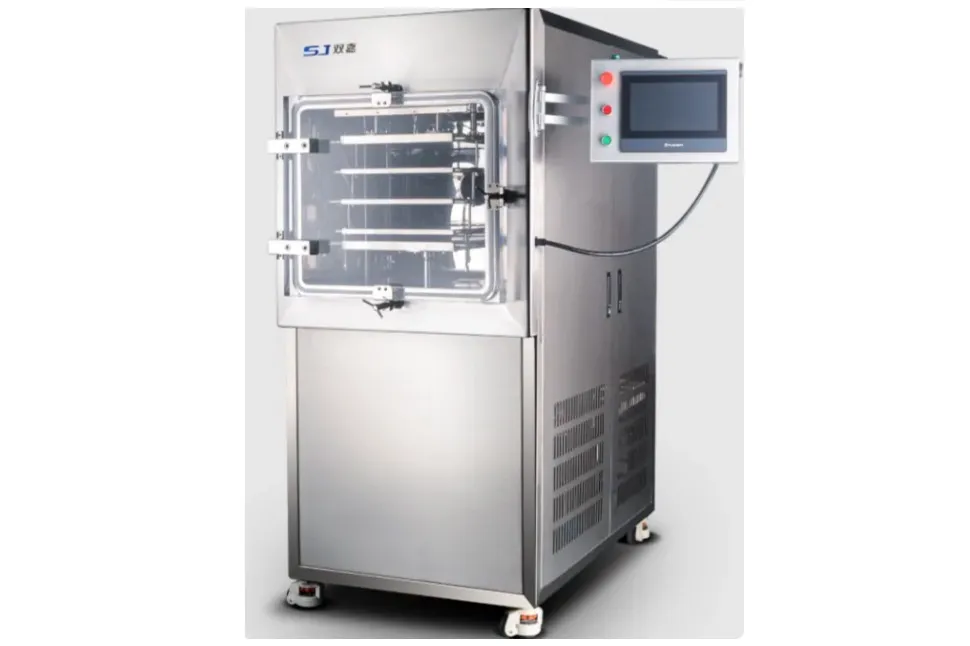
The expressions freeze dryer machine, freeze drying machine, and lyophilizer machine describe the same basic equipment category. Buyers use “lyophilizer” more often in laboratory, biotechnology, peptide, protein, vaccine, and pharmaceutical projects. “Freeze dryer machine” is common in food, commercial, industrial, and general equipment searches. The application determines the correct configuration.
Choose the machine class before comparing models
| Application | Typical work | Most useful sizing inputs | SJ product family |
|---|---|---|---|
| Laboratory | Sample preparation, flasks, small trays, early vial trials | Sample volume, flask ports, condenser volume and temperature, pump compatibility | Pioneer laboratory freeze dryers |
| Pilot and process development | Formulation screening, controlled shelves, cycle development, small batches | Shelf area, vial format, product temperature, pressure control, data capture | Creator pilot freeze dryers |
| Pharmaceutical GMP | Sterile vials, peptides, proteins, biologics, vaccines, bulk API | Vial count, fill volume, shelf area, stoppering, condenser duty, cleanroom interface, validation | Command GMP freeze dryers |
| Home and small food | Fruit, vegetables, meals, snacks, pet treats, product trials | Prepared fresh load, tray area, product thickness, power, ventilation, batches per week | H Series small food freeze dryers |
| Commercial food | Regular small-factory production and specialty ingredients | Prepared load, tray density, cycle target, cleaning, packaging rhythm, utilities | Commercial H Series |
| Industrial food | Factory-scale carts, trays, pre-freezing, drying, unloading and packaging | Daily throughput, shelf area, water load, condenser rate, carts, sanitation and site layout | SJ-FFD industrial systems |
1. Define the product and container
A liquid in a vial, a peptide formulation, sliced fruit, cooked meat, coffee extract, and pet food do not create the same heat- and mass-transfer problem. Send the supplier the product form, initial solids or moisture, freezing behavior, critical product temperature where known, container or tray drawing, fill depth, and target residual moisture.
For vials, include nominal vial size, outside diameter, height, fill volume, stopper drawing, loading pitch, and required quantity. For food, state the prepared weight after trimming or cooking, not only incoming raw weight. Also state product thickness and tray loading density.
2. Compare usable area instead of shelf count alone
Shelf count is easy to understand but incomplete. Two machines with the same number of shelves can have very different shelf dimensions and total usable area. Compare shelf width, depth, count, spacing, total area, edge clearance, loading method, and whether every shelf is temperature controlled.
More area can carry more product, but it can also create more vapor. A larger shelf load therefore needs an appropriate vapor path, condenser surface, ice capacity, refrigeration duty, and process margin. The condenser should be checked against the expected water load and sublimation rate rather than copied from a smaller configuration.
3. Match the condenser to the real ice load
Condenser temperature is only one part of performance. Ask for total ice capacity, expected capture rate, defrost method, refrigeration arrangement, and the assumptions behind the rating. A very low empty-system temperature does not prove that the condenser can maintain useful performance during the highest-vapor part of primary drying.
4. Evaluate process control, not only ultimate vacuum
Ultimate vacuum is measured under a relatively easy condition. Freeze drying requires stable control at the pressure used by the recipe while vapor is moving through the system. Review vacuum sensors, pressure-control method, leak-rate test, pump configuration, isolation valves, trends, alarms, and recovery behavior.
5. Decide how much control and documentation the project needs
A small food machine may need recipes, trends, alarms, manual control, and straightforward cleaning. A pilot lyophilizer may need programmable shelf ramps, controlled pressure, product probes, data export, and repeatable cycle development. A GMP pharmaceutical lyophilizer may also require user roles, audit trail, electronic signatures, backup, time synchronization, recipe versioning, 21 CFR Part 11-ready functions, FAT, SAT, IQ/OQ support, material records, calibration, and traceability.
| Specification | Useful buyer question |
|---|---|
| Shelf temperature | What is the operating range, ramp performance, and loaded uniformity test? |
| Condenser | What ice load and peak capture rate were used for sizing? |
| Vacuum | What is the controllable process range, sensor arrangement, and leak criterion? |
| Capacity | Is it stated as usable shelf area, vial quantity, prepared food load, or water removed? |
| Controls | Which recipes, trends, alarms, permissions, records, and exports are included? |
| Utilities | What power, cooling water, compressed air, steam, drain, and room conditions are required? |
| Acceptance | Which functions and performance values will be witnessed at FAT and SAT? |
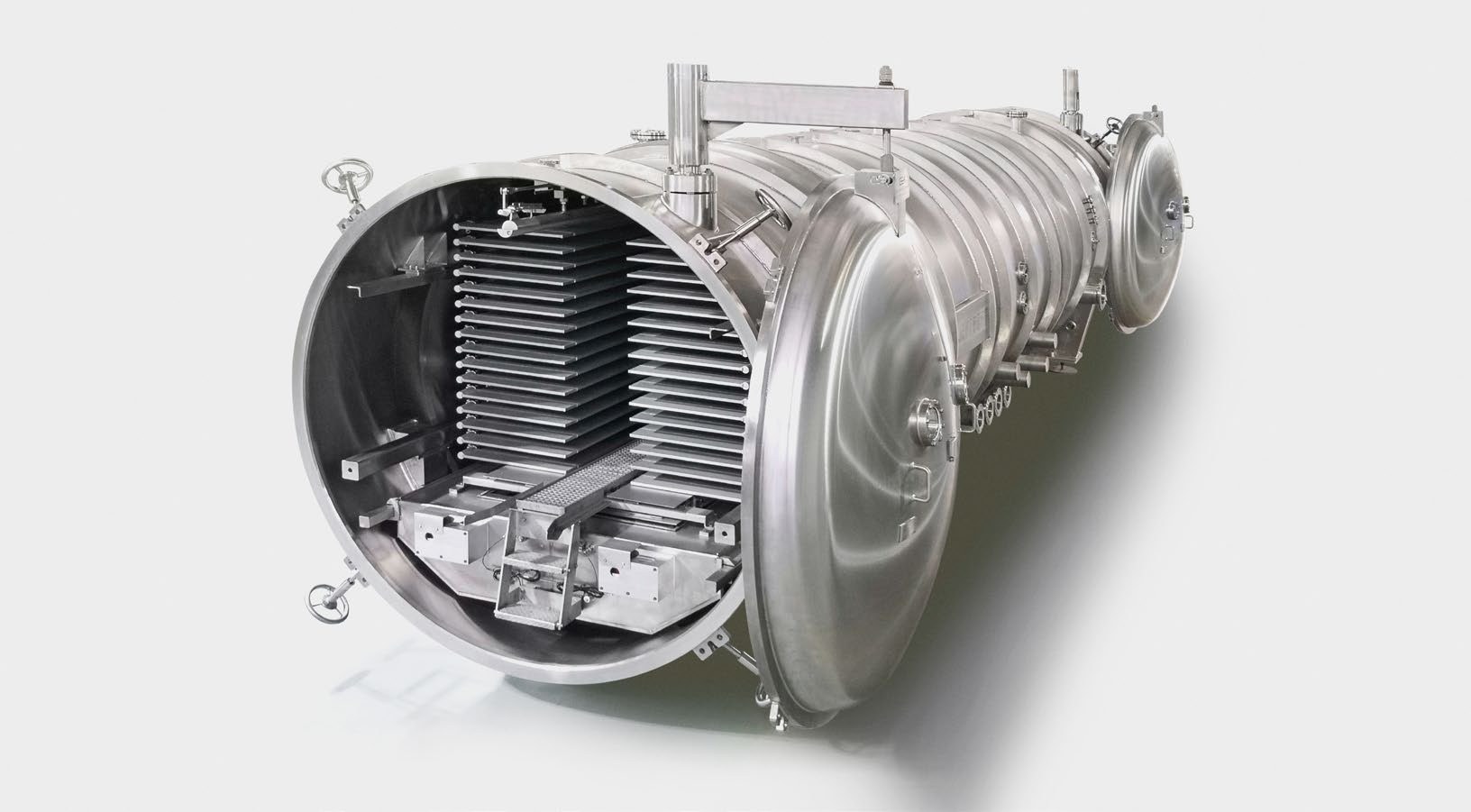
Representative machine formats
| Laboratory and pilot | Commercial and industrial food |
|---|---|
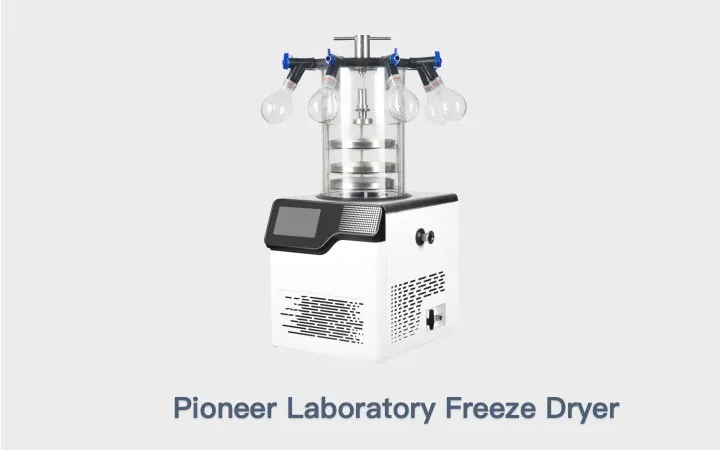 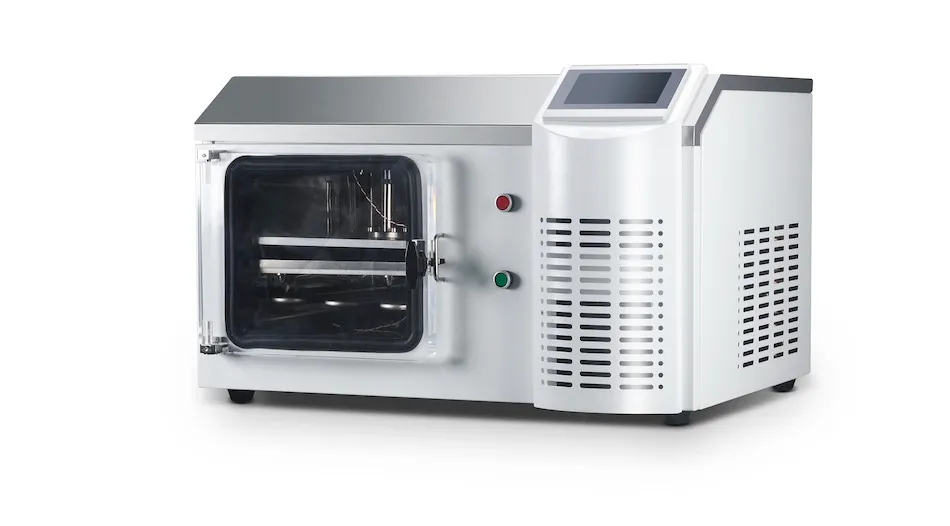 | 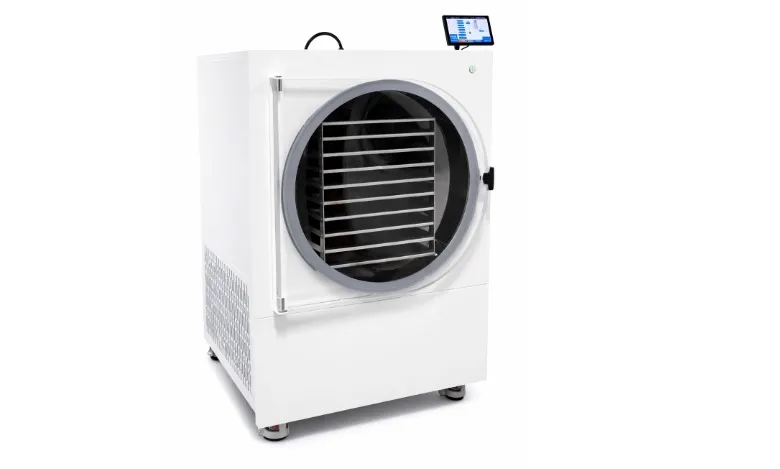  |
What “freeze dryer for sale” should mean in a serious quotation
A page or listing marked “for sale” should still identify the exact model, usable area or tray capacity, condenser, temperature range, vacuum configuration, control scope, electrical supply, included accessories, documentation, delivery boundary, warranty, and commissioning responsibility. A low headline price without this scope is not a comparable offer.
For an engineering review, start at the freeze dryer machine product range, read the manufacturer and factory capability page, and send a process brief through the inquiry form.
Frequently asked questions
Is a lyophilizer machine different from a freeze dryer machine?
No. Both names describe equipment that removes frozen solvent by sublimation under vacuum. Lyophilizer is used more often in laboratory and pharmaceutical projects.
What information is needed to size a freeze dryer machine?
Provide the product, container or tray, prepared load, water load, fill or layer depth, shelf area or vial quantity, target cycle, final moisture, utilities, controls, and documentation requirements.
Why is shelf count not enough to compare freeze dryers?
Shelf dimensions, total usable area, spacing, temperature control, loading clearance, vapor load, and condenser sizing can differ even when two machines have the same shelf count.
What should I check before buying a freeze dryer for sale?
Confirm the exact model, usable capacity, condenser, temperature and vacuum performance, control scope, utilities, included accessories, documentation, warranty, delivery boundary, and commissioning responsibility.