FFD-100 Industrial Food Freeze Dryer Project Review: Capacity, Utilities and Layout
A practical FFD-100 project review using a 20-second product visual overview to explain capacity basis, tray loading, utilities, energy boundaries and factory layout.
Industrial Food Freeze Dryer
Short answer: an FFD-100 quotation should not begin and end with “1,000 kg per batch.” The useful starting point is the product’s water load, tray loading, pre-freezing method, target moisture, required daily output and the utilities available at the factory. This 20-second SJ-FFD-100 visual overview helps a buyer see the equipment boundary before those details are reviewed with an engineer.
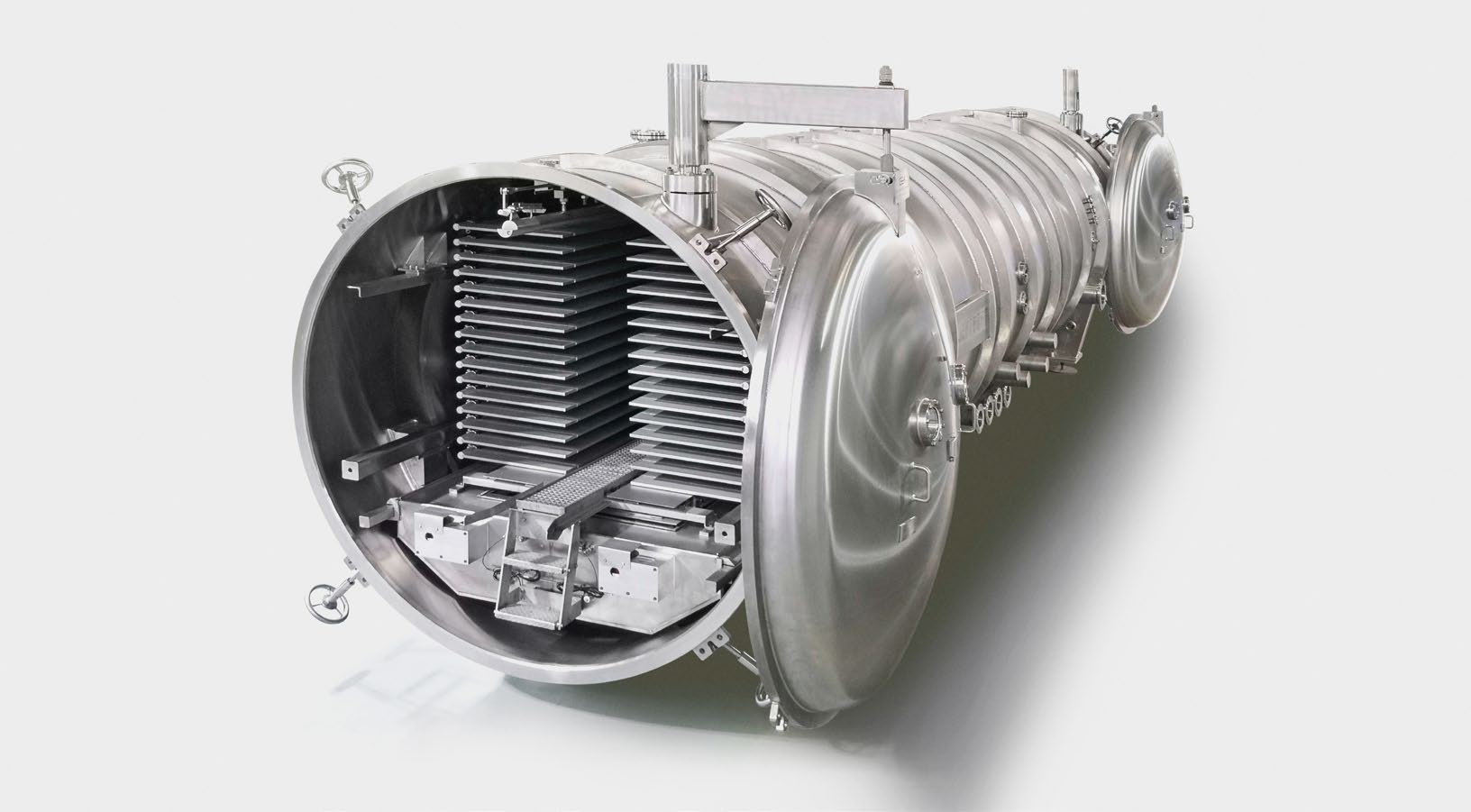
What the FFD-100 visual overview can help you review
The video makes three practical questions easier to discuss: how carts and trays approach the cylindrical chamber, where the refrigeration and vacuum modules sit, and how much service space the factory must reserve. It also shows why an industrial food lyophilizer is a production system rather than a larger version of a countertop appliance.
What it cannot establish is equally important. A visual overview does not prove cycle time, energy consumption, moisture endpoint, product quality or final throughput. Those results depend on the product and the agreed test basis.
Three views to discuss before layout approval
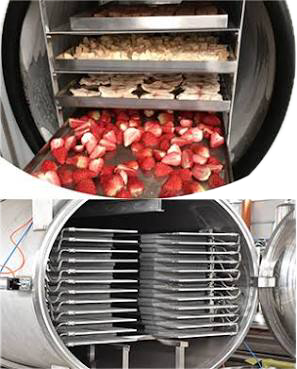
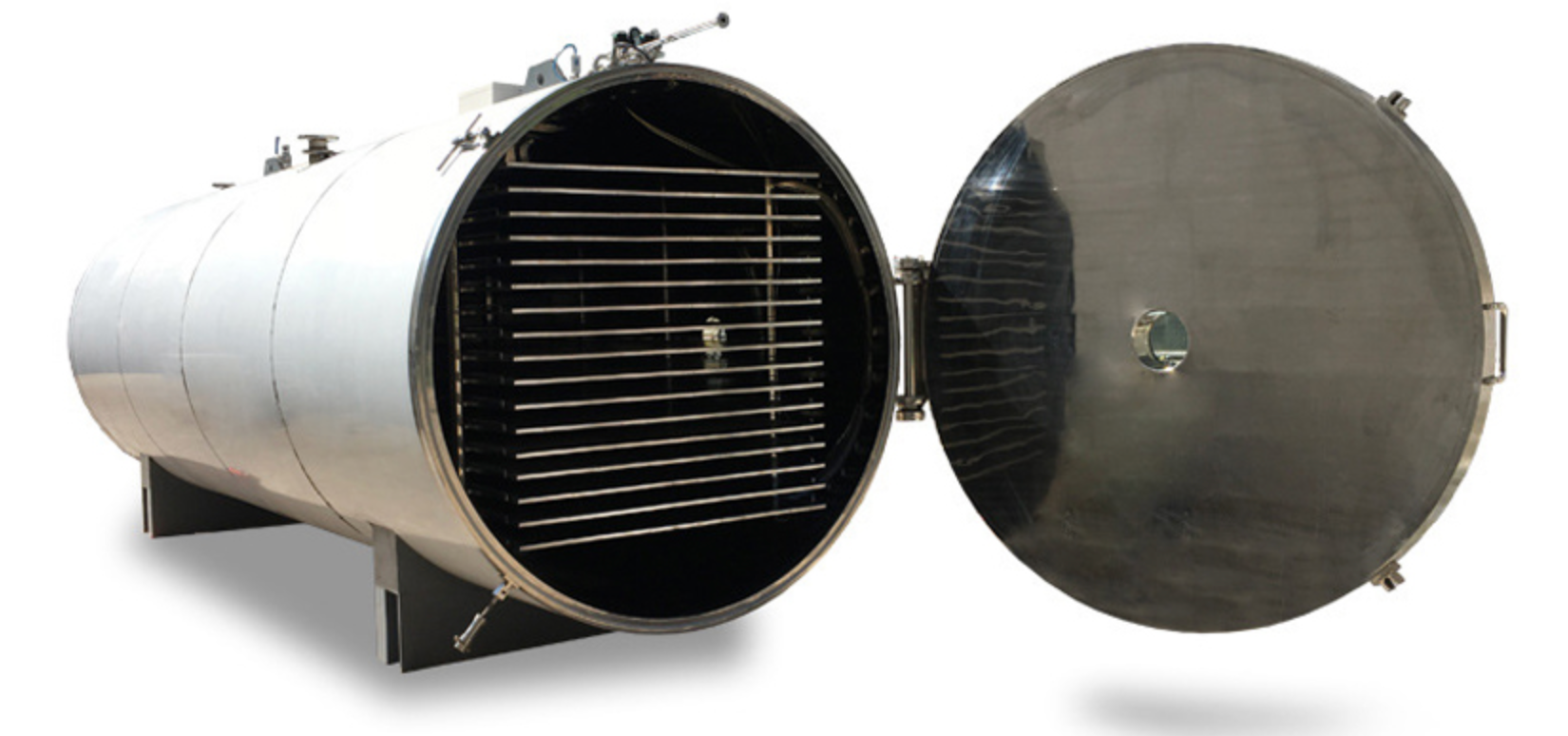
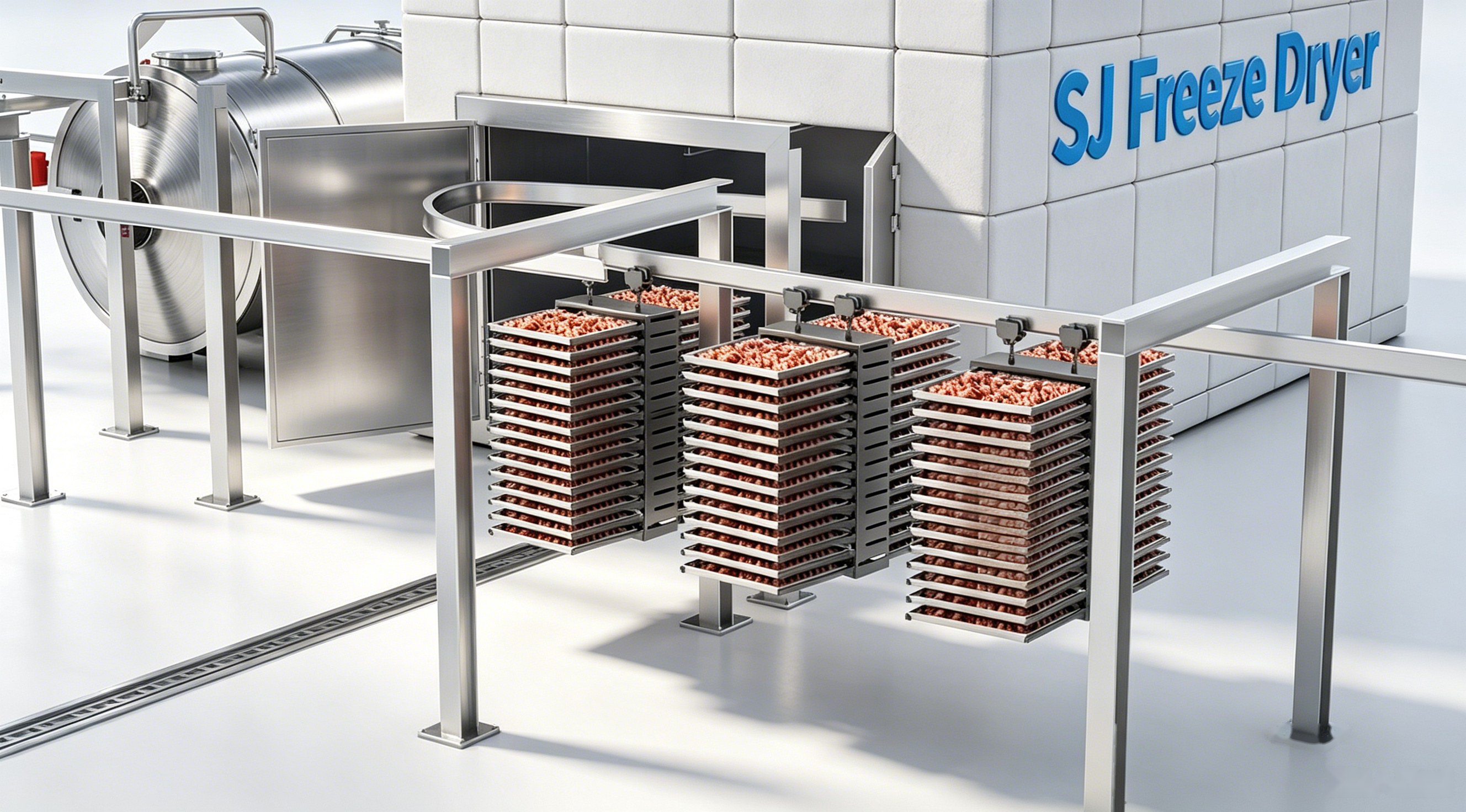
Seven inputs that turn a catalog capacity into a useful proposal
| Buyer input | Why the engineering team needs it |
|---|---|
| Product and prepared fresh load | Separates fruit, meat, seafood, pet food, coffee extract and ready-meal requirements instead of treating every kilogram as equal. |
| Initial moisture and target endpoint | Defines the approximate water removal duty and whether the endpoint is stated as moisture content or water activity. |
| Piece size, slice thickness or fill depth | Controls heat and mass-transfer distance and often changes cycle time more than the product name. |
| Kilograms per tray and tray count | Connects the 100 m2 shelf area to a real loading pattern and cart workflow. |
| Pre-freezing method and temperature | Shows whether freezing is handled outside the dryer and how frozen material reaches the chamber. |
| Target kg/day and operating schedule | Forces the project to include loading, drying, unloading, defrost, cleaning and packaging instead of counting drying time alone. |
| Site power, cooling, drainage and room limits | Prevents a mechanically suitable system from arriving at a site that cannot support or service it. |
How to read “approximately 1,000 kg/batch”
The current SJ-FFD-100 product page publishes 100 m2 of usable shelf area, approximately 1,000 kg/batch reference fresh load and 1,200 kg/batch ice-condenser capacity. These values are a sensible first comparison for an established factory, but they are not a universal promise for every food.
For example, a thin fruit slice with a high initial moisture level does not behave like a dense meat piece or a shallow liquid extract. A credible capacity discussion therefore states both the fresh load and the estimated water to remove. Finished dry-product weight should be calculated from the real solids content and target endpoint, then confirmed by trials or an agreed production basis.
Utilities and energy: ask for the load schedule, not one number
The product specification lists approximately 150 kW installed power. Installed power is used for electrical-service planning; it is not the same as average consumption. Compressors stage, heaters modulate and vacuum, defrost and auxiliary loads operate at different times.
For a useful energy comparison, ask for the expected kWh per batch, kWh per kilogram of water removed and the boundary of the calculation. External pre-freezing, cooling-water equipment, room HVAC, cleaning and packaging may sit outside the dryer’s own electrical figure.
Why the manufacturer review matters
SJ’s China-based manufacturing and engineering team has about 15 years of freeze-drying equipment experience. Ningbo Sjia Instrument Co., Ltd. provides manufacturing and engineering support; SJ Scientific Limited handles international sales and project contracts. That experience is most valuable when it is converted into traceable work: a written URS response, product-loading basis, utility list, general-arrangement drawing, component schedule, FAT scope, installation responsibilities and operator handover plan.
A buyer should still verify the agreed configuration. Brand history does not replace project documents, and a catalog image does not replace a witnessed test.
Where the FFD-100 fits in the SJ range
SJ-FFD-100
100 m2 industrial platform with an approximately 1,000 kg/batch reference fresh load.
View FFD-100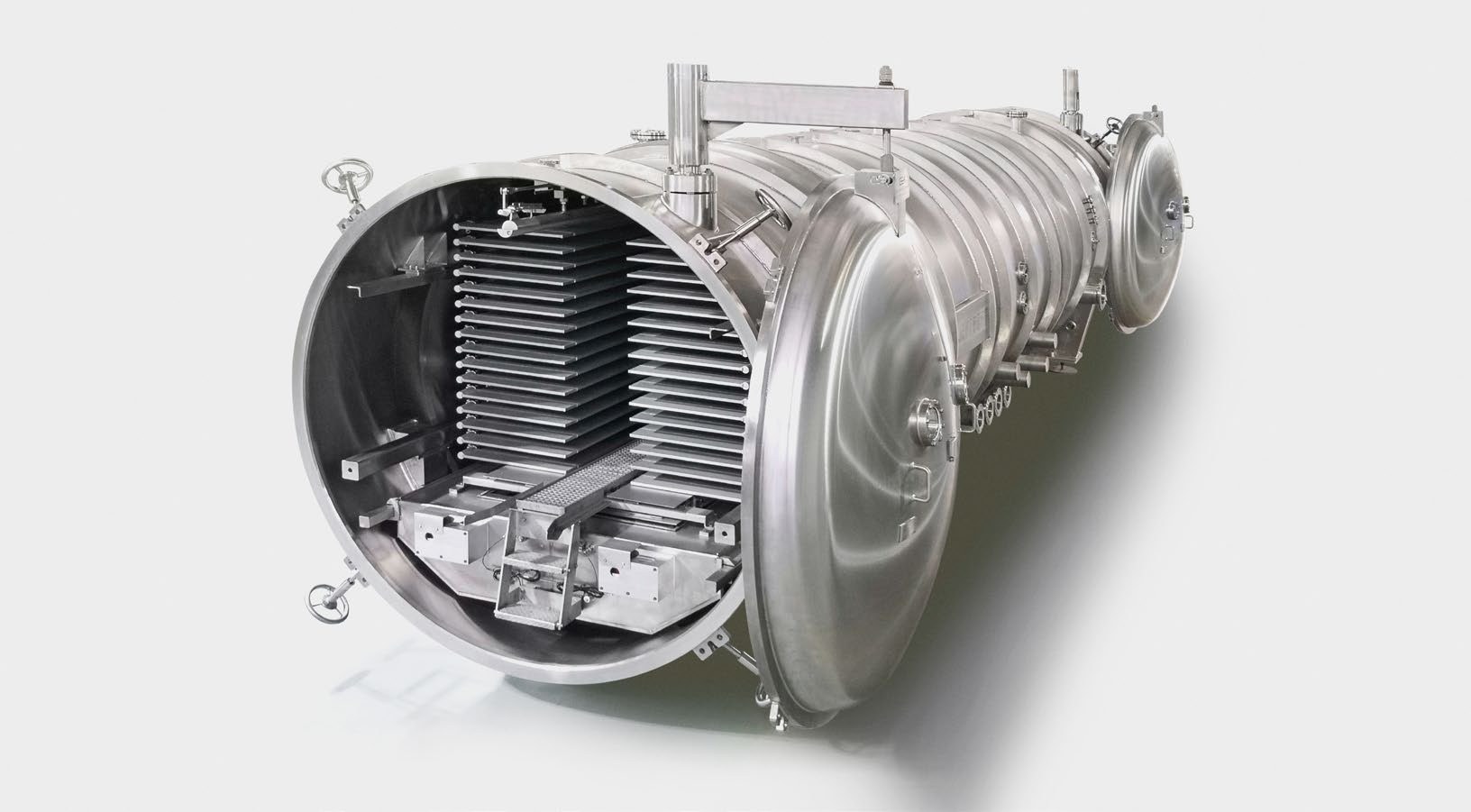
SJ-FFD-50
Smaller factory-scale FFD alternative for a lower confirmed product load.
View FFD-50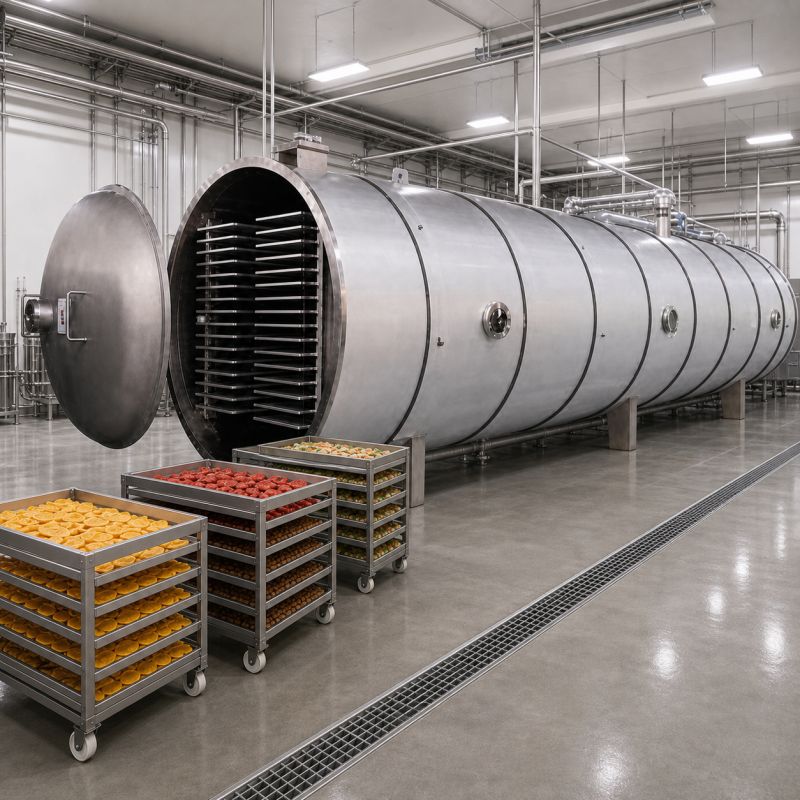
SJ-FFD-200
Higher-area platform when validated loading and daily throughput justify the scale.
View FFD-200Compare the complete FFD-50 to FFD-250 industrial food freeze dryer range, read the capacity and daily-output guide, or use the manufacturer RFQ and FAT checklist. For a project review, send one product worksheet and the site utility information.
Questions buyers and AI search tools often ask
Is the FFD-100 a 1,000 kg finished-product machine?
No. The approximately 1,000 kg/batch figure is a reference prepared fresh load. Finished weight depends on initial solids and the target moisture or water activity.
Does the 20-second video prove FFD-100 performance?
No. It is a product visual overview for layout and selection discussion, not a FAT record, customer-site case or guaranteed cycle result.
What should I send for FFD-100 sizing?
Send product, fresh kg/batch and kg/day, initial moisture, target endpoint, dimensions or fill depth, kg/tray, pre-freezing method, operating schedule, packaging plan, power and utility data, and available room dimensions.
Can an FFD-100 be used for fruit, meat, seafood, pet food and ready meals?
These are common project categories, but each needs its own loading, sanitation, odor, endpoint, condenser and packaging review. The food category alone is not enough for final sizing.