How to Qualify a Pharmaceutical Lyophilizer Manufacturer
A risk-based buyer guide for qualifying a pharmaceutical freeze dryer or lyophilizer manufacturer before design approval, FAT, delivery, and site acceptance.
Pharmaceutical Freeze Dryer
Short answer: qualify a pharmaceutical lyophilizer manufacturer by the evidence behind the proposed system, not by a stainless-steel photograph or a statement that the machine is “GMP.” A capable supplier should translate the user requirement specification into a traceable design, define the sterile and process boundaries, explain how shelf, vacuum, condenser, stoppering, cleaning, controls, and utilities will be tested, and agree which records will support DQ, FAT, SAT, IQ, OQ, and the customer’s process qualification.
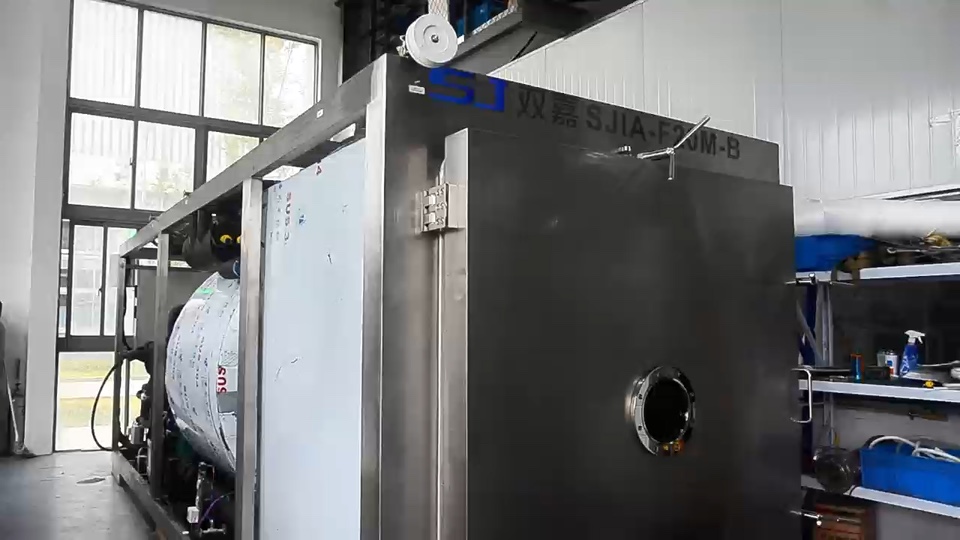
This guide addresses a specific buying question: how should a pharmaceutical company compare lyophilizer manufacturers? It complements the pharmaceutical freeze dryer application page, the Command GMP lyophilizer range, and the existing GMP equipment requirements guide. It does not replace a site quality system, validation plan, or product-specific regulatory assessment.
Start with one controlled project definition
Suppliers cannot be compared if each one is pricing a different process boundary. Before requesting a proposal, issue the same controlled data package to every candidate. At minimum, state:
- dosage form, product family, solvent system, containment needs, and whether the load is sterile;
- vial drawing, stopper drawing, fill volume, vial quantity, loading pattern, shelf spacing, and stoppering requirement;
- bulk tray dimensions and fill depth when the machine will process API or another bulk material;
- expected water or solvent load, target cycle range, product critical temperature, and endpoint strategy where known;
- cleanroom classification, wall or technical-area arrangement, RABS or isolator interface, and loading method;
- CIP, SIP, leak testing, sterile filtration, condenser defrost, drainage, and waste expectations;
- automation, historian, user access, audit trail, electronic signature, batch report, backup, cybersecurity, and time-synchronization requirements;
- utilities, ambient conditions, installation country, applicable codes, documentation language, and service boundary.
The pharmaceutical lyophilizer sizing and URS guide explains how to turn vial count, shelf area, fill volume, and ice load into this starting specification.
Ask for a requirement-to-test traceability matrix
A useful proposal shows where each critical requirement is designed, documented, and tested. The traceability matrix can begin during design review and mature through FAT, SAT, and qualification. It prevents important requirements from disappearing between the sales quotation, mechanical design, software configuration, and final acceptance.
| Requirement area | Evidence to review | Typical verification stage |
|---|---|---|
| Product chamber and shelves | Materials, surface finish, weld and drainability records, shelf geometry, pressure rating, loaded mapping approach | Design review, FAT, IQ/OQ |
| Thermal performance | Shelf range, ramp behavior, fluid distribution, temperature uniformity protocol, sensor calibration | FAT and OQ under defined conditions |
| Vacuum and leak control | Pump and valve arrangement, sensor ranges, pressure-control method, leak criterion, isolation logic | FAT, SAT, OQ |
| Condenser and vapor path | Ice capacity, refrigeration duty, capture-rate assumptions, conductance, defrost and drainage | Design review and load-based testing |
| Stoppering | Vial and stopper compatibility, travel, force, uniformity, interlocks, position confirmation | FAT with representative components, SAT/OQ |
| CIP/SIP and sterile boundary | Flow path, spray coverage, drainability, temperature distribution, filters, valves, condensate removal | Design review, FAT where possible, site qualification |
| Automation and data | Functional specification, alarm list, roles, audit trail, recipe/version control, backup and restore, reports | Software review, FAT, SAT, IQ/OQ |
| Utilities and interfaces | P&ID, utility list, loads, cleanroom penetrations, drainage, exhaust, communication interfaces | Design review, site readiness, SAT |
“GMP lyophilizer” must be translated into a defined scope
GMP is not a single equipment certificate. The user remains responsible for operating the machine within an appropriate pharmaceutical quality system. The manufacturer’s job is to supply a design, controls, tests, and records that support the intended use and the customer’s qualification strategy.
For aseptic vial processing, review contamination-control interfaces explicitly. EU GMP Annex 1 treats loading, unloading, sterilization, barrier integration, and interventions as part of the contamination-control problem. FDA inspection guidance likewise calls attention to formulation, filling, lyophilizer sterilization and engineering, cycle scale-up, validation, and finished-product testing. The exact applicable requirements depend on the product, market, facility, and regulatory pathway.
Review the manufacturer’s design process, not only the finished machine
Ask who owns the mechanical design, refrigeration and vacuum selection, PLC/SCADA software, documentation, testing, commissioning, and after-sales support. Then review how changes are approved. A late substitution of a sensor, valve, compressor, PLC module, or software component can affect qualification, spare-parts planning, and long-term maintainability.
Useful design-review records include approved drawings, P&IDs, component lists, instrument ranges, material specifications, surface-finish requirements, weld documentation where applicable, software functional specifications, alarm and interlock lists, risk assessments, and a controlled deviation/change process.
Make FAT a witnessed engineering test
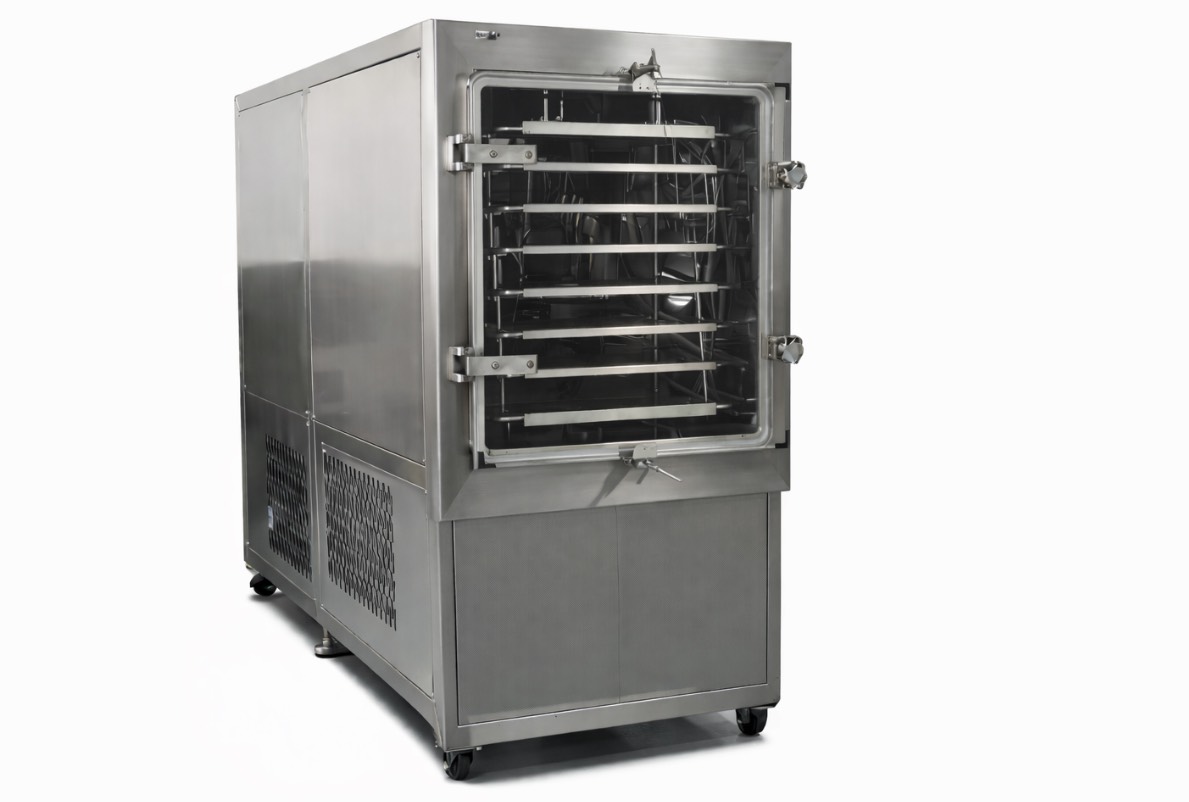
A pharmaceutical freeze dryer FAT should do more than confirm that the screen turns on and the shelves become cold. The approved protocol should state the test method, instruments, prerequisites, acceptance criteria, raw-data handling, deviation process, and retest rules.
Depending on project scope, FAT may include I/O and interlock challenges, recipe execution, alarm and power-recovery tests, user-role and audit-trail checks, shelf temperature mapping, pull-down and ramp tests, pressure control, chamber leak rate, condenser pull-down, stoppering with representative vials, report generation, backup and restore, and review of calibration and turnover documents. Full process-load simulation may require a separately agreed method because water load, vapor flow, site utilities, and product behavior cannot be inferred from an empty-chamber test.
Separate equipment qualification from process validation
Supplier documents can support DQ, IQ, and OQ, but the drug manufacturer owns the validated process and continued process verification. PQ requires the approved formulation, container closure, loading pattern, cycle, facility, operators, analytical methods, and quality system. A supplier should not promise that a generic factory test validates every future product.
Agree the document index before purchase. Typical project records may include design documents, manuals, drawings, P&IDs, component certificates, calibration records, software documents, FAT/SAT protocols and reports, recommended IQ/OQ documents, spare-parts lists, maintenance schedules, and training records. The exact list should be risk based and written into the order.
Check site acceptance and lifecycle support before signing
SAT is where transport, installation, utilities, network, room conditions, drainage, and site interfaces become real. Define who checks placement, leveling, utility quality, rotation, leakage, communication, safety, functional operation, and open FAT items. Also define response times, remote-support rules, software backup, source and configuration control, spare-parts availability, refrigeration service, vacuum-pump support, and calibration strategy.
Understand the SJ and SJIA names in an international project
SJ Scientific is the Hong Kong company used for international commercial coordination. Ningbo Sjia Instrument Co., Ltd. is the China manufacturing entity and is also associated with the SJIALAB name on factory and marketplace channels. Product models are presented primarily with the SJ prefix; SJIA may still appear on historical equipment, factory records, or channel materials. Buyers can request the quotation entity, manufacturing entity, factory address, model identity, and document responsibility to be stated clearly in the project file.
Review the SJ freeze dryer manufacturer and factory page for company context. For a defined project, send the URS or process brief through the pharmaceutical lyophilizer inquiry form.
Reference framework
Frequently asked questions
What should I check when choosing a pharmaceutical lyophilizer manufacturer?
Check the requirement-to-design traceability, sterile and process boundaries, shelf and vacuum performance, condenser sizing, stoppering, CIP/SIP, automation and data integrity, FAT/SAT methods, qualification documents, change control, and lifecycle service.
Does a pharmaceutical freeze dryer have a universal GMP certificate?
No. GMP applies to the regulated manufacturing system and intended use. The equipment supplier should provide an appropriate design, controls, tests, and records that support the user’s qualification and quality system.
What should be tested during a lyophilizer FAT?
Use the approved URS to define tests such as I/O, interlocks, recipes, alarms, recovery, user access, audit trail, shelf mapping, pressure control, leak rate, condenser operation, stoppering, reports, backup, calibration, and document review.
Can supplier IQ/OQ documents replace pharmaceutical process validation?
No. Supplier documents can support equipment qualification, but the drug manufacturer owns process performance qualification using the approved formulation, container closure, loading pattern, cycle, facility, methods, and quality system.
Are SJ Scientific and Ningbo Sjia Instrument the same project organization?
SJ Scientific is the Hong Kong company used for international commercial coordination, while Ningbo Sjia Instrument Co., Ltd. is the China manufacturing entity. Project documents can state each entity’s commercial, manufacturing, and documentation responsibilities.