Commercial Food Freeze Dryer Price: What Changes the Cost?
A practical cost guide for comparing commercial food freeze dryer and food lyophilizer quotations without relying on a misleading price-per-kilogram figure.
Food Freeze Dryer
Short answer: a commercial food freeze dryer price cannot be judged from “kg per batch” alone. A useful quotation must state the prepared product load, tray or shelf area, expected water removal, condenser duty, cycle assumption, utilities, controls, loading method and delivery scope. Without that basis, two prices may describe very different machines.
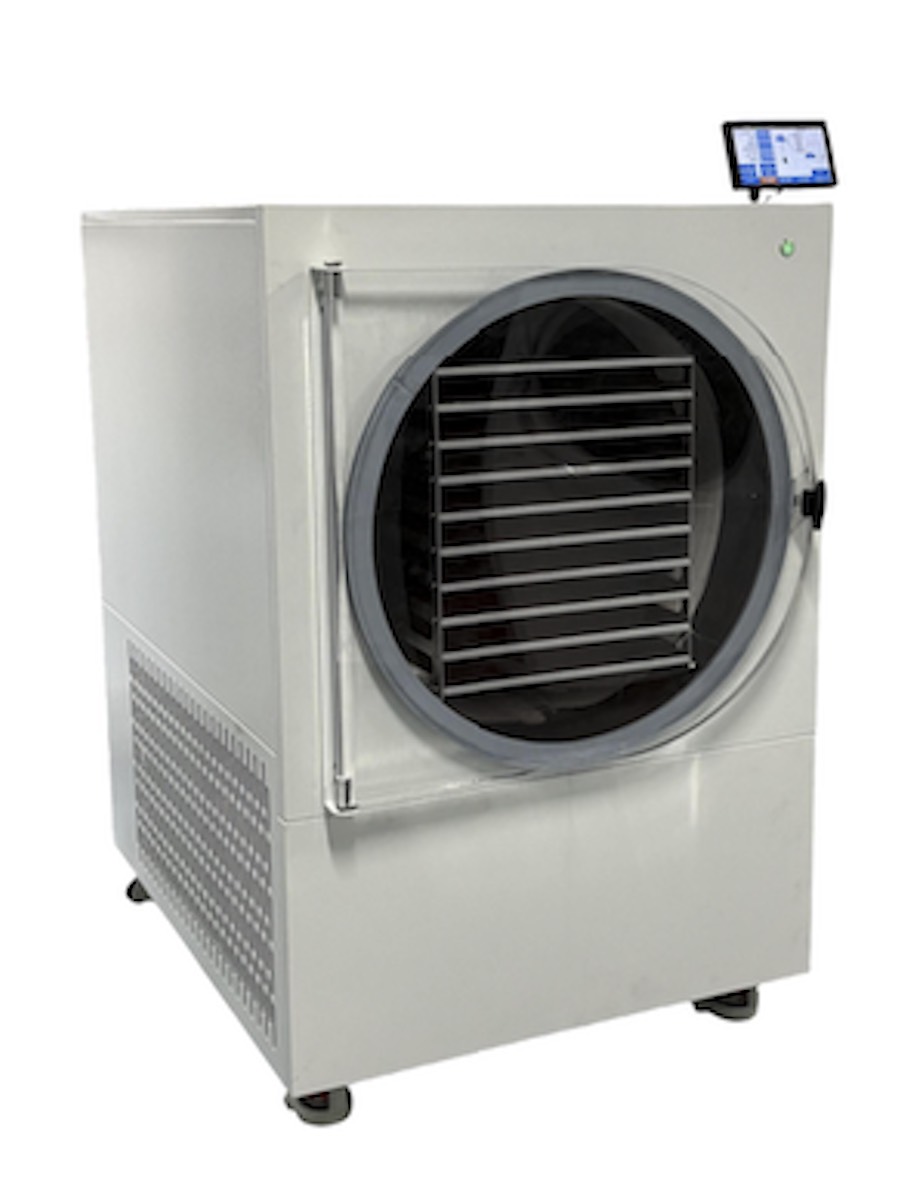
This guide is for buyers searching for a commercial food freeze dryer for sale, a food lyophilizer machine price, or an industrial FFD quotation. It does not publish a universal list price because product, voltage, destination and project scope can change the correct configuration. Instead, it shows how to obtain comparable quotations and avoid paying later for missing scope.
First decide which equipment class you are pricing
| Equipment class | SJ models | Reference fresh load | Main cost structure |
|---|---|---|---|
| Small H series | SJ-05H to SJ-20H | About 5-30 kg/batch | Self-contained cabinet, trays, refrigeration, vacuum and basic site connection |
| Commercial H series | SJ-30H, SJ-35H, SJ-50H | About 30-70 kg/batch | Larger tray area, power, heat rejection, pump and production workflow |
| Industrial FFD | FFD-50 to FFD-250 | About 500-2500 kg/batch | Chamber, shelves, condenser, refrigeration skid, vacuum, carts, utilities, installation and factory integration |
The gap between SJ-50H and FFD-50 is not simply a larger model number. It is a change from cabinet batches to a cart-based production system. Pre-freezing, material movement, condenser defrost, unloading, cleaning, packaging and site utilities become part of the investment.
1. Usable tray or shelf area
Usable area is a better first comparison than chamber volume. Ask for tray dimensions, tray count, total usable area, shelf spacing and the permitted loading method. A machine with a large chamber can still offer less useful product area than expected. Also confirm whether the quoted area is physical, usable or calculated from both sides of a component.
For commercial H models, compare the SJ-30H at 2.95 m2, SJ-35H at 3.5 m2 and SJ-50H at 4.98 m2. The correct choice depends on proven kilograms per square meter for the actual product, not an optimistic universal loading density.
2. Water load, condenser capacity and refrigeration duty
A freeze dryer removes water, not just kilograms of food. Fifty kilograms of a high-moisture fruit and fifty kilograms of concentrated puree can create different ice loads. The quotation should state initial moisture, target moisture, estimated water removed and the condenser basis.
Condenser ice capacity is not the same as peak capture rate. The refrigeration system must maintain the required condenser condition while vapor arrives during primary drying. Ask how shelf area, product load, heat input, vapor path and condenser duty were matched. Increasing shelf area without checking condenser and refrigeration margin can extend the cycle or reduce process robustness.
3. Vacuum system and pressure control
Vacuum cost changes with chamber volume, leakage target, pump arrangement, process-pressure control, food vapor and maintenance expectations. An ultimate-vacuum number does not describe how steadily the machine controls the useful drying range. Ask for pump type, nominal pumping speed, pressure sensors, control method, oil-mist handling, isolation valves and service access.
Foods containing fat, aroma compounds or fine powders may require additional attention to pump protection and cleaning. Put those requirements in the RFQ instead of assuming the standard pump arrangement suits every product.
4. Freezing and heating configuration
Some products are frozen inside the chamber. Others are loaded on carts and pre-frozen in a separate blast freezer or cold room. External pre-freezing can improve dryer utilization, but it adds equipment, floor space, carts and transfer control. In-chamber freezing can simplify handling but occupies the main chamber for longer.
Heating method, shelf control range, ramp control and temperature uniformity also affect cost and cycle development. The quotation should explain how heat is delivered and controlled across a full load.
5. Controls, recipes and production records
A touchscreen does not define the control scope. Ask the supplier to demonstrate recipe creation, step transitions, pressure and temperature trends, alarms, user permissions, batch records, data export, backup and recovery. A food factory may not need a pharmaceutical data-integrity package, but it still needs records that operators can use and managers can review.
Remote support, language, spare PLC or HMI backups and access to configuration files should be clarified before purchase.
6. Food-contact construction and cleaning
“Stainless steel” is incomplete. Confirm material grades for the chamber, shelves or trays, carts, drains and product-contact components. Review welds, corners, drainage, gasket material, access to surfaces and the cleaning procedure. A producer changing between fruit, meat, pet food, dairy or allergen-containing products may need more separation and verification than a single-product factory.
CIP-related options can reduce manual work in a suitable design, but they do not automatically create a validated cleaning process. The product soil, detergent, rinse, drainage and inspection method still need to be defined.
7. Utilities and installation
Ask for connected and operating electrical loads, voltage and frequency, cooling water flow and temperature, compressed air, drainage, ventilation, heat rejection, ambient limits, machine weight and service clearances. For industrial FFD systems, verify how the chamber and skid enter the building and whether foundations, cranes, wall openings or separate equipment rooms are required.
A low equipment price can become an expensive project when cooling water, electrical distribution or room modifications were not included in early planning.
8. Loading, labor and packaging
Tray filling, cart movement, pre-freezing, chamber loading, unloading and packaging determine how much product the factory actually ships. Ask how many operators are needed and how long each turnaround step takes. A larger dryer can wait idle if preparation or packaging cannot keep up.
Freeze-dried food absorbs moisture quickly. A dry unloading environment and suitable moisture-barrier packaging may be as important to saleable yield as the drying endpoint.
9. Freight, commissioning, documentation and service
Compare Incoterms, packing, inland transport, ocean or air freight, insurance, duties, unloading, installation supervision, commissioning, operator training and travel expenses. Ask which manuals, drawings, certificates, spare-parts lists and test records are included. Confirm warranty start date, remote-response method and the availability of pumps, sensors, valves and refrigeration parts in your market.
Why price per kilogram can mislead
Price divided by an advertised kg/batch figure assumes every food has the same water content, thickness, cycle and turnaround. It also ignores utilization. A smaller machine running a proven cycle four times per week can produce more saleable output than a larger machine whose product preparation, condenser defrost or packaging limits operation.
A better comparison uses annual saleable dry product:
- prepared wet kilograms per tray and per batch;
- water removed and verified cycle duration;
- defrost, cleaning, loading and unloading time;
- realistic batches per week and annual operating weeks;
- yield loss, packaging capacity, labor and energy.
New versus used commercial food freeze dryers
A used machine may reduce initial cost when its history, refrigerant, controls and service parts are known. Before buying, inspect chamber and condenser condition, vacuum leak performance, refrigeration pull-down, pump condition, sensors, electrical drawings, software backup, alarms and available spare parts. Confirm that tray area, voltage, refrigerant and utility requirements fit the new site.
Modification, transport, recommissioning and missing documentation can remove the apparent saving. For food use, also establish what products were previously processed and how the machine will be cleaned before production.
A comparable quotation checklist
- Product name, photos, dimensions or liquid fill depth.
- Initial moisture, target moisture or water activity and required appearance.
- Prepared fresh kilograms per batch and target kilograms per day.
- Tray dimensions, loading thickness and pre-freezing method.
- Expected cycle and turnaround basis.
- Usable area, water removed, condenser capacity and refrigeration basis.
- Vacuum pumps, pressure control, controls and data functions.
- Food-contact materials, trays, carts, drainage and cleaning scope.
- Utilities, room limits, loading route and installation responsibility.
- Freight, commissioning, training, documents, spares, warranty and exclusions.
Send the same checklist to each manufacturer. For SJ Scientific sizing, start with the food freeze dryer and food lyophilizer overview, compare the commercial H series and FFD industrial series, then submit the product data through the engineering inquiry form.
Frequently asked questions
How much does a commercial food freeze dryer cost?
There is no useful universal price without product and scope. Tray area, water load, condenser and refrigeration duty, vacuum, controls, materials, voltage, freight, commissioning and documents all affect the quotation.
Why does an industrial food freeze dryer cost more than a commercial cabinet machine?
An industrial system adds much more shelf area, condenser and refrigeration duty, a larger vacuum chamber, carts, utility integration, loading workflow, installation and factory-level controls.
Can I compare food freeze dryers by price per kilogram?
Only when product, moisture, thickness, cycle, turnaround and utilization assumptions are identical. Annual saleable output is a more reliable comparison.
What should be included in a food lyophilizer quotation?
The quotation should identify usable area, load assumptions, condenser and vacuum configuration, controls, materials, utilities, trays or carts, tests, documents, freight, commissioning, spares, warranty and exclusions.
Is a used commercial food freeze dryer a good option?
It can be when condition and history are verifiable. Check leaks, refrigeration, pumps, sensors, controls, refrigerant, voltage, documentation, cleanability, spare parts and recommissioning cost.
What information should I send for an accurate price?
Send the food type, photos, dimensions or fill depth, initial and target moisture, prepared kg per batch and per day, pre-freezing method, voltage, utilities, room limits, cleaning needs and destination.