Industrial Food Freeze-Drying Line Layout: Utilities, Pre-Freezing, Carts and Packaging
A room-by-room engineering guide for food processors planning an FFD production line rather than buying an isolated chamber.
Food Freeze Dryer
Quick answer: An industrial food freeze-drying line is not only a large freeze dryer. The working line includes product preparation, controlled loading, pre-freezing or frozen buffering, cart transfer, the FFD chamber, condenser defrost, unloading, endpoint checks and moisture-protective packaging. Model selection becomes credible only after those steps, utilities and daily production rhythm are put on one layout.
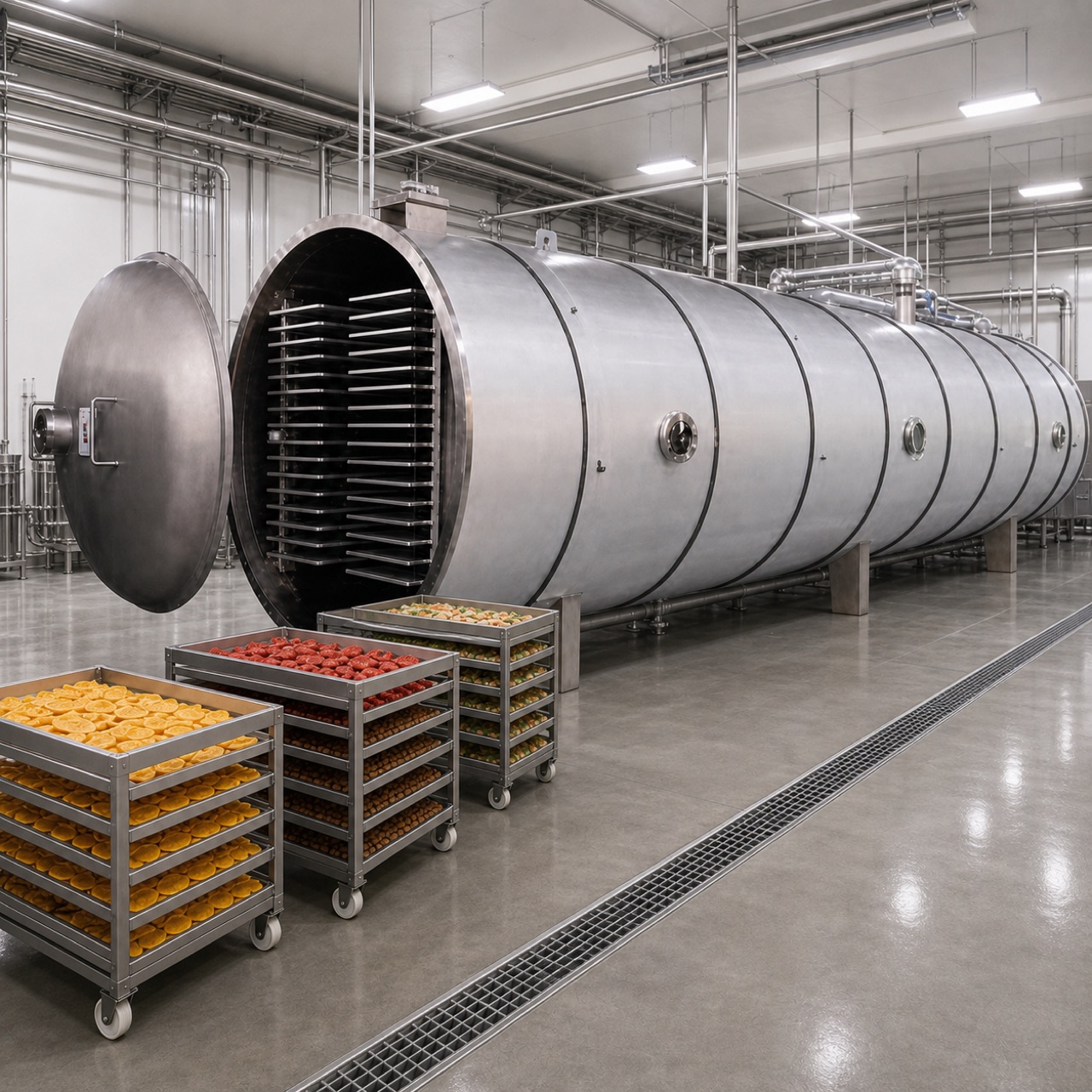
Define the production-line boundary before choosing shelf area
Begin with the prepared product entering the food area and finish with sealed finished packs leaving it. This boundary prevents a common purchasing error: sizing the chamber while treating pre-freezing, defrost, cart cleaning or packaging as someone else's problem. A 500 kg reference batch cannot become saleable output if the cold room holds only half a load or the packaging room needs several hours to receive one discharge.
List the product families, fresh kilograms per batch and day, incoming moisture, piece or layer thickness, target endpoint, expected cycles per week, changeover frequency and package format. The line can then be sized from the constraint that actually limits output.
| Production zone | Questions to settle before layout approval | Typical interfaces |
|---|---|---|
| Preparation | Cut size, cooking or formulation, draining, kilograms per tray and allergen separation | Wash water, drains, tables, scales and tray staging |
| Pre-freezing | In-chamber or separate freezing, product-center target, frozen buffer and cart quantity | Blast freezer or cold room, rails, doors and transfer time |
| FFD room | Chamber orientation, condenser, service side, rigging path and maintenance clearance | Power, cooling, vacuum, heat transfer, defrost and drainage |
| Unloading | Humidity exposure, sampling, endpoint verification and cart return | Controlled room, tools, scales and product-status identification |
| Packaging | Full-batch receiving rate, barrier film, seal verification and oxygen control where required | Dehumidification, sealers, gas, absorbers, labels and metal control |
See the FFD model path in pictures
SJ-FFD model numbers correspond to usable shelf-area classes. The fresh-load figures below are planning references, not guaranteed output for every food. Product geometry, water removal, loading depth and the approved cycle remain part of final sizing.
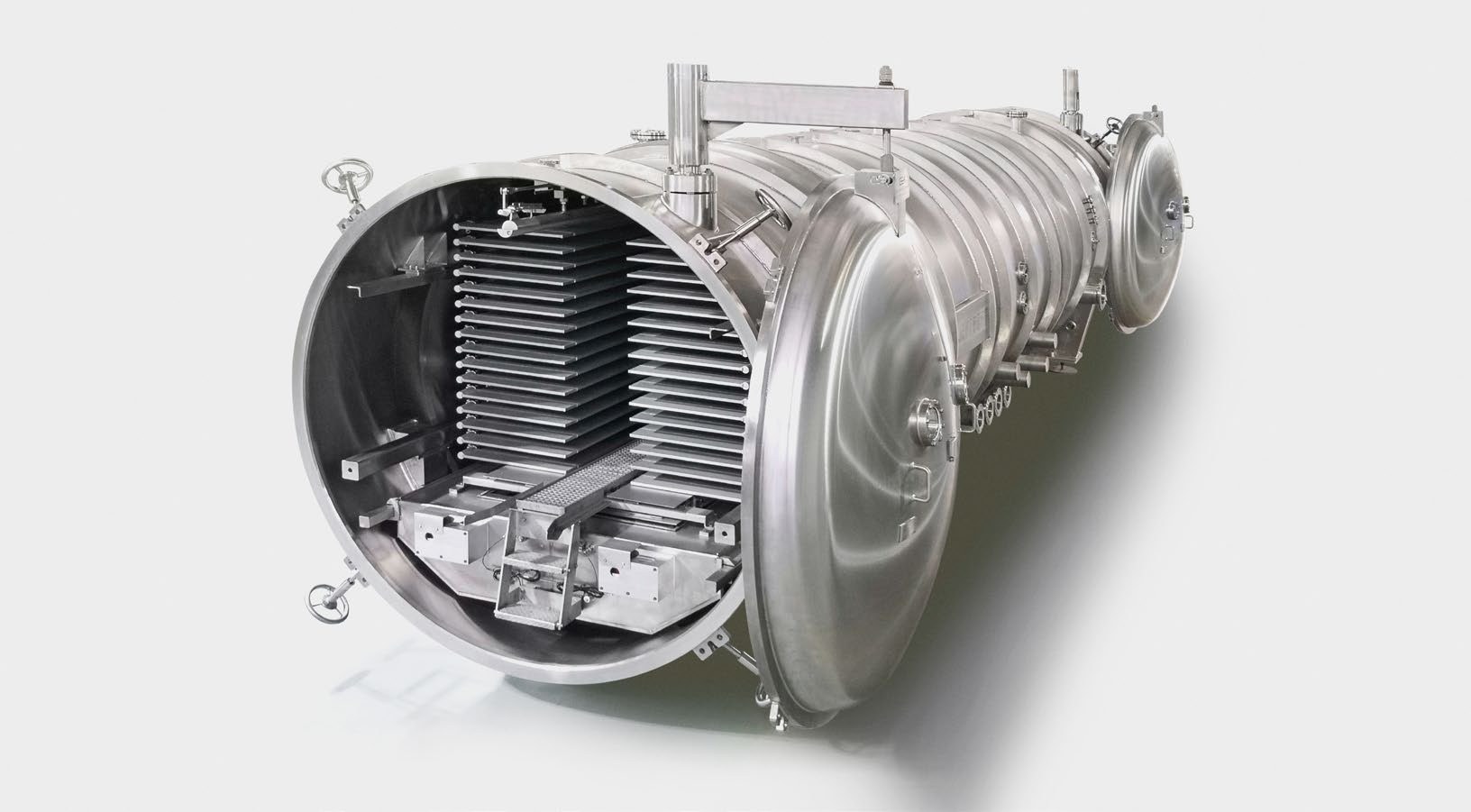
SJ-FFD-50
50 m2 shelf-area platform; approximately 500 kg/batch reference load.
View model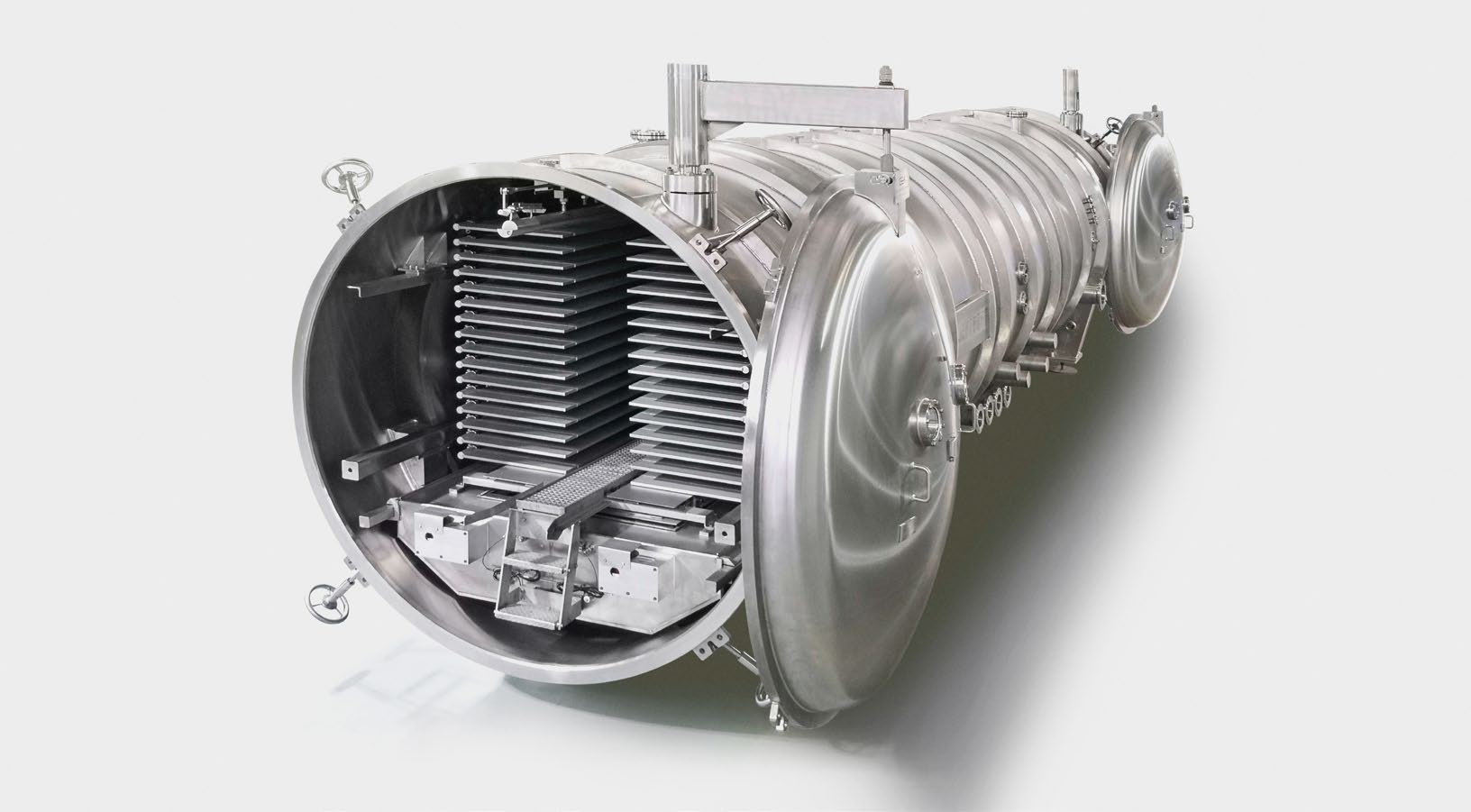
SJ-FFD-100
100 m2 platform for regular fruit, coffee, ingredient and protein production.
View model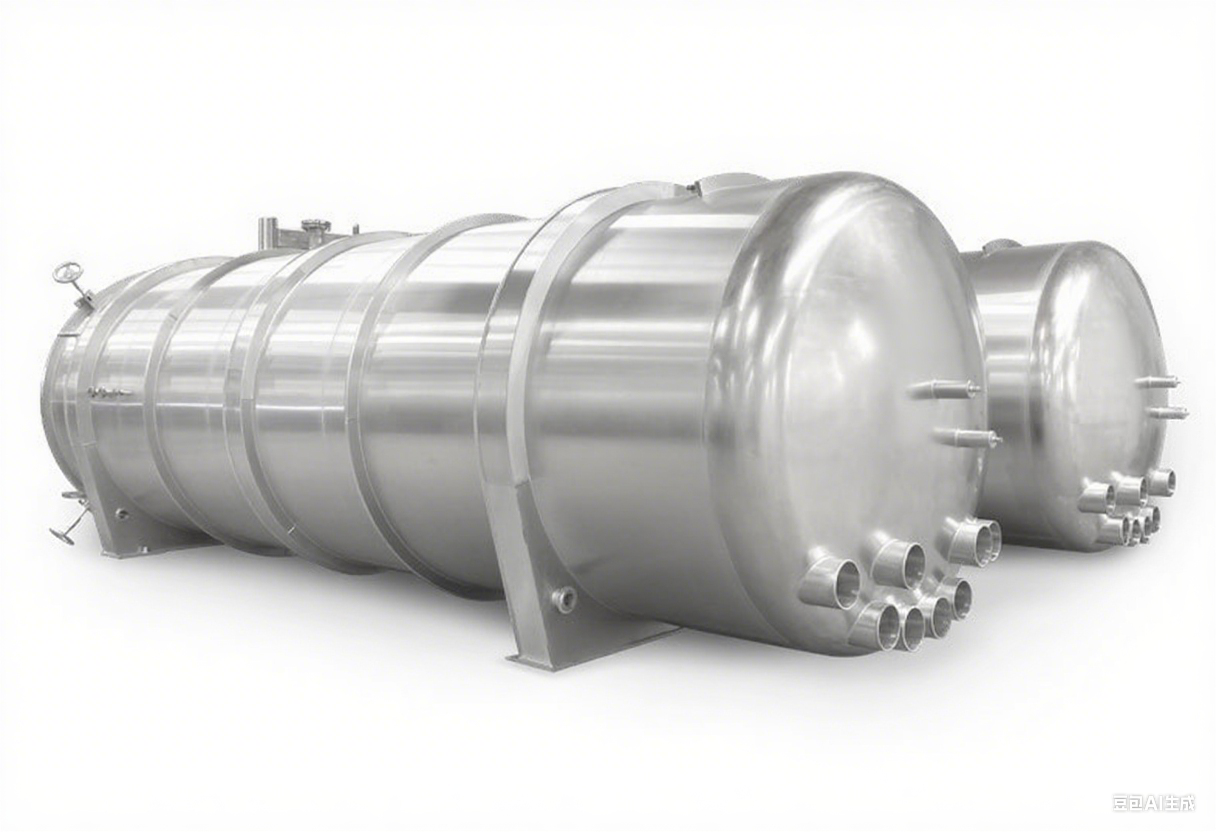
SJ-FFD-150
150 m2 platform for higher-volume, factory-scale food projects.
View model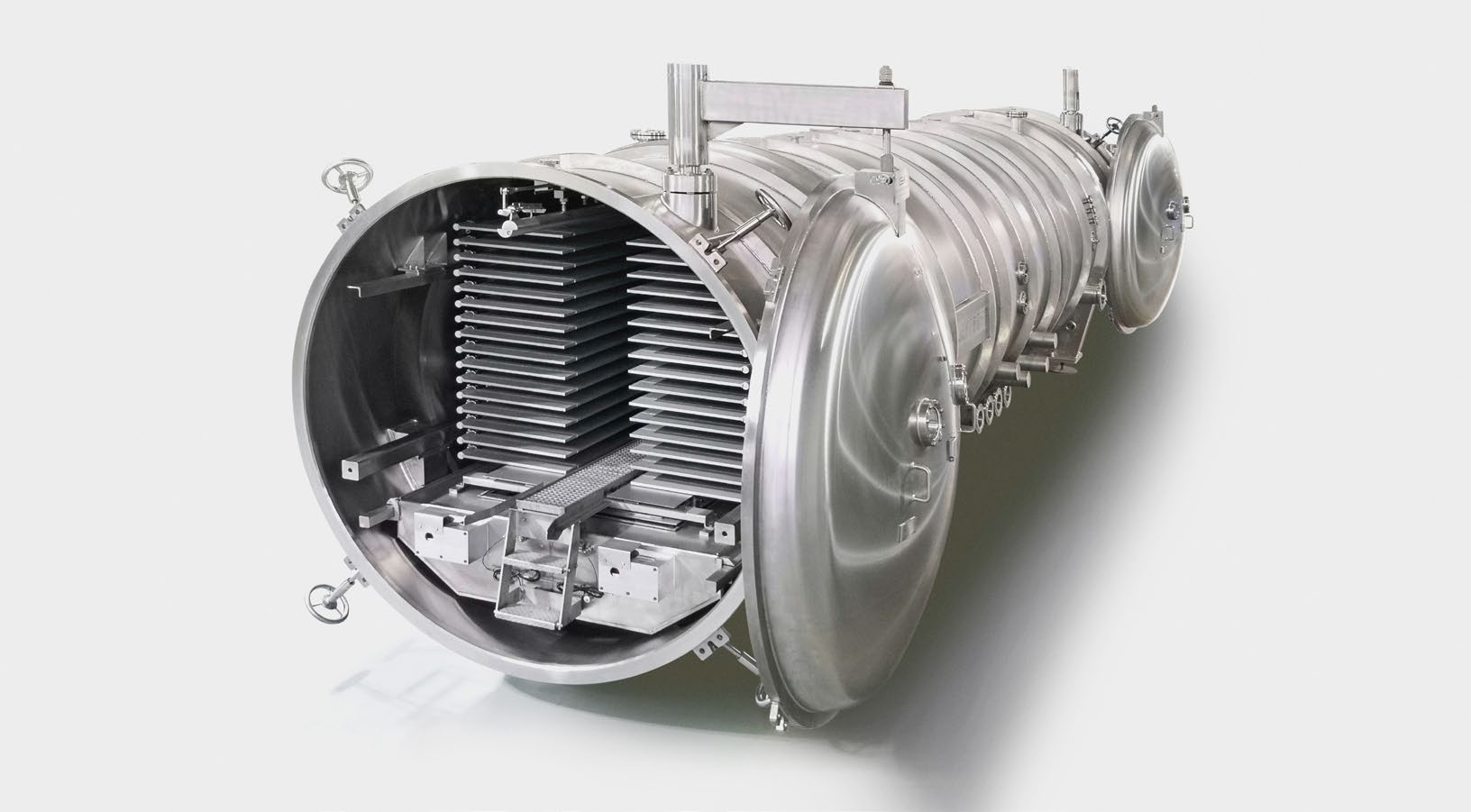
SJ-FFD-250
250 m2 platform for centralized plants and high daily throughput.
View modelChoose pre-freezing around dryer utilization and product handling
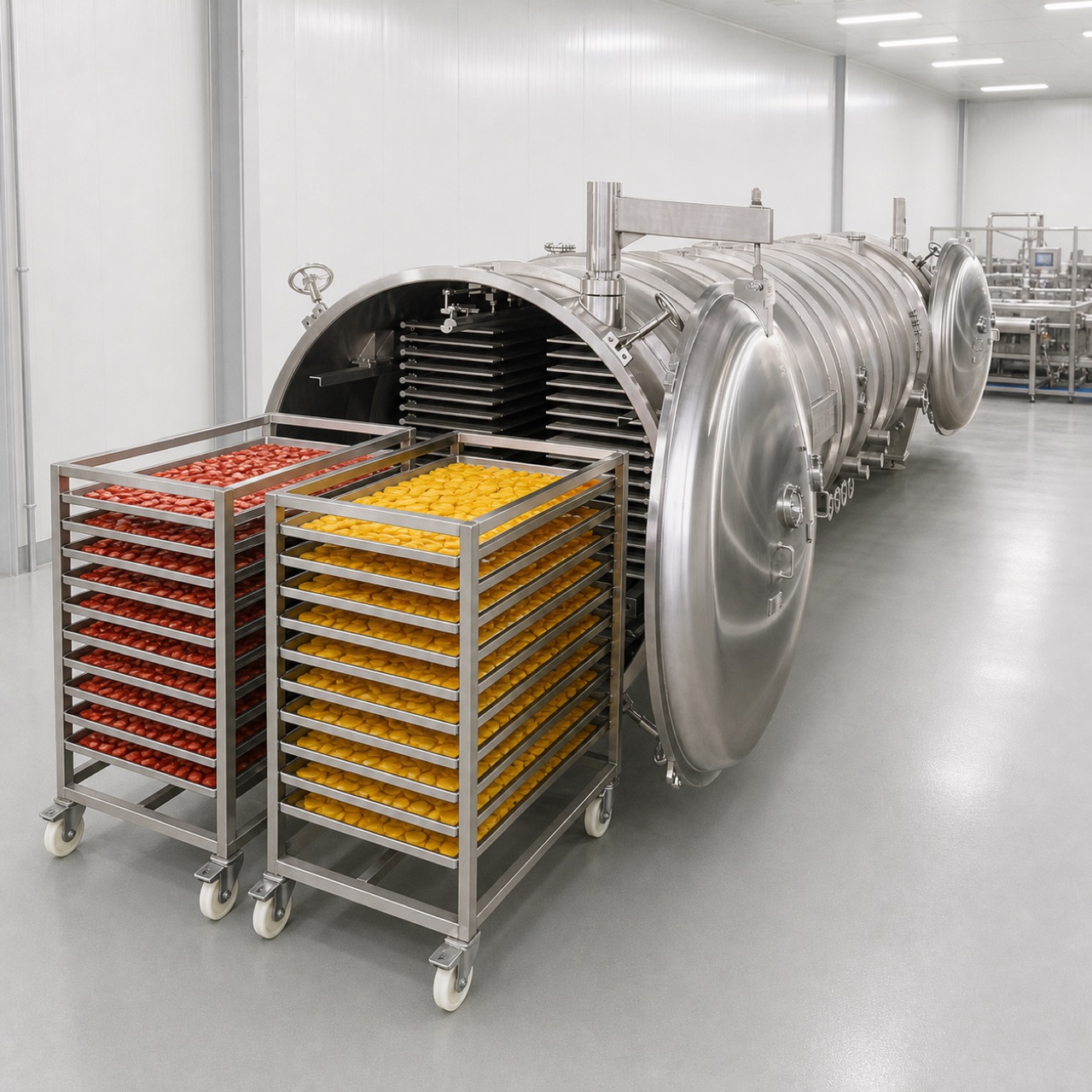
In-chamber freezing reduces transfers and can suit selected products, but it occupies the FFD while the load cools. A separate blast freezer or cold room can prepare the next cart set while the current batch dries. That may improve dryer utilization, but only if frozen storage, cart count, doors and transfer paths are sized together.
Use representative product probes during development. Room air or freezer air temperature does not prove that the center of the thickest piece or deepest tray is frozen. Transfer time must also be controlled so a frozen surface does not hide partial warming at the slowest location.
Design carts, rails and doors as one material-handling system
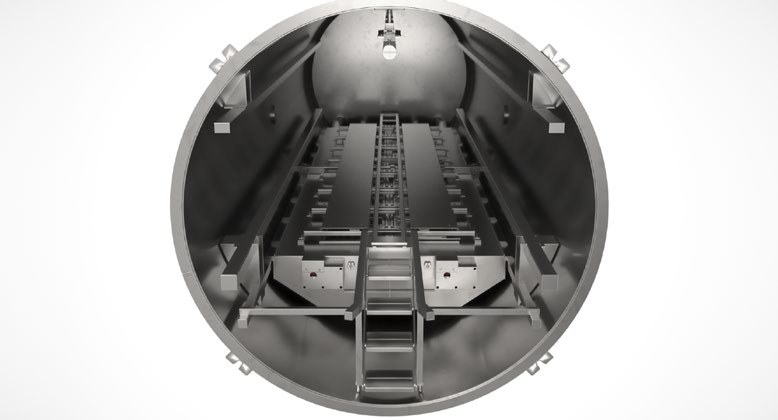
Measure the complete cart envelope, loaded weight, turning radius and rail height. Check floor level changes, thresholds, cold-room doors, FFD door swing and the path used to remove the largest service component. A cart that fits the chamber can still fail the factory layout if it cannot turn into the loading lane or be cleaned without crossing finished-product flow.
Provide a defined location for clean empty carts and another for carts returning from unloading. Where raw meat, seafood, allergens or strong aromas are processed, zoning and changeover verification should be resolved before the rail layout becomes fixed.
Issue a utility schedule, not a list of connection names
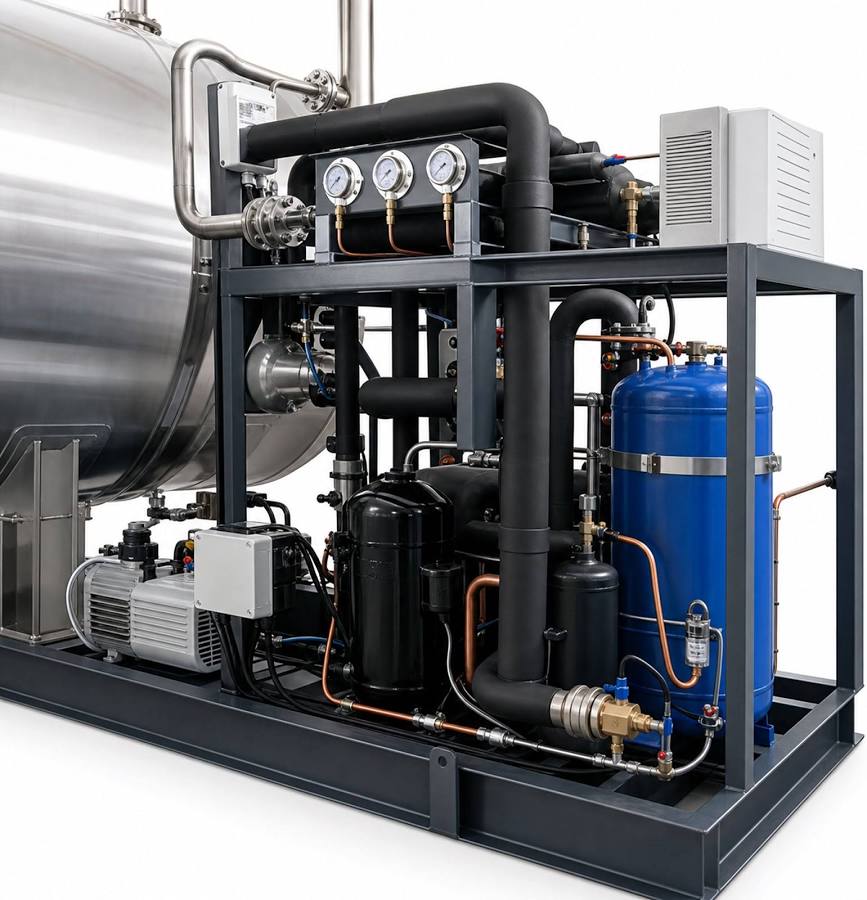
The engineering file should state required condition, peak demand, normal demand, connection size, allowable variation and responsibility for every utility. Depending on the approved configuration, this can include electrical power, cooling water, compressed air, defrost water or steam, drainage, ventilation, pump exhaust, heat rejection and clean gas.
Peak loads matter when refrigeration, vacuum and heating stages overlap or several dryers share a plant room. Leave access around compressors, pumps, valves, heat exchangers and control cabinets. A lower purchase price is not useful if maintenance later requires dismantling the food room.
Match condenser duty to removable water and peak vapor flow
Shelf area alone does not establish cycle performance. Estimate water to be removed from the actual prepared food and review when vapor release is highest. The condenser, vapor path, refrigeration and vacuum system must work as one system with operating margin. Increasing tray depth or shelf area without a matched vapor-handling basis can lengthen the cycle or narrow the usable process window.
Plan the end of the batch as carefully as the start. Defrost and drainage must restore condenser capacity before the next run. Include this time, plus unloading and cleaning, in the weekly capacity model.
Make packaging capable of receiving a complete batch
Freeze-dried food is porous and can pick up moisture quickly. Stage film, labels, absorbers or gas where validated, sealers and operators before venting the chamber. Record unload-to-seal time and define sampling so the batch does not wait in open trays while the packaging team catches up.
For U.S.-bound human-food projects, hazard analysis, sanitation, allergen controls and process controls belong to the facility's food-safety system. Equipment selection supports that plan; it does not replace it.
What to send for an FFD layout review
- Products, prepared kilograms per batch and day, incoming moisture and target endpoint.
- Piece size or liquid depth, kilograms per tray, tray and cart drawings, and planned cycle frequency.
- Pre-freezing route, frozen buffer, room dimensions, door sizes and material-flow sketch.
- Available power, cooling-water conditions, drainage, ventilation, compressed air and defrost utilities.
- Cleaning, allergen or raw-protein zoning, packaging rate and target commissioning date.
Next, compare the FFD-50 to FFD-250 capacity guide, review the industrial FFD operating sequence, or send the line inputs for an engineering review.
Authoritative references for the project team
- GEA food freeze-drying plant overview for the role of integrated food and ingredient systems.
- FDA preventive controls for human food for facility-level hazard, sanitation and allergen planning.
Frequently asked questions
Should an industrial food freeze dryer be sized from fresh kg per batch?
No. Fresh kilograms are a useful reference, but usable shelf area, kilograms per tray, removable water, cycle duration, condenser margin, cleaning and packaging rate determine practical output.
Is separate pre-freezing always better than in-chamber freezing?
No. Separate pre-freezing may improve dryer utilization, while in-chamber freezing can reduce handling. Compare product risk, transfer time, cold-room capacity, cart count and total cycle economics.
Which utilities should be confirmed for an FFD line?
Confirm the approved configuration, then document power, cooling, heat rejection, vacuum support, drainage, defrost, ventilation, compressed air and any clean gas with peak and normal demand.
Why must packaging be included in the layout?
Freeze-dried food can regain moisture quickly. Packaging must receive the full batch promptly under suitable humidity control using the selected barrier and verified seal process.