Protein Lyophilization: Formulation, Cycle Development, and Freeze-Dryer Selection
A practical guide to protein freeze drying that connects formulation risk, product temperature, primary-drying capacity, scale-up, vials, and equipment selection.
Protein Lyophilization
Short answer: a protein lyophilization process must protect the molecule during freezing, ice removal, desorption, storage, and reconstitution. Begin with formulation and container-closure studies, measure the relevant thermal behavior, define product quality attributes, and then develop shelf temperature and chamber pressure together while monitoring product temperature. Select the freeze dryer only after the vial, fill volume, batch size, critical temperature, expected vapor load, endpoint method, and scale-up pathway are understood.
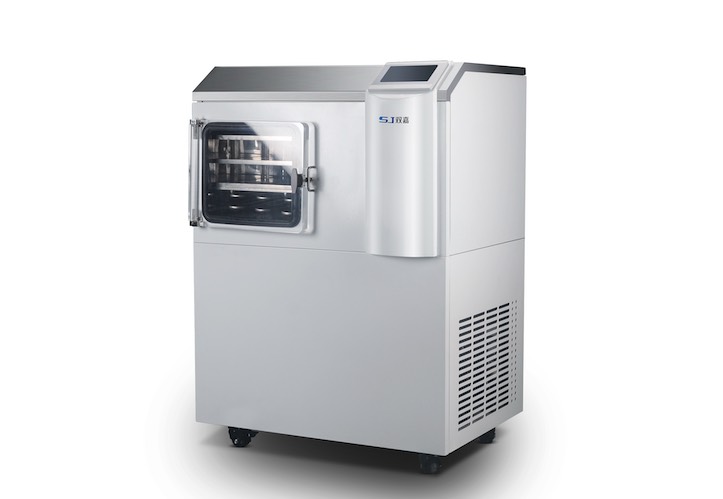
“Protein lyophilizer” and “protein freeze dryer” describe equipment used to freeze-dry formulations containing proteins such as enzymes, antibodies, antigens, or other biologics. Peptides are shorter chains and may behave differently, so a peptide cycle should not be treated as a universal protein cycle. For peptide-focused work, use the existing peptide freeze dryer selection guide and practical peptide lyophilization guide.
Define success before adjusting the freeze dryer
A visually elegant cake is useful but not sufficient evidence of protein stability. Development teams commonly define a product-specific group of critical quality attributes such as:
- assay, potency, purity, and relevant chemical degradation;
- aggregation, fragmentation, particles, or other physical instability where applicable;
- residual moisture and, where justified, solid-state or glass-transition behavior;
- cake appearance, shrinkage, melt-back, collapse, and vial-to-vial consistency;
- reconstitution time, appearance, pH, concentration, and activity after reconstitution;
- container-closure integrity, sterility-related requirements, and stability through the intended shelf life.
The cycle and the equipment must be judged against these attributes. A shorter primary-drying time has little value if it increases aggregation, cake defects, moisture variability, or reconstitution failure.
Formulation and process cannot be developed separately
Proteins may experience cold denaturation, concentration of solutes in the freeze concentrate, pH shifts, interfacial stress, dehydration stress, oxidation, and aggregation. Excipients can protect the molecule, provide structure, modify thermal behavior, or reduce interfacial damage, but their effects are formulation specific. Sugars, sugar alcohols, amino acids, buffers, surfactants, and bulking agents should be selected through analytical and stability work, not copied from an unrelated protein.
For equipment selection, formulation composition matters because it changes the critical product temperature, cake resistance, allowable drying conditions, endpoint, and final moisture target. It can therefore change both cycle time and required condenser/vapor capacity.
Measure the thermal limits that control primary drying
For amorphous systems, freeze-drying microscopy and thermal analysis may be used to understand collapse behavior and the glass transition of the maximally freeze-concentrated phase. Crystalline systems may be governed by eutectic or melting behavior. The chosen measurement, interpretation, and safety margin must be appropriate for the formulation.
Do not confuse shelf temperature with product temperature. During primary drying, heat moves from the shelf, through the vial and frozen matrix, while sublimation consumes energy. Product temperature varies with vial position, chamber pressure, shelf contact, radiation, cake resistance, and drying progress.
Build the cycle in three connected stages
Freezing
Freezing establishes ice-crystal structure and the distribution of solutes in the freeze concentrate. Cooling rate, nucleation, final freezing temperature, hold time, vial position, and optional annealing can change pore structure, primary-drying resistance, and phase behavior. Annealing is a formulation decision, not an automatic improvement.
Primary drying
Primary drying removes ice by sublimation. Shelf temperature and chamber pressure should be developed together so product temperature remains within a justified limit while vapor travels through the cake and system. The practical limit may come from product temperature, cake resistance, choked vapor flow, condenser/refrigeration duty, or pressure-control capacity.
Secondary drying
After the ice is removed, secondary drying reduces more strongly associated water. Higher product temperature often increases desorption, but the endpoint must balance moisture, stability, cake behavior, and cycle time. “Drier” is not automatically “more stable” for every protein formulation.
Match the machine to the development stage
| Project stage | Useful equipment capabilities | SJ family |
|---|---|---|
| Early formulation and analytical work | Small loads, flexible probes, reproducible freezing, condenser appropriate to the solvent and load | Pioneer laboratory freeze dryers |
| Cycle development and scale-up | Controlled shelves, pressure control, product probes, trends, partial-load stability, representative vials and stoppering options | Creator pilot lyophilizers |
| Clinical or GMP vial production | Qualified shelf performance, stoppering, cleanability, sterile interfaces, data integrity, FAT/SAT and qualification support | Command GMP protein lyophilizers |
Partial-load control matters for high-value proteins
Protein development batches are often small compared with the available shelf area. With low vapor generation, an oversized vacuum system or poorly tuned control valve may hunt around the pressure setpoint. Ask the supplier to demonstrate controllable pressure, useful sensor resolution, stable shelf-fluid control, data acquisition, and recipe execution under representative partial-load conditions.
Scale-up is a heat- and mass-transfer exercise
A laboratory recipe should not be copied into a larger protein lyophilizer without evaluating the receiving system. Relevant differences include vial heat-transfer coefficient, edge-vial radiation, shelf geometry, loading density, nucleation behavior, chamber pressure measurement, vapor-path conductance, condenser duty, refrigeration capacity, and the maximum sustainable sublimation rate.
Use representative vials, fill depth, loading pattern, probes, and formulation. Compare product-temperature profiles, pressure behavior, primary-drying endpoint, residual moisture, cake quality, and analytical results. Engineering data may support transfer, but acceptance is ultimately product specific.
Vials, stoppering, and final closure are part of the process
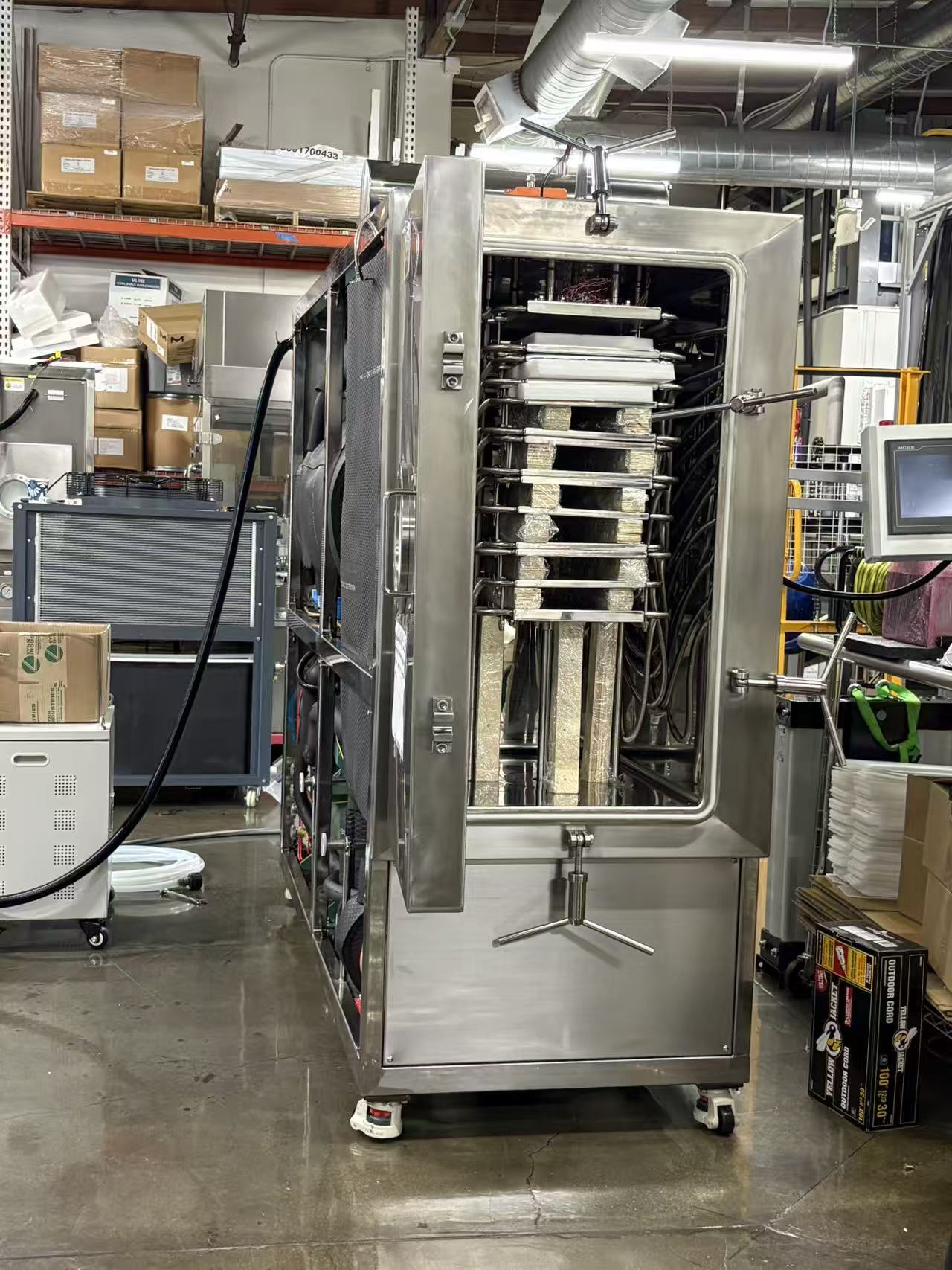
Provide vial outside diameter, height, fill volume, stopper dimensions, half-stoppered height, loading pitch, and required quantity. Verify shelf spacing, loading tools, stoppering travel and force, stopper seating, and container-closure strategy. The vial loading and pharmaceutical lyophilizer sizing guide gives a practical URS framework.
Where GLP-1 peptide projects fit
GLP-1-related molecules are peptides rather than a single interchangeable formulation. Semaglutide, tirzepatide, other research peptides, and future molecules can differ in sequence, modifications, concentration, excipients, container, critical temperatures, degradation pathways, and stability target. The equipment requirement is therefore defined by product-specific development data. A GLP-1 peptide lyophilizer still needs stable low-load pressure control, controlled shelves, appropriate condenser margin, vial compatibility, data capture, and a GMP/sterile scope when the intended use requires it; it does not create a universal recipe.
Information to send when selecting a protein lyophilizer
- protein or biologic class, concentration, solvent system, formulation stage, and containment needs;
- vial and stopper drawings, fill volume, batch quantity, loading pattern, and shelf spacing;
- known thermal data, target product-temperature limit, planned cycle range, and endpoint method;
- water or solvent load, expected batch frequency, scale-up equipment, and target production machine;
- analytical acceptance criteria, residual-moisture target, reconstitution requirements, and stability plan;
- stoppering, cleanability, sterile interface, automation, data integrity, FAT, SAT, IQ/OQ, and service scope.
For equipment mapping, compare the Creator pilot range with the Command GMP range, or submit a protein lyophilization process brief.
Technical references
Frequently asked questions
What is a protein lyophilizer?
It is a freeze dryer configured to process protein or biologic formulations under controlled freezing, vacuum, shelf temperature, and condensation conditions. Pilot and GMP systems may also provide stoppering, data, cleanability, and qualification support.
Can one freeze-drying cycle be used for every protein?
No. Protein, concentration, excipients, container, fill volume, critical temperatures, degradation pathways, residual-moisture target, and stability requirements all influence the cycle.
Why is product temperature important during protein primary drying?
Product temperature indicates the thermal condition of the formulation and should remain within a justified limit while ice is removed. Shelf temperature alone does not describe the condition inside every vial.
What matters when scaling protein lyophilization to a larger freeze dryer?
Evaluate vial heat transfer, edge effects, loading density, nucleation, pressure measurement, vapor-path conductance, condenser and refrigeration duty, maximum sublimation rate, endpoint, and product analytical results.
Is a GLP-1 peptide lyophilizer different from a protein lyophilizer?
The same equipment platform may be used, but the formulation and cycle are molecule specific. GLP-1-related peptides require their own development data, vial and load definition, controls, and regulatory scope.