Vial Height, Shelf Spacing, and Loading: A Practical GMP Lyophilizer Guide
A planning table for vial dimensions, per-shelf counts, clearance, stoppering, and flexible Command F shelf configurations.
Vial Loading
Short answer: choose a vial lyophilizer from the tallest approved vial-and-stopper envelope, not from shelf count alone. More shelves increase nominal loading area but reduce vertical clearance. For the SJ Command F 450 × 600 mm shelf platform, the table below gives current planning references for common 2R to 100R vials. Final capacity must be checked against the actual supplier drawing, stopper position, loading pitch and stoppering travel.
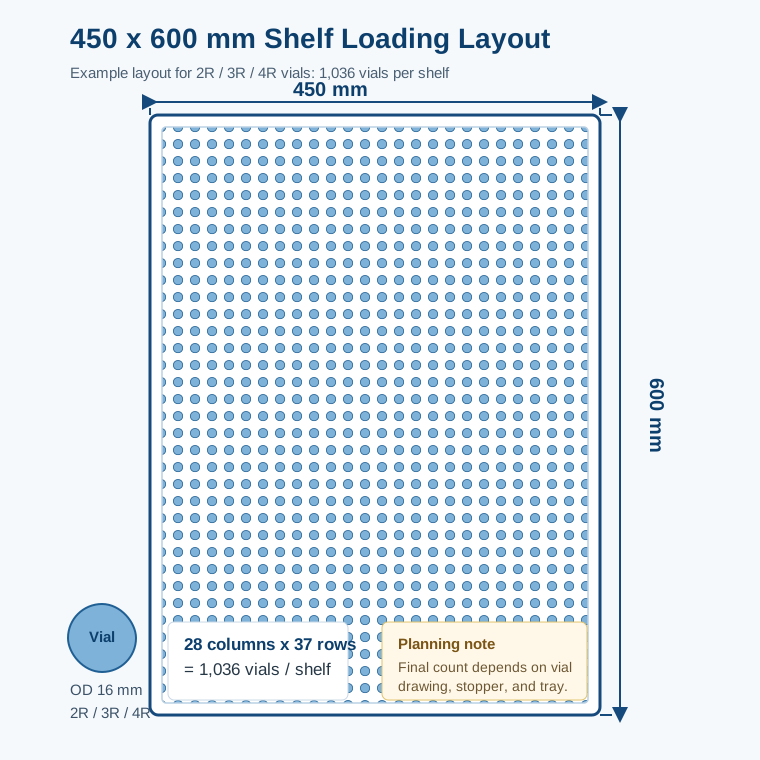
Reference vial dimensions and one-shelf capacity
| Vial format | Reference OD | Reference height | Approx. vials per shelf |
|---|---|---|---|
| 2R | 16 mm | 35 mm | 1,036 |
| 3R | 16 mm | 40 mm | 1,036 |
| 4R | 16 mm | 45 mm | 1,036 |
| 6R | 22 mm | 40 mm | 540 |
| 8R | 22 mm | 45 mm | 540 |
| 10R | 24 mm | 45 mm | 450 |
| 15R | 24 mm | 60 mm | 450 |
| 20R | 30 mm | 55 mm | 300 |
| 25R | 30 mm | 65 mm | 300 |
| 30R | 30 mm | 75 mm | 300 |
| 50R | 40 mm | 73 mm | 165 |
| 100R | 47 mm | 100 mm | 108 |
Planning basis for the current SJ shelf layout. Vial standards and supplier drawings can vary. Counts do not include every possible loss from rails, gaps, probes or automated loading.
Why vial height is not the same as shelf spacing
Catalog vial height is only the glass-container reference. The lyophilizer must also allow for the stopper in its drying position, tolerances, shelf flatness, loading tools, product-temperature leads and the vertical stroke needed for stoppering. A 45 mm vial should not be assigned to a 45 mm clear opening.
- Bare vial height from the approved drawing.
- Drying envelope with the stopper in lyophilization position and loading method included.
- Stoppering envelope and shelf movement required to close the batch.
What different shelf configurations really mean
| Shelf configuration | Nominal planning clearance | Best early use case | Important check |
|---|---|---|---|
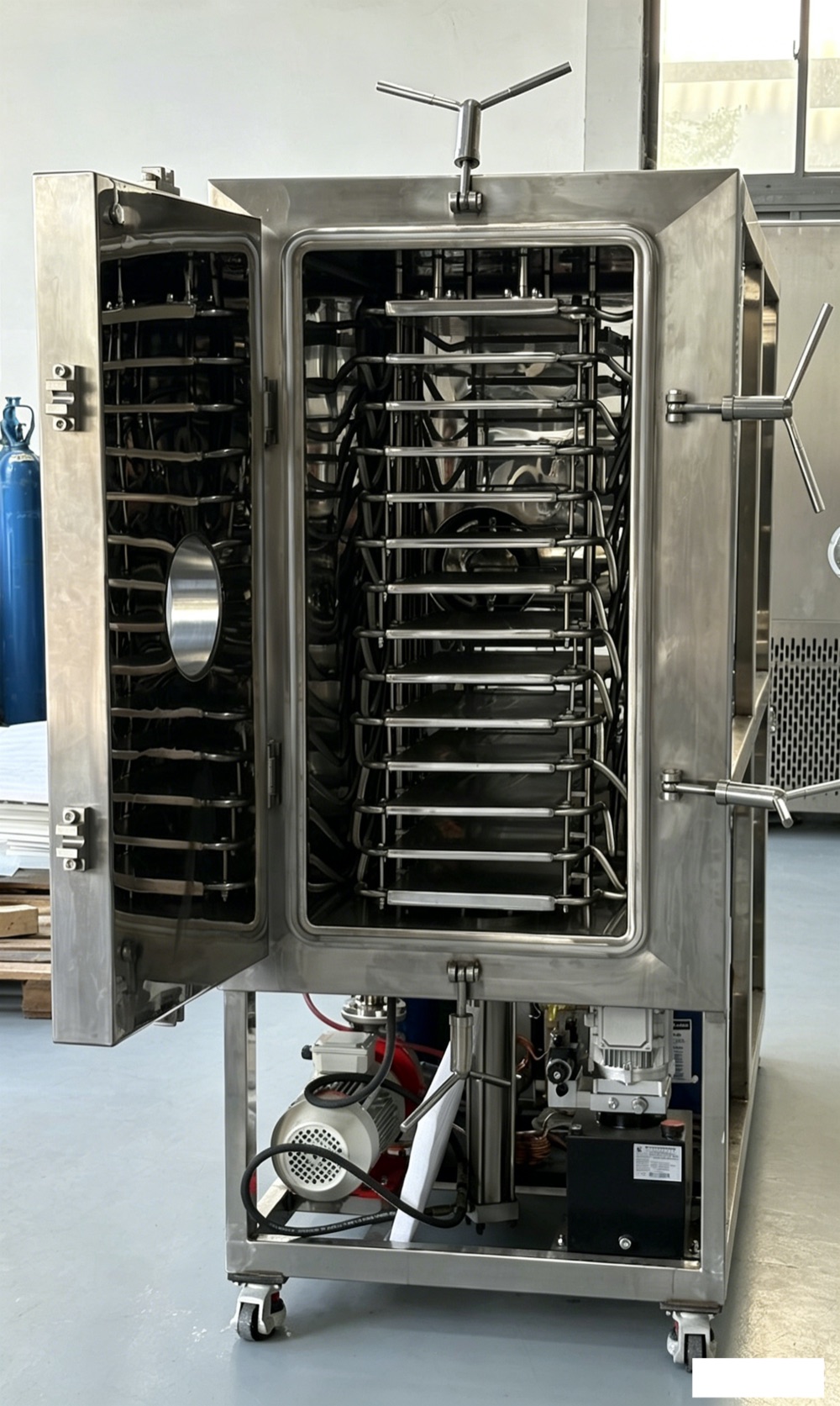
| 4 to 8 shelves | About 80 mm class | Flexible development and taller common vial formats | Confirm the specific 25R, 30R or larger drawing |
| 10 shelves | About 76–80 mm class | Higher count while retaining moderate flexibility | Check 30R height, stopper and loading clearance |
| 13 shelves | About 56 mm class | High count for short vial formats | Check the complete 4R, 6R, 8R or 10R envelope |
| 14 shelves | About 51 mm class | Very high count for short containers | Do not assume every 45 mm vial fits with stopper clearance |
| 15 shelves | About 47 mm class | Maximum short-vial density | Project-specific review; small tolerance changes matter |
These are early layout classes, not universal approvals. The more tightly shelves are packed, the more important the exact vial, stopper and mechanical tolerance become.
Why one machine may need fewer shelves
A customer may run 2R or 6R vials today and a taller 20R or 30R container next year. A dense 13- to 15-shelf configuration can maximize a short-vial batch but remove flexibility for the taller format. Fewer shelves with wider spacing may be the better investment even though the headline vial count is lower.
When a customer asks how many vials, the useful answer is a matrix: vial format, fill volume, shelf count, per-shelf count, total water load and batch pattern. The pharmaceutical freeze dryer sizing guide shows how geometry becomes condenser and URS inputs.
Total vial count is not total process capacity
Multiply the approved per-shelf count by usable shelf count, then account for lost positions. Next calculate liquid and water load:
Total liquid load = approved vial count × fill volume × formulation density.
Ten thousand 10R vials at a 1 mL fill and the same vial count at a 10 mL fill create very different ice loads. The condenser, vapor path, refrigeration and cycle must be checked from water to remove and expected peak sublimation rate, not vial count alone.
A five-line RFQ that prevents rework
- Approved vial and stopper drawings, including drying position.
- Minimum, normal and maximum fill volume for every vial family.
- Target batch count and expected partial load.
- Stoppering, backfill, loading method and cleanroom interface.
- Water or solvent load, cycle range, documentation and qualification scope.
Command F Flexible Shelf
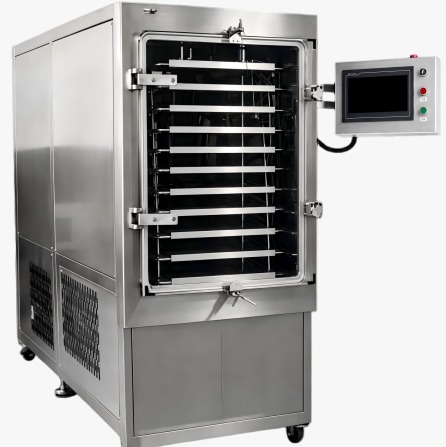
450 × 600 mm shelf platform with configurable shelf counts for research, clinical and GMP vial batches.
View loading options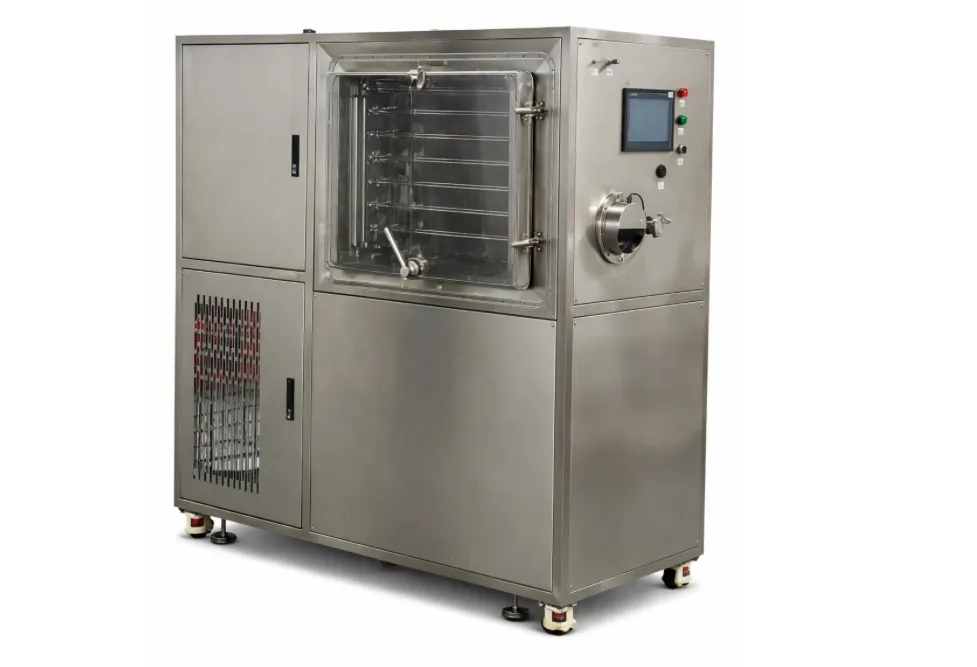
Command SJ-100F(T)
1.0 m²-class GMP pharmaceutical freeze dryer for controlled shelf processing, vacuum regulation and optional stoppering.
Compare Command modelsQuestions buyers ask
Can 2R and 3R use the same per-shelf count?
On the current layout they share a 16 mm reference OD, so the early count is the same. Final pitch follows the approved drawing.
Is 15 shelves best because it holds the most vials?
Only for short containers that fit the full drying and stoppering envelope. It can be the least flexible choice for a multi-vial facility.
Should condenser size rise when shelf area rises?
The condenser and vapor path should be matched to removable water and peak sublimation demand. The engineering calculation must support any shared condenser design.