U.S. Peptide Lyophilizer Case Study: From Vial Plan to 13-Shelf Command F
An anonymized engineering case explaining the decisions between a buyer asking for 13 shelves and receiving a configured Command F GMP peptide lyophilizer in the United States.
GMP Freeze Dryer Case Study
Case summary: a U.S. peptide customer selected a 13-shelf Command F GMP lyophilizer and received on-site installation and commissioning support in July 2026. This case explains the engineering decisions between “we need 13 shelves” and a usable equipment configuration. It does not disclose the customer's peptide, formulation, validated recipe, batch results, or proprietary acceptance data.
What is documented and what remains confidential
| Documented project fact | Not claimed or disclosed |
|---|---|
| United States customer; peptide lyophilization application | Customer identity, peptide sequence, formulation, concentration, or indication |
| Command F pharmaceutical platform with 13 product shelves | That every peptide or vial fits the same configuration |
| 450 x 600 mm shelf format used by the Command F family | That theoretical vial positions equal the customer's released batch size |
| Two working days of on-site installation and commissioning | Completion of customer IQ/OQ/PQ or process validation in two days |
| HMI, alarms, refrigeration, vacuum, shelf functions, and handover checked | Validated residual moisture, potency, purity, cycle time, or shelf life |
The customer language started with shelf count
Many U.S. pharmaceutical buyers have been trained to compare lyophilizers by the number of shelves. That is a useful first question because shelf count influences vial positions and vertical clearance. It is not enough to define drying capacity. The engineering brief had to connect shelf count to the shelf dimensions, vial and stopper height, fill volume, total water load, expected cycle, vapor path, condenser duty, refrigeration margin, stoppering, controls, and documentation.
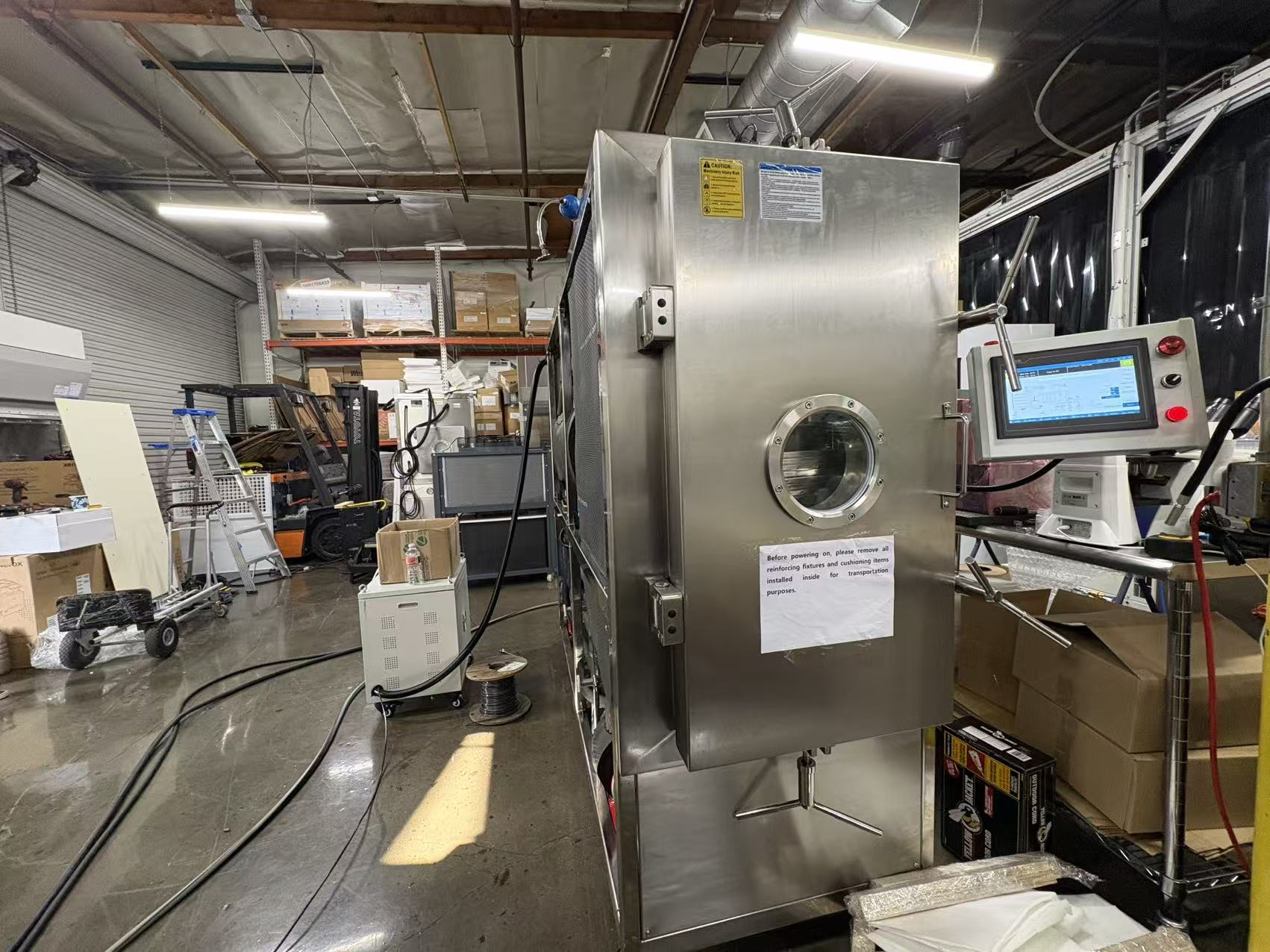
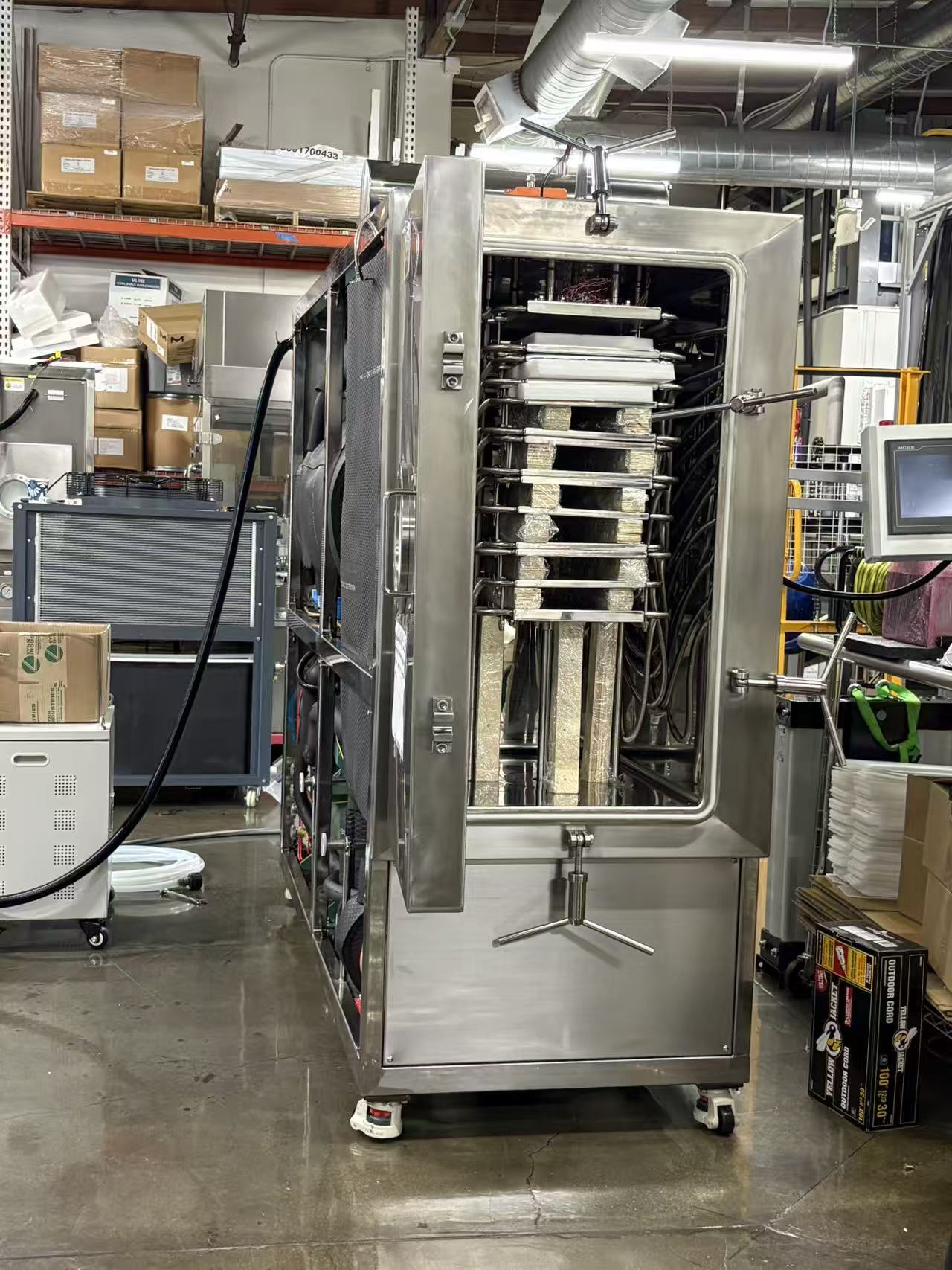
The Command F family uses a 450 x 600 mm shelf. A 13-shelf configuration provides 3.51 m2 of nominal product shelf area and approximately 58 mm shelf clearance in the current planning table. That high-density layout is intended for confirmed small-vial formats; the vial body, partially inserted lyophilization stopper, loading method, and stoppering travel must all fit.
Vial-count planning without turning an estimate into a promise
SJ Scientific uses an actual 450 x 600 mm shelf layout for early vial-count conversations. The figures below show geometric planning scenarios for common vial outside diameters. They do not state the confidential customer load and do not approve stopper or loading clearance.
| Planning vial | Common OD | Glass height | Positions / shelf | 13-shelf geometric total | Required review |
|---|---|---|---|---|---|
| 2R | 16 mm | 35 mm | 1,036 | 13,468 | Vial drawing, stopper height, edge clearance, loading method |
| 3R | 16 mm | 40 mm | 1,036 | 13,468 | Vial drawing, stopper height, edge clearance, loading method |
| 4R | 16 mm | 45 mm | 1,036 | 13,468 | Stopper and stoppering clearance become especially important |
| 6R | 22 mm | 40 mm | 540 | 7,020 | Confirm actual supplier drawing and partially stoppered height |
The per-shelf count is a layout estimate. Final batch quantity can be lower because of trays, edge clearance, loading tools, breakage allowance, probe vials, stopper geometry, or the customer's sampling plan. Fill volume then converts vial positions into total ice load.
Why 13 shelves required a matched condenser discussion
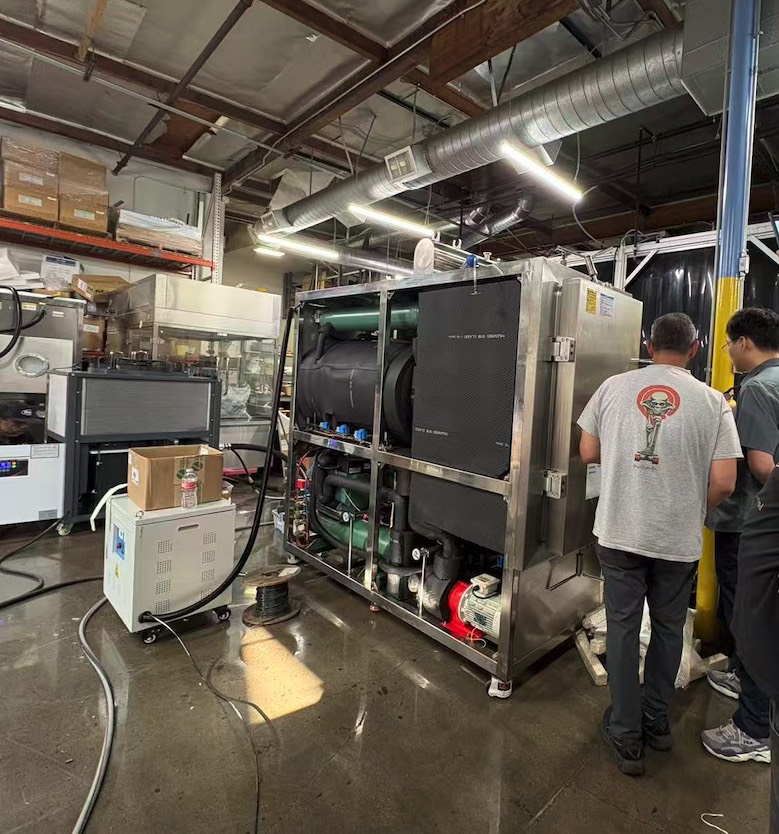
More fully loaded shelf area normally means more product water and more sublimation vapor. It would be misleading to hold condenser and refrigeration duty constant merely because the chamber enclosure appears similar. Command F configurations are therefore reviewed against the intended vial count, fill per vial, total water or solvent, expected peak sublimation rate, primary-drying target, chamber-to-condenser conductance, condenser ice capacity, and refrigeration reserve.
The confidential condenser design for this customer is not published here. The transferable lesson is the sizing method: shelf area defines potential loading surface; formulation and fill define ice mass; cycle design defines the rate at which that mass reaches the condenser. All three must agree.
From factory configuration to the U.S. site
Before travel, the teams coordinated the intended machine position, utilities, site contact, and start-up window. After international transport, the first job was inspection: remove shipping restraints, review the chamber and shelf assembly, open service access, and check visible piping, wiring, refrigeration, and vacuum components before power-up.
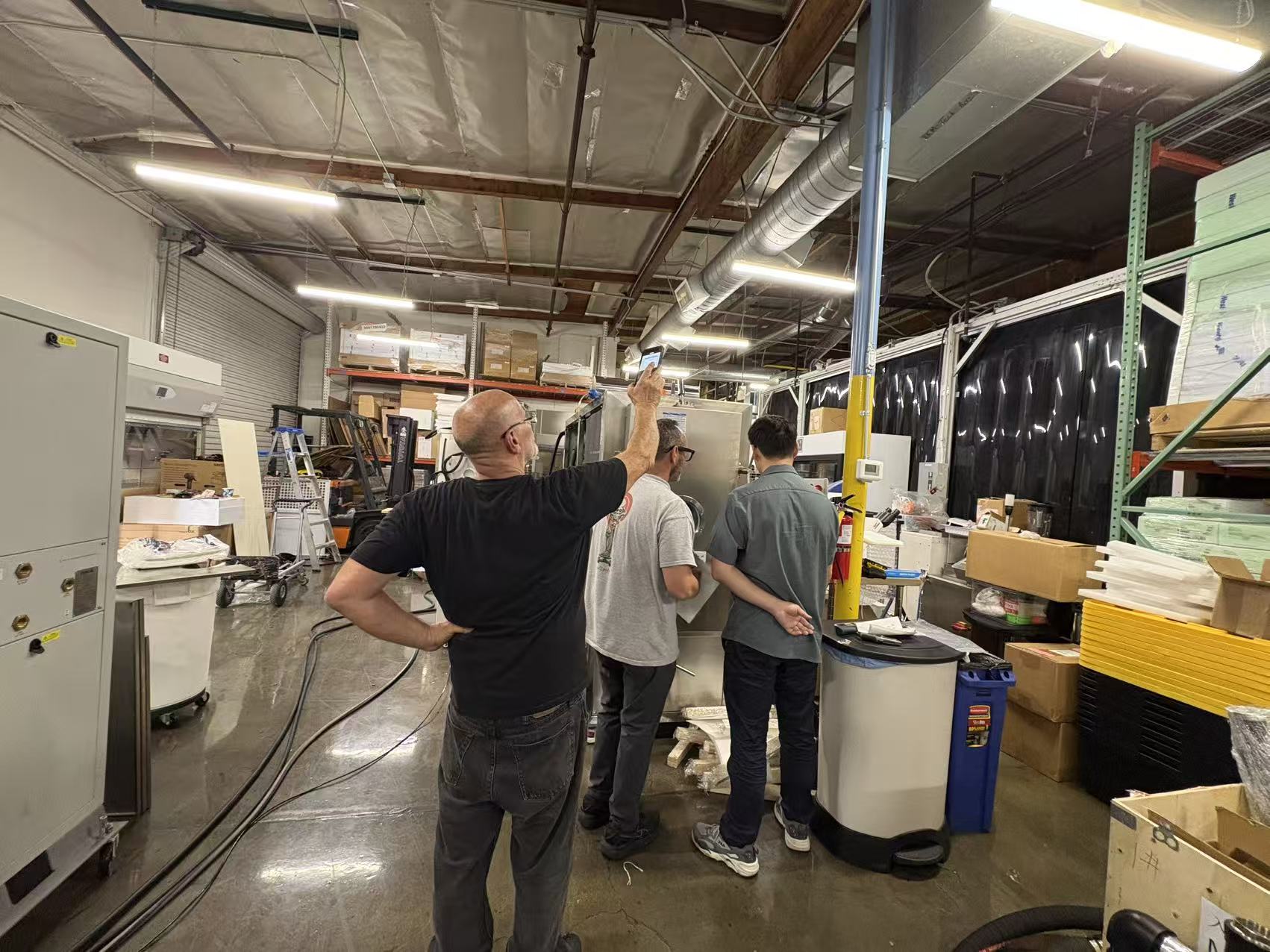
During the second working day, the SJ engineer and customer team moved through the agreed commissioning scope: HMI and operating sequence, alarms, refrigeration, vacuum, shelf-related functions, and operator handover. Working beside the same machine shortened questions that would otherwise move slowly across time zones.
Equipment readiness was not product readiness
The two-day result was equipment installation, first start-up, agreed functional checks, and handover. The customer's controlled quality work remained separate: calibration strategy, IQ/OQ/PQ, cleaning procedures, formulation development, product-specific acceptance criteria, engineering and GMP batches, analytical comparability, process validation, stability, and approved storage conditions.
This boundary matters in technical marketing. A successful vacuum test does not prove peptide potency. A uniform shelf check does not prove uniform residual moisture in every formulation. A delivered 13-shelf machine does not mean that every small vial can be loaded to the geometric maximum. Clear boundaries make the case more useful to a serious pharmaceutical buyer.
What this case changed in later buyer discussions
- Ask for the vial and stopper drawings before treating shelf count as a final configuration.
- State both per-shelf geometric positions and the reasons actual batch quantity may be lower.
- Calculate total liquid and ice load, not only shelf area or nominal condenser kilograms.
- Discuss minimum load as well as maximum load because partial-load pressure control matters in peptide development.
- Separate factory tests, site commissioning, qualification, and product validation in the scope and schedule.
- Transfer a characterized process package rather than copying the lab recipe file.
Equipment path for another peptide project
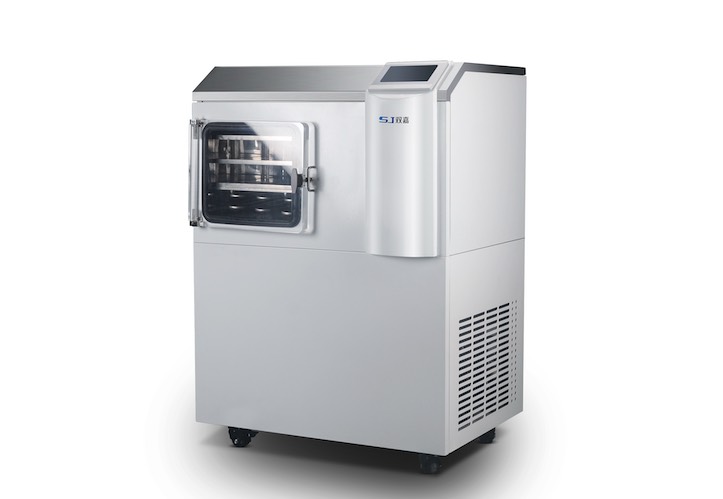
SJ-Creator 2S
Develop formulation and cycle evidence before the receiving GMP configuration is frozen.
Command F Flexible Shelf
Confirm shelf count, vial clearance, ice load, condenser duty, stoppering, controls, and validation scope together.
Information to send before requesting a similar configuration
- Peptide product stage, formulation status, solvent system, and confidentiality limits.
- Vial and stopper drawings, fill range, vial quantity, load map, and sampling allowance.
- Known Tg', collapse or eutectic limits, current recipe, product-temperature data, and endpoint method.
- Minimum, normal, and maximum load plus total liquid or ice mass per batch.
- Target cycle time, condenser margin, operating frequency, defrost, and turnaround expectations.
- Stoppering, backfill, cleaning, CIP/SIP, room interface, data integrity, FAT/SAT, IQ/OQ/PQ, and service scope.
For the complete photo-based field report, read Two Days On Site: Installing a 13-Shelf GMP Freeze Dryer in the USA. To build the formulation-neutral development package before equipment transfer, use the peptide freeze-drying protocol tutorial and the peptide freeze dryer selection guide.
Frequently asked questions
Why did the U.S. peptide customer choose 13 shelves?
The 13-shelf Command F configuration provides high small-vial loading density on 450 x 600 mm shelves. Final suitability still depends on the vial and stopper drawings, fill, ice load, loading method, and condenser design.
Does 13 shelves mean 13,468 vials in every batch?
No. That is a geometric estimate for 2R, 3R, or 4R positions using the SJ shelf layout. Actual batch quantity may be lower and must be confirmed from the vial, stopper, tray, loading, probe, sampling, and clearance plan.
Can a 13-shelf lyophilizer use the same condenser as a smaller shelf configuration?
Condenser and refrigeration duty should be matched to fill volume, total ice load, peak sublimation rate, vapor-path conductance, and target cycle. Shelf count alone is not enough to approve condenser sizing.
Was the customer peptide process validated during the two-day visit?
No. The visit covered installation, agreed commissioning checks, and operator handover. Customer IQ/OQ/PQ, formulation work, analytical acceptance, process validation, and stability remained separate controlled activities.
What should another peptide customer provide for a Command F quotation?
Provide vial and stopper drawings, fill and batch range, formulation and thermal limits, current cycle data, minimum and maximum ice load, stoppering and cleaning needs, facility interfaces, data integrity, qualification, and service scope.