Specialty food brands
Run planned batches of fruit snacks, candy, herbs, coffee ingredients, and premium prepared foods.
For a food business moving beyond recipe trials, compare saleable output per tray, batches per week and packing capacity before investing in a larger machine.
Run planned batches of fruit snacks, candy, herbs, coffee ingredients, and premium prepared foods.
Develop and produce premium treats while controlling piece size, fat, sanitation, odor, and moisture-sensitive packaging.
Generate scale-up data, process seasonal raw material, and validate products before a larger capital project.
Choose from the tray area, product water load, site power, and batch frequency rather than the model number alone.
| Model | Usable tray area | Reference fresh load | Best-fit stage | |
|---|---|---|---|---|
| SJ-30H | 2.95 m2 | 30-45 kg/batch | pilot sales, farm processing, and specialty-food production | View Model |
| SJ-35H | 3.5 m2 | 35-52 kg/batch | regular production with several food SKUs | View Model |
| SJ-50H | 4.98 m2 | 50-70 kg/batch | stable commercial batches and scale-up data generation | View Model |
Once you compare tray areas across the H Series, use these planning guides to evaluate operating budgets and product-specific loading behavior:
What variables separate baseline machine quotes from total landed equipment budgets?
Which energy figures are measured or calculated references, and how do local electricity rates affect batch running cost?
How should you manage shelf spacing, puffing volume, and batch sizing for freeze-dried sweets?
How do slice thickness and water content influence tray loading and turnaround?
How do pet-treat recipes affect loading, cleaning, and changeover planning?
Commercial output depends on standard preparation, loading, cycle records, cleaning, and packaging.
Control piece size, pretreatment, fill depth, and tray weight so each cycle starts from comparable conditions.
Track freezing, drying, unloading, cleaning, packaging, and operator time to calculate useful daily output.
Use moisture-barrier packaging, suitable oxygen control, and a dry unloading environment for stable shelf life.
Commercial sizing should connect the machine to the building, people, product flow, and sales target.
Confirm electrical supply, ventilation, heat rejection, pump placement, drainage, and service clearance.
Estimate cycles per week from product thickness, water content, tray loading, and packaging capacity.
Review food-contact surfaces, tray handling, allergen control, odor, fat, and changeover between SKUs.
Use commercial H records to size FFD shelf area, condenser load, carts, pre-freezing, and factory utilities.
Compare the complete quotation, batch kWh, operator time, packaging and cleaning. Rated kW is not kWh per batch; ask which energy figures are measured and which are calculated references.
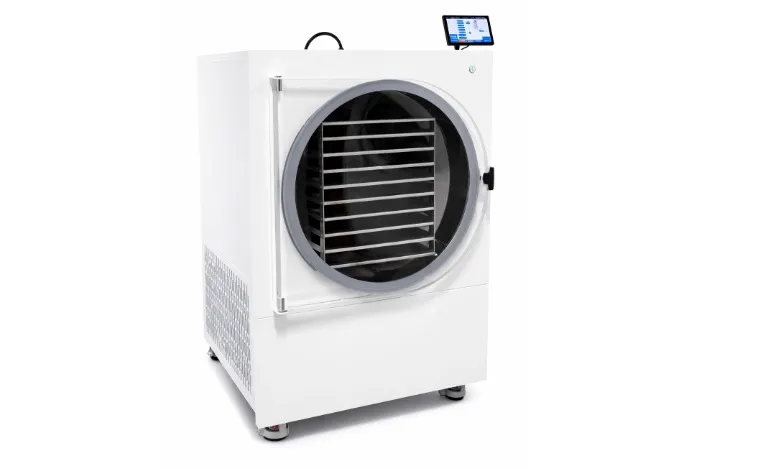
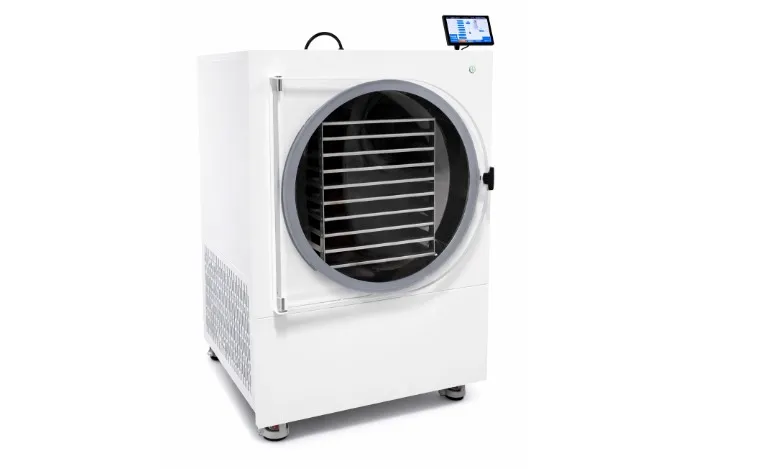
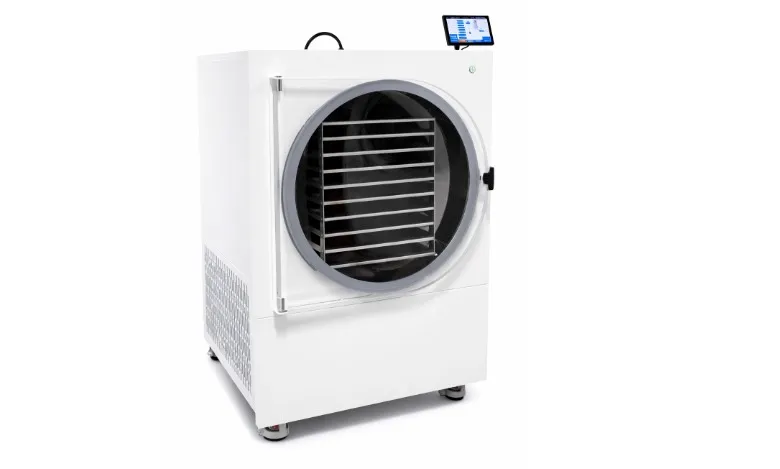
Compare the SJ-30H, SJ-35H, and SJ-50H machines by tray area, reference fresh load, condenser specification, power and installation footprint.
The main differences are reference fresh load, usable tray area, tray dimensions, condenser specification, machine size, weight, and electrical configuration.
No. It is a reference fresh-material load. Dry yield depends on the raw product moisture and the selected final moisture.
Yes, but each product needs a separate preparation, tray-loading, drying, sanitation, odor-control, and packaging plan.
Compare FFD when shelf area, loading method, daily water removal and factory workflow justify a different platform. The FFD range includes compact 5/10/20 m² models and larger cart-based systems; do not assume that every FFD requires a 500 kg batch.
Send product photos, piece or layer thickness, fresh kilograms per batch and per day, target moisture, voltage, room size, and expected operating schedule.
No. The terms describe the same low-temperature vacuum-drying equipment. Food producers usually say freeze dryer, while lyophilizer is common in technical specifications and international RFQs.
Price depends on tray area, refrigeration and condenser duty, vacuum configuration, controls, materials, voltage, shipping, commissioning and documentation. Compare quotations against the same product load and scope.
Match the proven product and weekly orders to usable tray area, batch frequency, electrical supply and packing capacity. SJ-30H, SJ-35H and SJ-50H cover 30–70 kg reference fresh loads; smaller H models can suit trials and lower demand. Confirm the actual recipe before selecting a machine.
No. Candy expansion and spacing can limit tray loading before weight does. Wet fruit adds a different water load, while pet-food recipes also require cleaning and changeover planning. Request trials with the actual product and intended loading pattern.
Check whether the number describes fresh material, ice collection or finished product. SJ-30H has a 30–45 kg reference fresh load and SJ-50H a 50–70 kg reference fresh load. These are not kg/day guarantees; use the complete cycle and packing schedule to estimate weekly output.
Send the product, tray load, target batches per week, voltage, room limits, and packaging plan. We will compare the 30H, 35H, and 50H for your workflow.