SJ Freeze Dryer FAQ: Models, Quality Checks, Customization and Support
Practical answers before choosing an SJ lyophilizer: which series fits, what the loading figures mean, and which quality and support documents to request.
SJ Buyer FAQ
A freeze dryer should be chosen around the product you want to make, not just the largest number in a catalogue. This FAQ answers the questions that help narrow an SJ enquiry to a useful model and a clear quotation. Freeze dryer and lyophilizer refer to the same drying technology; the application determines the configuration.
1. Why consider SJ as a freeze dryer supplier?
SJ has focused on freeze-drying equipment since 2012. Our company records more than 10,000 systems delivered, including laboratory freeze dryers, with customers in over 50 countries. That is company-wide experience, not a claim of 10,000 pharmaceutical production installations.
The practical advantage is a selection path across laboratory, pilot, pharmaceutical and food equipment. SJ Scientific Limited coordinates international enquiries; the quotation and manufacturing documents identify the responsible legal entities. For a new project, ask us to turn your requirements into a configuration list and an agreed acceptance scope. About SJ
2. Which SJ series should I look at first?
Start with the application and process stage. A laboratory sample, a stoppered peptide vial and a tray of food may all be freeze-dried, but they do not need the same equipment.
| Series | A useful starting point | Check before choosing |
|---|---|---|
| SJ Pioneer | Laboratory samples and routine sample preparation. | Sample containers, condenser configuration and solvent compatibility. |
| SJ Creator S / ST / Max | Formulation screening, peptide process development and controlled pilot work. | Shelf geometry, stoppering, condenser version and actual liquid load. |
| SJ Command | Pharmaceutical vial projects and production-oriented configurations. | Vial/stopper drawings, ice load, controls and required qualification scope. |
| SJ H Series | Small food batches; larger Commercial H models for recurring food production. | Fresh load, tray area, slice thickness, power supply and operating schedule. |
| SJ FFD | Industrial food projects, from compact contact-heating models to larger factory systems. | Water removal, daily throughput, loading method, utilities and factory layout. |
For food projects, also compare Commercial H models with FFD before deciding that an industrial layout is necessary. The 12-input sizing worksheet helps compare quotations on the same basis.
3. What is the difference between Creator S, ST and Max?
S/ST and Max describe different configuration choices. ST identifies a stoppering configuration; Max identifies an enhanced refrigeration configuration. Max does not automatically include a stopper mechanism. Stoppering changes usable shelf geometry on some models, so do not apply a non-stopper model's shelf dimensions or vial count to its ST version.
As one planning example, Creator 1S provides 0.12 m² of shelf area and up to 450 positions for 3 mL vials with a 16 mm outside diameter in the stated arrangement. This is a position count, not a guarantee that 450 fully filled vials can run on any cycle. Fill volume, freezing behaviour and condenser load still matter. Peptide freeze dryer selection
4. When should a peptide or pharmaceutical project move to Command?
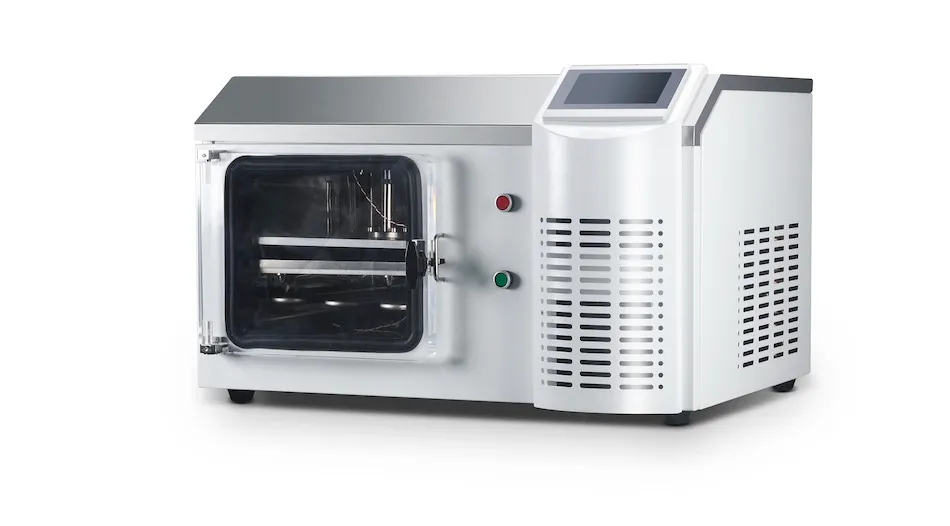
Consider Command pharmaceutical lyophilizers when production loading, stoppering, cleanroom interfaces, electronic records or qualification documentation become central requirements. Creator remains a useful starting point for formulation and cycle development. A successful pilot cycle needs a transfer review before it becomes a production recipe.
GMP suitability and 21 CFR Part 11 readiness are project requirements, not automatic certificates supplied by a machine name. Specify user access, audit trails, electronic signatures, data retention and the qualification work required. Confirm each requested function in the offered control configuration. The FDA Part 11 scope guidance concerns electronic records and signatures; it is not an FDA equipment approval.
5. Does the stated kg/batch tell me how much food I can sell each day?
No. Reference fresh load is not finished dry weight or guaranteed daily output. Peeling and trimming, initial moisture, tray loading, drying endpoint and packing losses all affect the saleable result. Daily planning must also include loading, pre-freezing where required, unloading, defrost and cleaning.
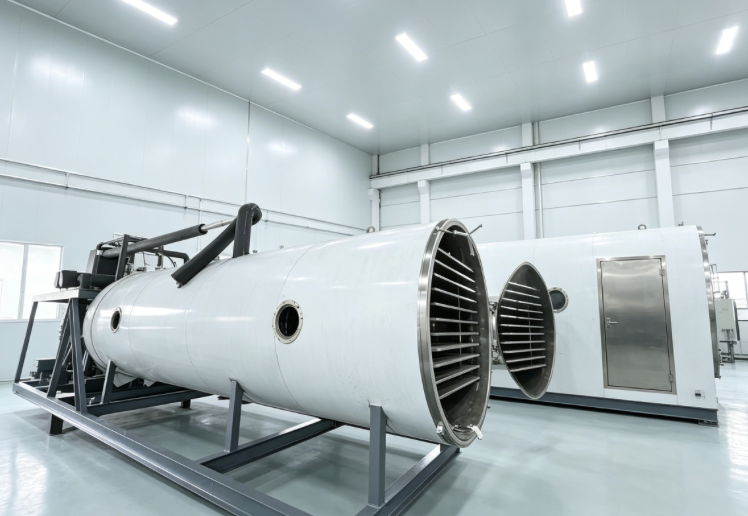
For example, FFD-10 is listed at 10 m² with about 100 kg/batch of reference fresh load. Whether your product suits that loading requires its thickness, moisture and water-removal requirement. FFD-5/10/20 use a compact contact-heating configuration; larger FFD factory systems have a different loading and heating arrangement. Compare the workflow as well as shelf area. H versus FFD selection guide
6. How much electricity will my freeze dryer use?
Rated or installed power in kW is not measured energy per batch in kWh. Refrigeration, heating and vacuum equipment do not necessarily run at their rated input throughout the cycle. Ask for a defined measurement basis before comparing an energy claim.
A useful trial records kWh per completed batch and kg of water removed, together with material, load, thickness, endpoint and ambient conditions. State whether pre-freezing, cooling utilities and defrost are included. Without matching these conditions, a lower advertised number may simply describe a different test.
7. Can SJ customize a Command or FFD freeze dryer?
Yes. Command and FFD support project-specific customization review. Depending on the platform, the review can cover shelf and tray layout, vial or cart loading, materials, control functions, refrigeration interfaces, site utilities and documentation.
Send vial/tray drawings and a simple room layout early. Distinguish standard equipment, priced options, proposed engineering changes and items supplied by the customer. A requested feature becomes part of the order only after its feasibility and scope are agreed. H electrical/configuration choices should also be checked model by model, rather than assumed from another H machine.
8. How can I assess build quality before the equipment leaves China?
Use a written acceptance plan with records tied to your machine. Agree what will be checked: model and serial number, materials and supplied components, wiring and protective earthing, specified vacuum performance, shelf-temperature performance, alarms, interlocks and the selected control functions. Where a calibration or loaded trial is required, define it in the scope.
For a factory acceptance test (FAT), agree the load condition, instruments, acceptance criteria and records before testing. A photo of a stainless-steel chamber is useful for inspecting construction, but it does not demonstrate a validated cycle. Our supplier evaluation guide and food equipment RFQ/FAT guide explain which evidence to request.
9. What UL-standard test and CE documentation is available for H models?
SJ holds model-specific Waltek electrical safety test reports with a recorded Pass result against the stated UL 60335 standards for these tested configurations:
- SJ-05H Smart: 115 V, 60 Hz, 1300 W.
- SJ-08H Smart: 220–230 V, 60 Hz, 2200 W.
- SJ-10H Smart: 220–230 V, 60 Hz, 2300 W.
These are concrete due-diligence documents, not a blanket claim that every SJ machine is UL Listed. Testing to a UL standard and authorization to use a UL certification mark are different; UL explains that distinction.
H-series CE-related electrical safety documentation is also available for listed models. Match the exact model, electrical configuration and document scope, then confirm the destination-market documentation needed for your order. Do not infer every CE requirement from a single safety certificate. Ask us for the applicable report information when requesting a quotation.
10. What support should be included in the quotation?
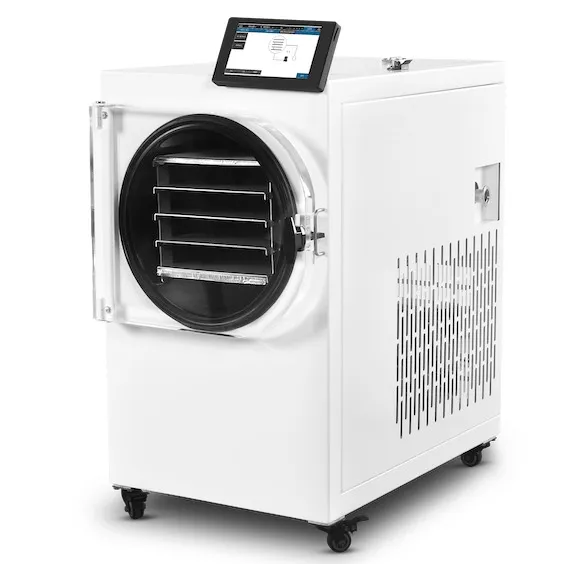
Ask for a written scope covering the manual, electrical information, operator training, recommended spare parts, warranty terms and the route for technical support. For Command and FFD projects, also agree installation responsibilities, utility readiness, commissioning and any on-site or remote assistance.
Factory testing, commissioning and product/process validation are different activities. Specify FAT/SAT and IQ/OQ documentation or assistance where required; do not assume PQ, a fixed response time or local on-site service is included. If a fault occurs, provide the serial number, alarm message and cycle log so the support team can identify the right next step.
11. Can a sample trial show whether my product will freeze-dry well?
A representative trial is more useful than a generic promise of a perfect result. Discuss sample-trial availability and acceptance targets before ordering. For food, record prepared load, piece size, endpoint and packaging needs. For peptides or proteins, define formulation, fill, residual moisture, reconstitution and any product-specific analytical checks needed.
Appearance is one observation, not proof of potency, microbiological safety or shelf life. Keep the recipe, cycle and test results together so that scale-up has an evidence base. See drying endpoint checks for the distinction between a promising appearance and a measured endpoint.
12. What should I send for a useful model recommendation and price?
Start with four things: your material and intended use; target batch or daily output; container dimensions or product thickness; and destination/power supply. For vials, include diameter and fill volume. For food, say whether the quantity is prepared fresh material or finished dry product. Mark unknown values as unknown.
Add any documentation, stoppering, cleaning or installation requirements and your project stage. We can then discuss a primary option and, where useful, an alternative. Compare the configuration, pump and cooling scope, freight terms, documents and services alongside the price, rather than comparing model names alone.