Freeze Dryer Sizing Worksheet: 12 Inputs for an Accurate Quote
A practical worksheet for defining material, water load, product geometry, throughput, utilities, compliance and project scope before choosing a freeze dryer.
Freeze Dryer Selection
Short answer: an accurate freeze dryer quotation needs more than a model name, shelf area, or kilograms per batch. The supplier must understand what is being dried, how much water or solvent must be removed, the product geometry, required daily throughput, installation utilities, and the documentation or compliance boundary.
This worksheet gives laboratory, biotech, pharmaceutical, food, and industrial buyers one comparison basis. Send the same inputs to every freeze dryer or lyophilizer manufacturer, then compare what each quotation includes, excludes, and assumes.


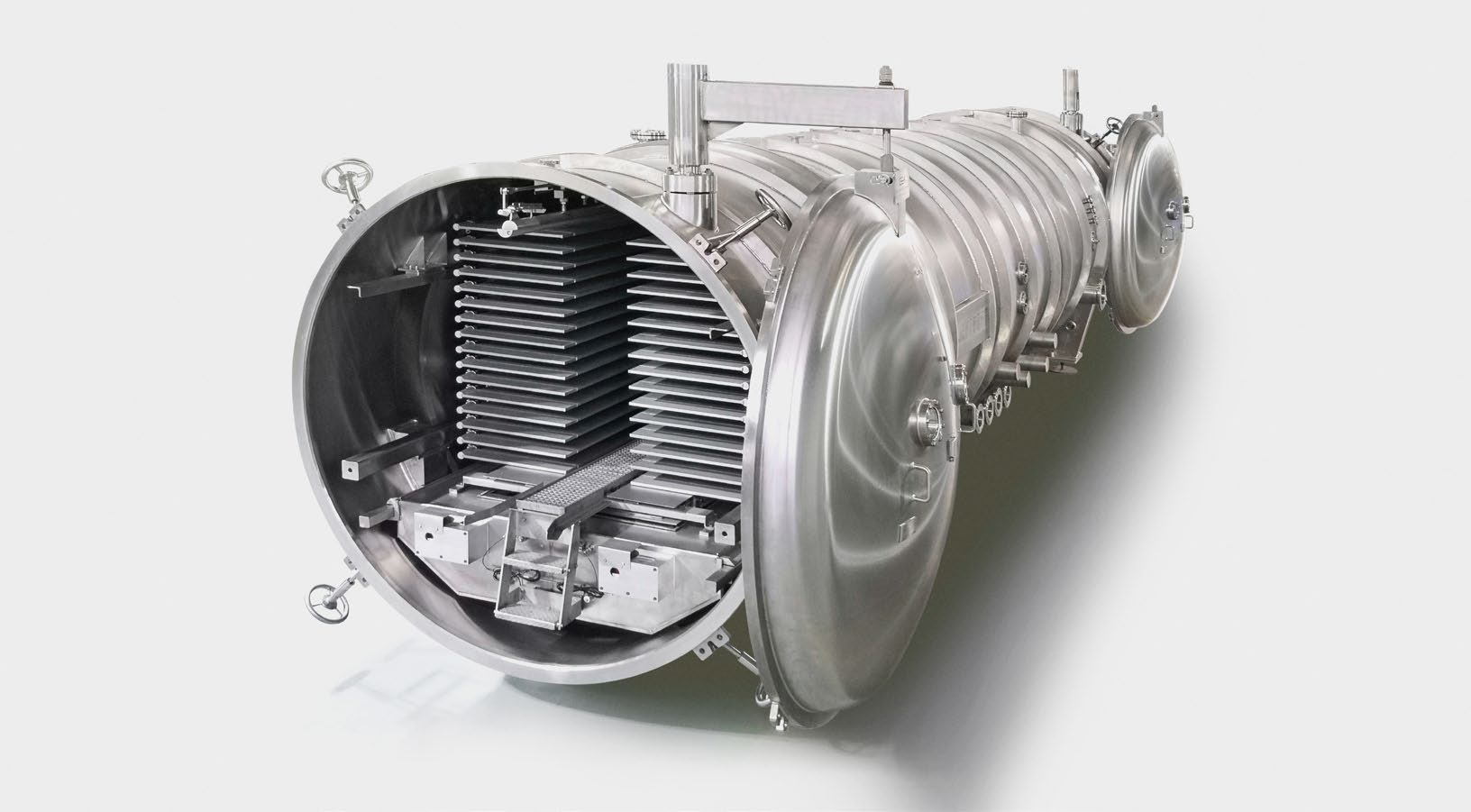
The 12 inputs
| Input | What to provide | Why it changes the machine |
|---|---|---|
| 1. Product or formulation | Food type, peptide, protein, vaccine, API, culture, diagnostic, extract, solvent, excipient, salt, acid, or volatile component. | Changes corrosion risk, collector temperature, pump protection, cleaning, containment, and product-contact requirements. |
| 2. Container or loading format | Vial drawing and stopper, flask volume, bulk tray, food tray, cart, bag, or other holder. | Defines shelves, spacing, usable area, stoppering, loading access, and heat-transfer path. |
| 3. Prepared load per batch | Liquid fill volume, vial count, kilograms of prepared food, or total sample volume. | Connects the commercial batch target to physical shelf and chamber capacity. |
| 4. Water or solvent to remove | Initial solids or moisture, target moisture, and estimated kilograms or liters removed. | Sets condenser ice duty and helps prevent a large shelf area from overloading vapor capture. |
| 5. Product geometry | Vial fill depth, tray fill depth, slice thickness, piece size, kilograms per tray, and spacing. | Mass-transfer distance strongly affects drying time and product temperature. |
| 6. Freezing method | In-chamber freezing, external freezer, shell freezing, pre-freeze temperature, hold time, and transfer method. | Changes equipment occupation time, ice structure, loading workflow, and factory layout. |
| 7. Critical process limits | Collapse or eutectic limit, solvent freezing point, target product temperature, pressure window, or existing cycle. | Defines shelf and collector temperature options, sensors, pressure control, and cycle-development margin. |
| 8. Product endpoint | Residual moisture, water activity, reconstitution, appearance, potency, stability, or texture requirement. | Determines how completion is judged and whether secondary drying or endpoint tools need special attention. |
| 9. Throughput | Batches per day or week, kg/day, vial output, loading time, defrost, cleaning, unloading, and packaging window. | Separates nominal batch capacity from a workable production schedule. |
| 10. Installation site | Country, voltage, phase, frequency, cooling water, compressed air, drainage, ventilation, ambient condition, doorway, and room size. | Prevents a suitable process machine from becoming an unsuitable site installation. |
| 11. Hygiene and compliance | Food cleaning plan, GMP URS, cleanroom grade, CIP/SIP, sterile filtration, RABS or isolator, data integrity, and validation needs. | Changes chamber, piping, automation, interfaces, documents, tests, and project cost. |
| 12. Commercial boundary | Destination, target date, Incoterm, packing, FAT, SAT, commissioning, training, spares, warranty route, and required documents. | Makes quotations comparable and exposes work that might otherwise appear after the purchase order. |
Route the requirement to the correct product family
| Work | Recommended SJ path | Main sizing language |
|---|---|---|
| Flasks, samples, and laboratory preparation | Pioneer laboratory freeze dryer | Liters of ice, sample type, flask or tray format, collector temperature |
| Formulation, cycle development, and small batches | Creator pilot freeze dryer | Shelf area, vial format, fill depth, pressure control, scale-up evidence |
| Peptide development and production | Peptide freeze dryer route | Critical temperature, low-load control, stoppering, stability, data scope |
| Sterile vial, biologics, vaccine, or API production | Command GMP freeze dryer | Vial count, shelf map, condenser duty, cleanroom, automation, qualification |
| Small and commercial food batches | H Series food freeze dryer route | Prepared load, tray area, thickness, packaging, weekly production |
| Factory-scale food production | FFD industrial food freeze dryer | Water removed, kg/day, pre-freezing, carts, utilities, sanitation, layout |
How to compare energy and capacity claims
Ask for the calculation boundary. Installed electrical power is not average energy consumption. Fresh food weight is not dry-product output. Shelf area is not condenser capacity. A useful comparison states kWh per batch or per kilogram of water removed, includes or excludes external pre-freezing and utilities, and uses the same product, loading thickness, endpoint, ambient condition, and operating schedule.
How to compare a China freeze dryer manufacturer
Check the legal contracting entity, manufacturing entity, drawings, major components, control description, test plan, document index, packing, warranty route, and technical-change responsibility. Ask for evidence linked to a comparable machine rather than relying on a generic factory photo or a certificate image without scope.
SJ Scientific has developed freeze-drying equipment since 2012. Company-wide delivery figures include more than 10,000 laboratory and production systems across more than 50 countries. Those figures show operating history; the approved URS, quotation, drawings, FAT scope, and project documents remain the evidence for a specific machine.
Before sending the RFQ
Mark unknown inputs as unknown instead of guessing. An engineer can identify what needs a sample trial, calculation, drawing review, or site confirmation. For a manufacturer-level review, use the China freeze dryer and lyophilizer manufacturer page and the manufacturer evaluation guide.
Frequently asked questions
Is a lyophilizer the same as a freeze dryer?
Yes. Lyophilizer is the term used more often in laboratory, biotech, peptide, and pharmaceutical work; freeze dryer is common across laboratory, food, pharmaceutical, and industrial markets.
Why is kilograms per batch not enough for sizing?
The machine removes water or solvent. Two products with the same fresh weight can have different moisture, thickness, vapor load, cycle time, and finished dry weight.
How should energy consumption be compared?
Compare the same product, load, thickness, endpoint, ambient condition, and operating schedule. State whether the number includes pre-freezing, cooling utilities, defrost, cleaning, and packaging.
What information is needed for vial lyophilizer sizing?
Provide vial and stopper drawings, fill volume, vial count, shelf spacing, stoppering requirement, formulation limits, total ice load, cycle, cleanroom interface, controls, and validation scope.
What information is needed for food freeze dryer sizing?
Provide prepared fresh load, initial and target moisture, piece size or fill depth, kilograms per tray, pre-freezing, kg/day, cleaning, packaging, utilities, and factory layout.
What if some process inputs are unknown?
Mark them unknown. The engineering review can identify which inputs require a sample trial, calculation, drawing review, or site confirmation before the final configuration.