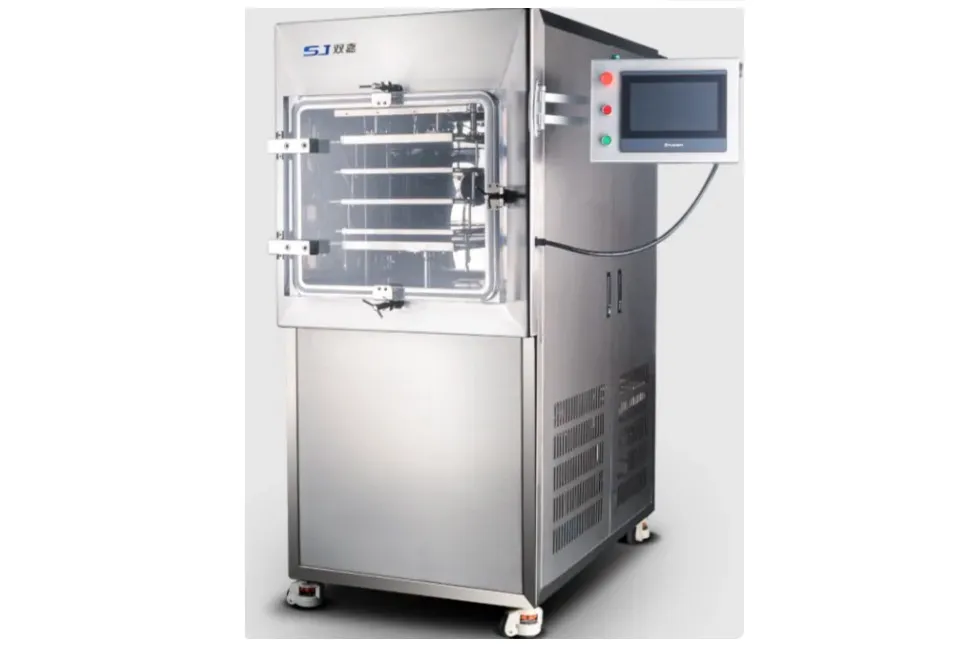
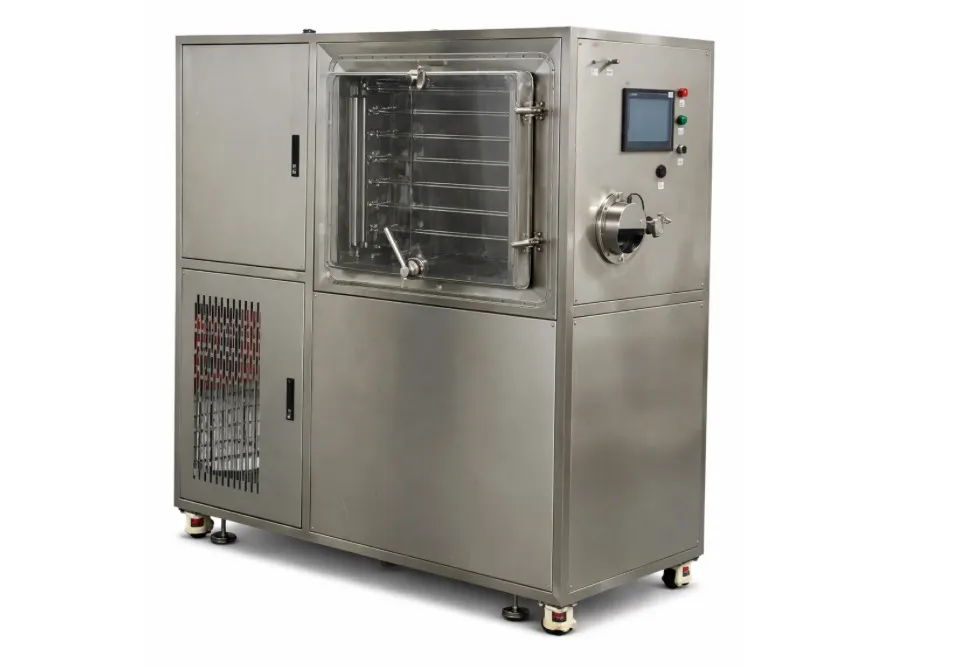
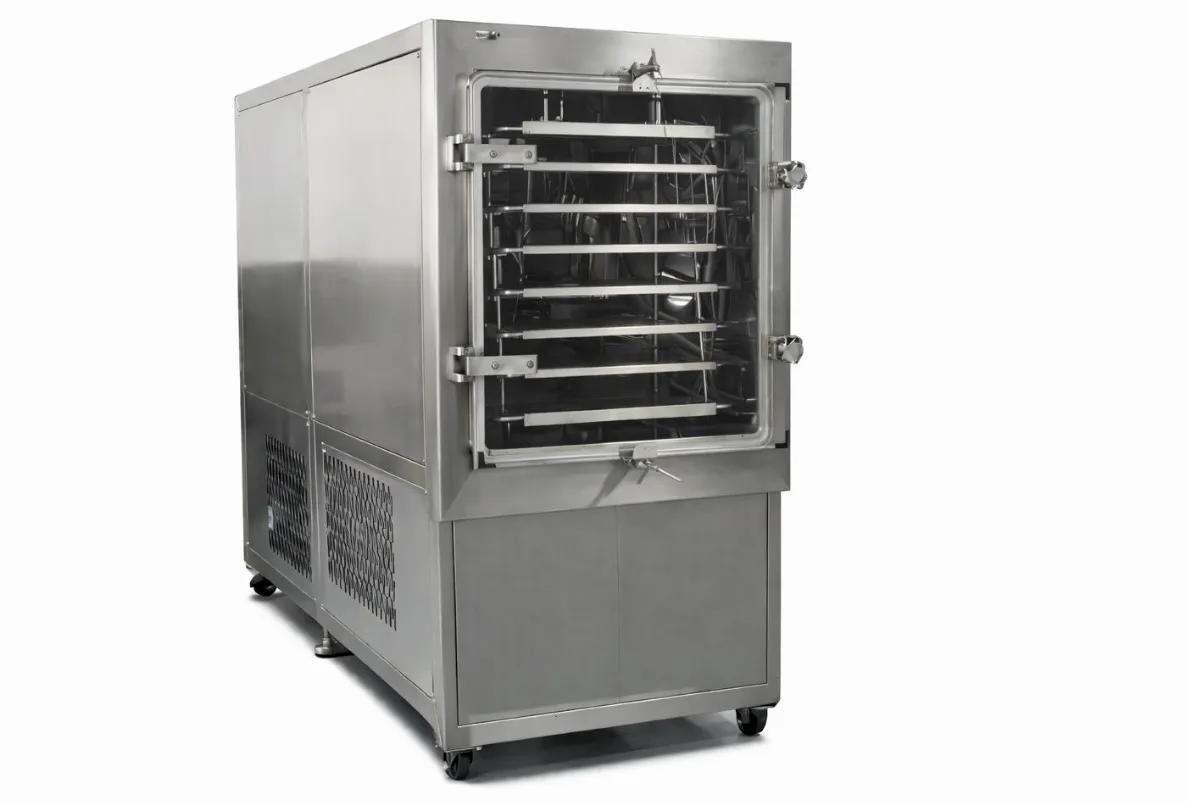
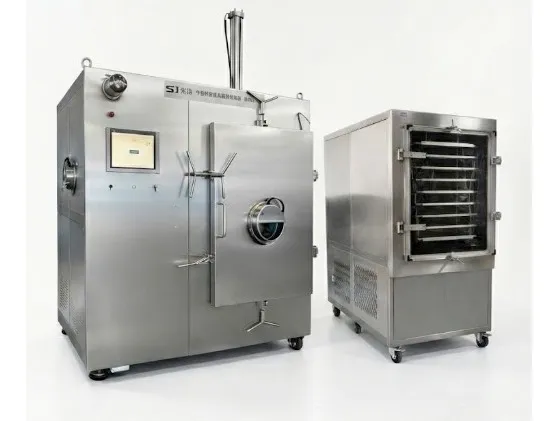
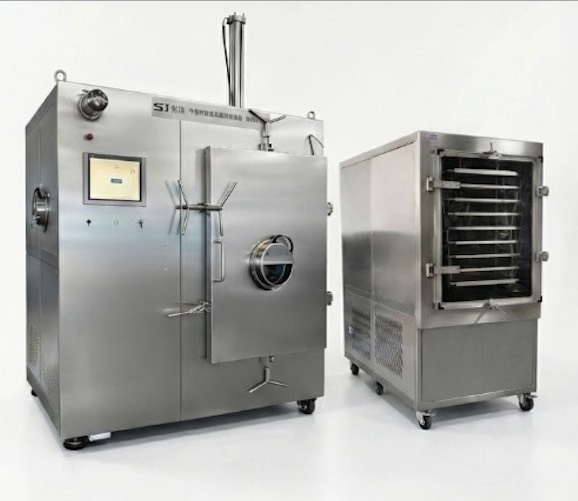
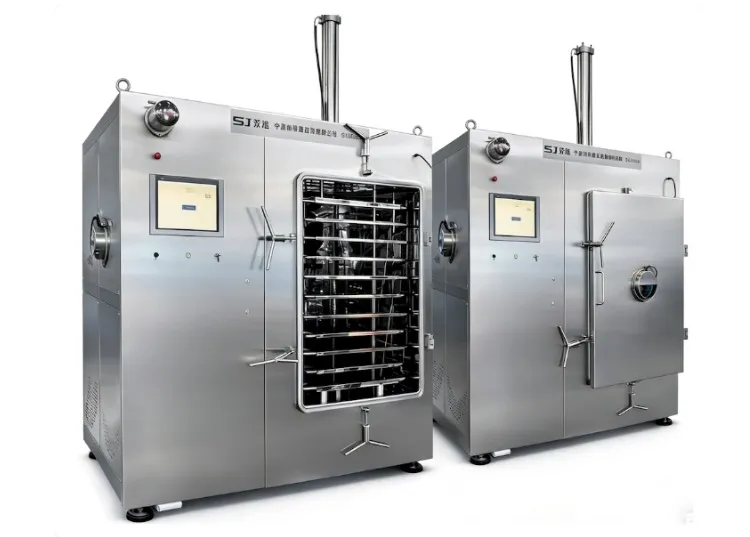
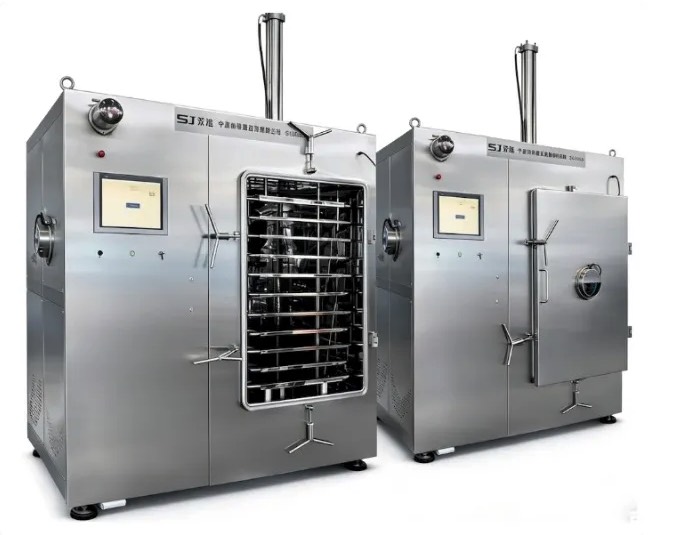
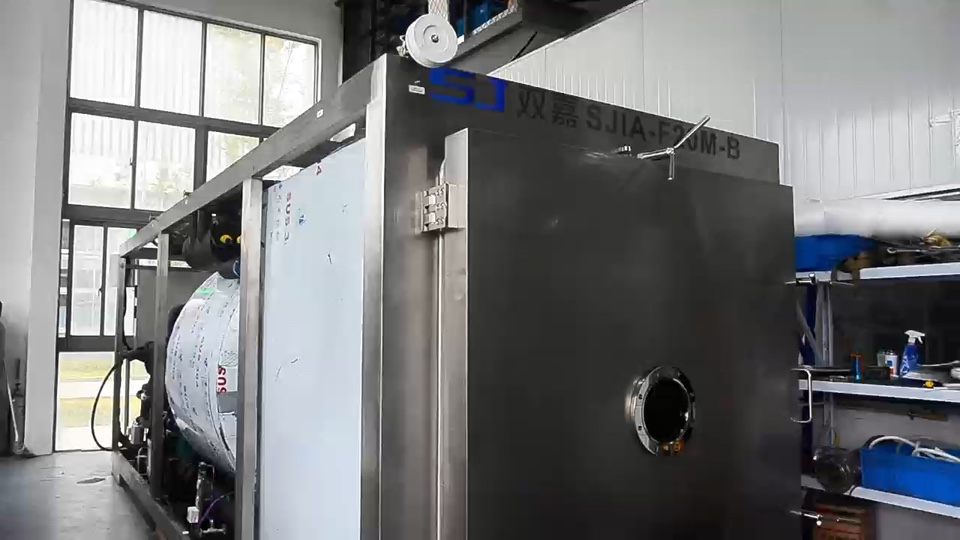
Clinical and small GMP batches
Compact Command models support early sterile vial production, peptide and protein batches, engineering runs, and controlled scale-up when full production capacity would be premature.
The same shelf area can serve very different projects. Vial geometry, fill depth, water load, stoppering, cleaning, data, and cleanroom integration determine the useful configuration.
Compact Command models support early sterile vial production, peptide and protein batches, engineering runs, and controlled scale-up when full production capacity would be premature.
Larger shelf areas support routine batches, denser vial loads, technology transfer, and production planning while keeping loading, stoppering, condenser duty, and cycle margin visible.
F10M and F25M class systems extend the Command platform to larger production duties, split layouts, project utilities, factory acceptance testing, and site integration.
Shelf area is the first comparison only. Final vial quantity and batch duty must be recalculated from the approved vial and stopper drawings, fill volume, shelf spacing, loading method, total ice load, condenser capacity, and cycle.
| Model | Published shelf area | Project stage | Best-fit planning use | |
|---|---|---|---|---|
| Command SJ-50F(T) | 0.5 m2 | Clinical / small GMP | Compact sterile vial, peptide, protein, or engineering batches | View Model |
| Command SJ-100F(T) | 1.0 m2 | Small production | Routine small-batch vial lyophilization and process transfer | View Model |
| Command SJ-200F(T)-30L | 2.16 m2 | Pilot / medium | Higher vial count, stoppering, and controlled production scale-up | View Model |
| Command SJ-300F(T) | 3.2 m2 | Medium production | Pilot production and recurring pharmaceutical batches | View Model |
| Command SJ-360F(T) | 3.6 m2 | Medium production | GMP lyophilization with project-defined loading and data scope | View Model |
| Command SJ-500F(T) | 5.4 m2 | Larger production | Larger vial or bulk loads with project-matched condenser duty | View Model |
| Command F Flexible Shelf | 1.08-3.51 m2 | Configurable | 450 x 600 mm shelf platform with project-selected shelf count | View Model |
| SJ-Command F25M | Approx. 24.48 m2 | Production | Large pharmaceutical or API production with split equipment layout | View Model |
A useful GMP proposal connects the formulation and container to thermal control, vapor flow, condenser margin, loading, stoppering, records, and cleaning.
Provide vial and stopper drawings, fill volume, vial count, formulation limits, product-temperature target, existing cycle, and expected edge or center-vial risks.
Total ice load defines condenser holding duty; the primary-drying profile, vapor path, refrigeration duty, and process pressure determine whether that load can be captured with useful margin.
Confirm tray or trayless loading, shelf spacing, stopper height, compression travel, cleanroom interface, unloading path, and whether manual, assisted, or automatic handling is required.
Recipe control, user roles, audit trail, alarm review, electronic signatures, batch reports, historian, backup, and retention should match the site quality system and URS.
Product-contact materials, surface finish, drainability, CIP/SIP, sterile filtration, nitrogen backfill, condenser isolation, and maintenance access affect mechanical design.
Confirm product behavior on a suitable development or pilot system, then review shelf mapping, pressure control, condenser duty, load density, edge effects, and endpoint strategy at the target scale.
A credible supplier comparison shows how the proposed machine meets the project inputs and states what is still subject to engineering confirmation.
Map each user requirement to the proposed chamber, shelves, condenser, refrigeration, vacuum, controls, loading, cleaning, utilities, and documentation. Record assumptions and exclusions.
Agree drawings, calibration records, material certificates, functional tests, alarms, interlocks, leak tests, temperature studies, software checks, FAT, SAT, and IQ/OQ deliverables before the purchase order.
The quotation should identify the contracting entity, manufacturing entity, model and nameplate convention, change-control route, component list, packing, shipment, warranty, and technical responsibility.
Define remote support, on-site commissioning, travel, test instruments, training, recommended spares, response expectations, and site responsibilities for the actual destination.
Open a model page for its published configuration, images, technical table, catalogue, and inquiry route. Flexible and larger production platforms are engineered against project-specific requirements.
Start with the number of filled vials per batch, not the nominal vial volume or the largest machine you can install. Use the published model table above to compare candidates, then check these three limits together.
Send the vial outer diameter and height, stopper drawing, target count and tray or trayless loading method. Usable shelf dimensions, edge clearance and stoppering travel determine the layout. A 10R vial designation alone is not enough to confirm a batch.
For example, 1,000 vials filled with 2 mL each contain 2 L of formulation, regardless of the nominal vial size. This is an arithmetic example, not a rated Command batch. Estimate the removable water from the formulation, then review condenser ice capacity and peak vapor-removal duty separately.
Convert the required output into batches using a demonstrated cycle, including loading, freezing, drying, unloading, defrost and any required cleaning. Do not calculate daily output from shelf area alone. If the cycle is not established, treat throughput and energy per batch as trial questions, not guaranteed figures.
Compare the compact platforms below when the reviewed vial layout and ice duty fit. Confirm the stoppering configuration and required production records; the smaller model is not automatically adequate.
Compare the larger standard shelf-count platforms when more usable area is needed. Check usable vial positions, loading access and total water load before choosing the next size.
Review Flexible Shelf for project-specific shelf-count and vial-clearance requirements. Review F25M separately for larger production duties and site integration. These are different engineering paths, not interchangeable upgrades.
Provide the vial and stopper drawings, fill volume, target vials per batch and batches per week, formulation or solvent constraints, any existing cycle, electrical supply, installation space and required acceptance documents. Mark unknowns as unknown. SJ can review Command customization against these inputs; the agreed technical specification defines the supplied functions and test scope.
Command projects can be reviewed for the required shelf layout, vial workflow, stoppering, utilities and control or documentation scope. Submit your user requirements specification (URS) and site constraints. Custom features must be confirmed in the agreed technical specification; a standard model listing does not include every option.
Define installation responsibilities, operator training, remote troubleshooting, spare parts and warranty terms before ordering. Any on-site work, travel costs, response commitments and qualification support must be agreed for the destination and project. Do not assume a local service team or a fixed response time without written confirmation.
A laboratory system supports samples and development work. A GMP pharmaceutical lyophilizer is specified as part of a controlled production process, including hygienic design, vial or bulk loading, stoppering where required, data integrity, qualification documents, cleanroom interfaces, and project-defined testing.
No. The machine, facility, utilities, procedures, cleaning, calibration, software use, training, validation, and quality system must work together. The quotation and URS should define which GMP-related functions and documents are included.
Vial capacity depends on outer diameter, tray or trayless loading, usable shelf dimensions, shelf count, clearance, stopper height, handling losses, and the approved layout. Use vial counts as a planning basis until the vial and stopper drawings are reviewed.
T identifies a stoppering configuration. The stoppering mechanism, shelf movement, compression travel, vial and stopper geometry, shelf spacing, and loading method must be confirmed for the project.
It means the control system can be configured with functions such as controlled user access, audit trails, electronic signatures, recipe and event records, and secure data handling. The customer must define intended use and validate the configured system within its quality framework.
Calculate total ice from the fill volume and batch, then evaluate peak vapor flow during primary drying, condenser temperature, refrigeration duty, vapor path, process pressure, defrost, and operating margin. Ice holding capacity alone is not enough.
Project scope may include approved drawings, component and instrument lists, manuals, calibration records, material certificates, software descriptions, FAT and SAT protocols, and IQ/OQ support. The quotation should list every included document and responsibility.
Review comparable equipment, engineering calculations, drawings, components, controls, factory test scope, document index, manufacturing identity, export packing, warranty route, commissioning plan, and who approves technical changes.
Send the product, vial and stopper, fill volume, vial count, shelf requirement, water load, existing cycle, cleanroom interface, controls, documentation, destination, utilities, and target date. Unknown items can be identified during engineering review.