Lyophilization Scale-Up: 7 Inputs Before GMP Production
Prepare a practical transfer packet for pharmaceutical lyophilization: product limits, container drawings, fill volume, ice load, endpoint evidence and GMP scope.
Pharmaceutical process-transfer planning
Watch the scale-up overview
A short SJ engineering overview of pharmaceutical lyophilization scale-up: product limits, vial geometry, fill volume, ice load, endpoint evidence and GMP scope.
Final equipment configuration, CIP/SIP, controls, 21 CFR Part 11-related functions and document scope depend on the approved project URS and order. No standard recipe, regulatory approval or guaranteed production result is claimed.
Video details & visual descriptionOfficial video posts
A lyophilization cycle cannot be transferred by copying shelf temperature, chamber pressure and time alone. When an API, peptide or sterile-vial project moves from development to production, the container, loading pattern and equipment response need to be reviewed together. This checklist turns that review into seven deliverables you can send with an equipment inquiry.
Download the five-page English scale-up checklist (PDF). This is an engineering overview, not a validated cycle, customer case or pharmaceutical manufacturing instruction. Final configuration and documentation depend on the approved project URS.
1. Product and formulation limits
Describe the material, concentration, excipients and solvent system. Supply the available evidence for collapse, eutectic or other product-specific temperature limits, and explain how freezing was performed in the development runs. State which limits have been measured and which are still being investigated. A shelf setpoint is not a measurement of the product temperature.
For solvent-containing API manufacturing projects, identify the solvent and amount before selecting the condenser, vacuum protection, materials or safety provisions. Do not assume an aqueous-product configuration is suitable.
2. Vial and stopper drawings
Include the actual vial outside diameter, body height and stopper drawing. Check the partially inserted stopper, carrier or tray, edge clearances and stoppering travel together. A nominal vial label such as 3R or 10R is a starting reference, not a complete loading specification. The usable layout must leave room for the approved handling and measurement method.
3. Fill volume and target batch size
State the fill volume per vial, planned vial count, fill depth and loading arrangement. Keep minimum, typical and maximum batches separate. More vial positions do not automatically mean more usable process capacity. Partial loads and full loads can behave differently, so record the development load rather than supplying only the machine model.
4. Total water load and condenser margin
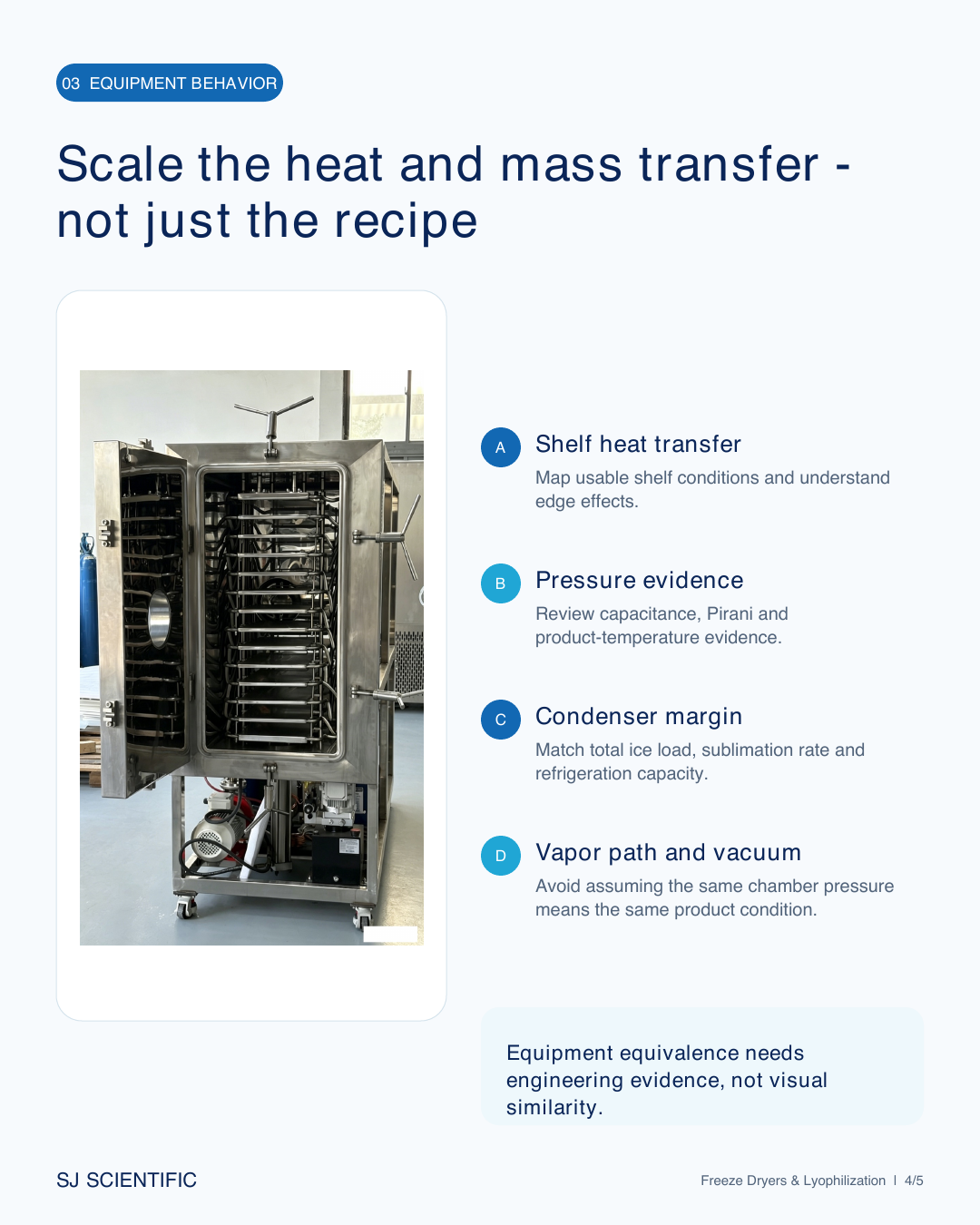
Calculate the water to remove from the formulation and batch plan, not from shelf area alone. Review the total ice load and expected vapor-removal rate with condenser storage, refrigeration duty, vapor path and vacuum performance. A low published condenser temperature by itself does not answer whether the proposed batch and primary-drying rate fit the equipment.
5. Endpoint and analytical requirements
Explain what evidence supported the end of primary drying and the end of the full cycle in development. Include relevant product-temperature and pressure trends, sensor types and locations, and the analytical acceptance criteria defined by the product program. Residual moisture, reconstitution, potency, purity and stability cannot be established from cake appearance alone.
A pressure-sensor comparison can be useful evidence in an appropriate process, but no single screen reading in this overview is a universal release criterion.
6. Aseptic boundary and loading method
Define whether the process is sterile or non-sterile and where the responsibility boundary lies between filling, loading, the freeze dryer and unloading. Describe manual or automated transfer, any barrier system, backfill gas and stoppering needs. Equipment selection must follow the project's contamination-control and handling requirements; a GMP freeze dryer name does not make a complete line aseptic.
7. Qualification and data-integrity scope
List the required records, user access, audit trails, electronic signatures, batch reports and test documents in the URS. Agree which checks belong at FAT, SAT and site qualification, who supplies the protocols and who approves the results. CIP/SIP and 21 CFR Part 11-related functions are configuration and project-scope discussions, not automatic inclusions or stand-alone compliance guarantees.
What changes when moving from Creator to Command?
Creator supports development-stage work; a Command configuration is reviewed against the proposed production load and project requirements. Compare heat-transfer behavior, shelf spacing, container contact, vapor flow and control instrumentation between the actual machines. Preserve the product limits and endpoint rationale, then establish suitable equipment-specific settings through the approved development and qualification plan.
For a vial project, Command F Flexible Shelf offers a configuration discussion around shelf count, vial and stopper clearance, matched condenser sizing and controls. Send the seven inputs above for a review; the product page is not approval of a particular cycle or batch load.
Useful next documents
Frequently asked questions
Can I copy my laboratory freeze-drying recipe to a production machine?
Not without a process-transfer review. Compare product limits, container and loading geometry, heat transfer, pressure measurement, vapor flow, condenser load and endpoint evidence on the actual equipment.
Is the maximum vial count a guaranteed batch capacity?
No. Vial positions describe a geometric layout. The approved load must also fit vial and stopper clearances, fill volume, total water load, equipment capability and the process endpoint.
What should I send for a Command configuration review?
Send product and formulation limits, vial and stopper drawings, fill volume and batch size, water or solvent load, endpoint requirements, the aseptic/loading boundary, and qualification and data-integrity scope.