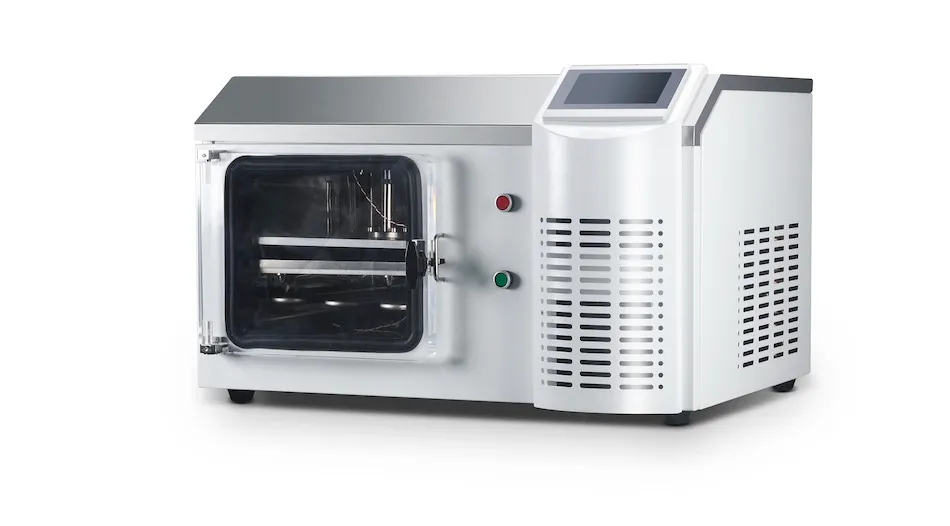
R&D / pilot
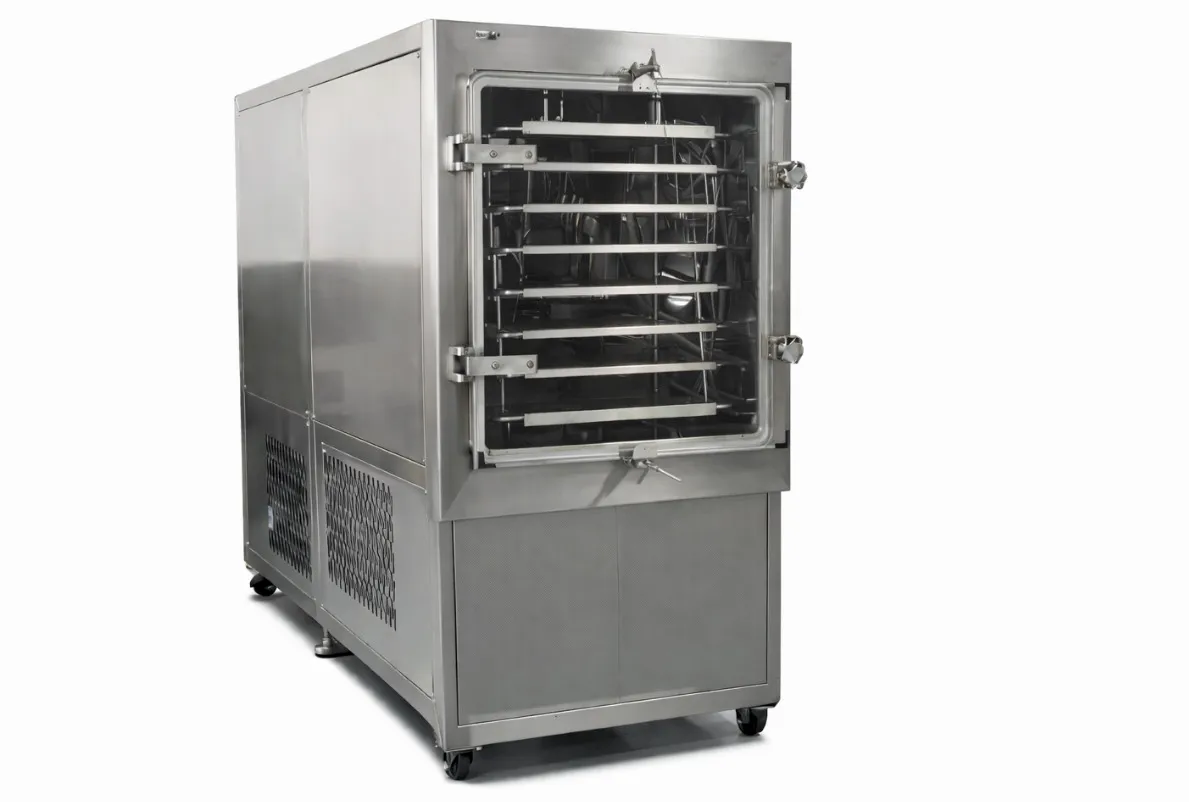
SJ-Creator 1S Research FD
0.12 m²S area; compare the S / ST layoutsStandard ≤ −60 °C; Max ≤ −85 °C
Small R&D batches and early cycle screening
Peptides · CDMO · Clinical & GMP Lyophilization
Select Creator pilot systems for peptide cycle development and Command GMP lyophilizers for clinical or commercial peptide production. Built around shelf uniformity, low-load pressure control, cleanability, stoppering, and audit-ready data.
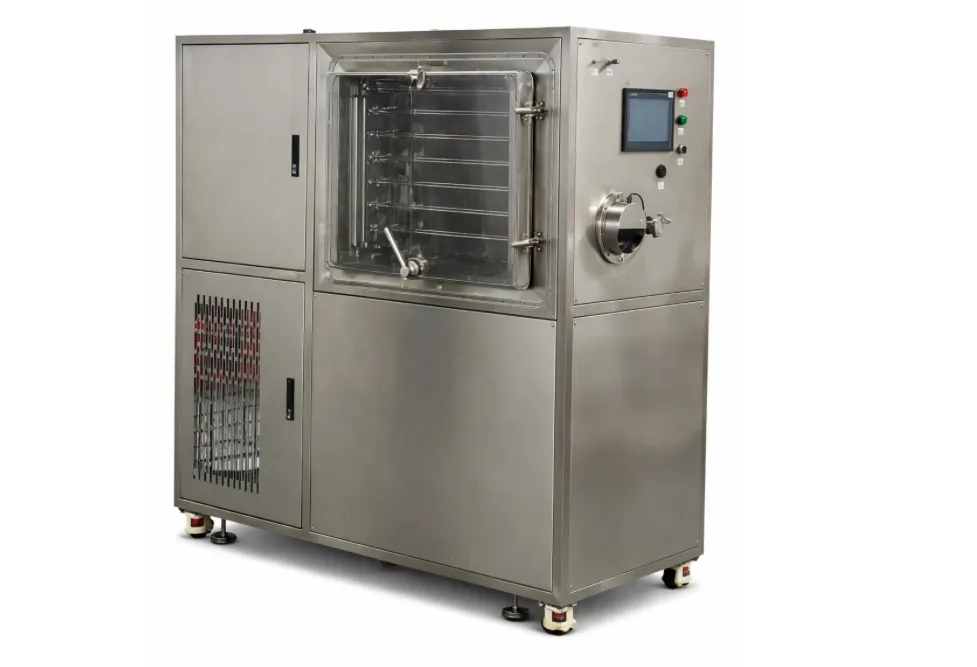
For peptide R&D, sterile API, injectable formulations, and CDMO scale-up
Open a model to compare shelf area, condenser options, vial workflow, and the most practical role in peptide R&D or GMP production.
R&D / pilot
0.12 m²S area; compare the S / ST layoutsStandard ≤ −60 °C; Max ≤ −85 °C
Small R&D batches and early cycle screening
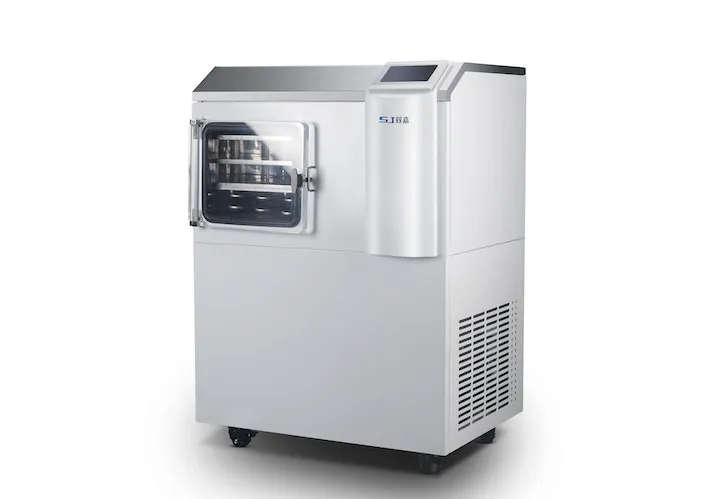
R&D / pilot
0.24 m²S area; compare the S / ST layoutsStandard ≤ −65 °C; Max ≤ −85 °C
Peptide formulation development with partial-load control
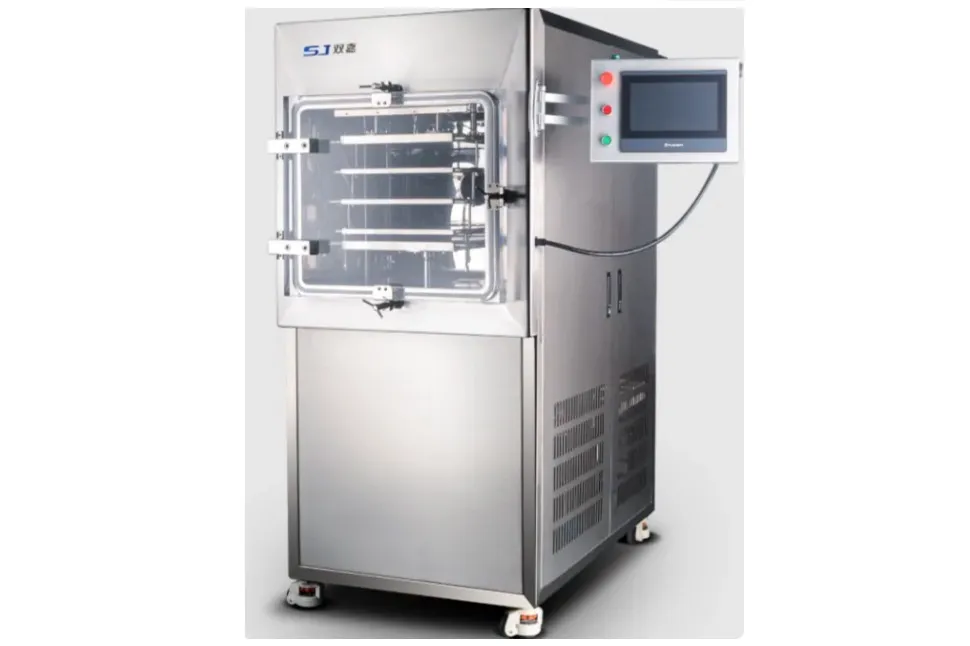
Clinical / GMP
0.5 m²≤-85 °C
Compact GMP peptide lyophilizer for clinical batches
Clinical / GMP
1.0 m²≤-85 °C
Small-batch GMP peptide production and sterile API work
Start with the work you need to do: develop a formulation, stopper a small vial batch, or transfer an established cycle into production. Then compare the exact shelf layout and water load, not just the model number.
Temperature-controlled shelves for research and pilot trials. Select S when in-chamber vial stoppering is not required. Compare product temperature, pressure and drying endpoints on representative loads.
T identifies the stoppering configuration. On 2ST, 3ST and 4ST, the shelf is 250 × 450 mm rather than the 300 × 400 mm S shelf. Do not carry the S vial count into an ST quotation.
Current Creator Max tables specify a condenser minimum of ≤ −85 °C. Max does not mean more shelves or automatic solvent compatibility; confirm the formulation, solvent concentration, pump and materials for your process.
For clinical or production projects, review Command shelf loading, stoppering, cleaning and documentation against your URS. 21 CFR Part 11-ready functions are configuration options; equipment alone does not validate a GMP process.
| Model | S shelf | ST shelf | Usable area S / ST | 16 mm vials S / ST | 22 mm vials S / ST |
|---|---|---|---|---|---|
| SJ-Creator 1S / 1ST | 300 × 400 mm | 300 × 400 mm | 0.120 / 0.120 m² | 450 / 450 | 234 / 234 |
| SJ-Creator 2S / 2ST | 300 × 400 mm | 250 × 450 mm | 0.240 / 0.225 m² | 900 / 840 | 468 / 440 |
| SJ-Creator 3S / 3ST | 300 × 400 mm | 250 × 450 mm | 0.360 / 0.3375 m² | 1,350 / 1,200 | 702 / 660 |
| SJ-Creator 4S / 4ST | 300 × 400 mm | 250 × 450 mm | 0.480 / 0.450 m² | Confirm layout | Confirm layout |
Reference positions across the product shelves, not a guaranteed batch. The “+1” radiant shelf is excluded from usable area. Confirm vial outside diameter, height, stopper and loading method; the current 4S / 4ST specification does not separate the two vial layouts, so no shared count is assumed here.
SJ-Creator 1S / 1ST has a reference layout of up to 450 vials at 16 mm outside diameter, or 234 at 22 mm. Command SJ-50F(T) has reference layouts of 550 × 4 = 2,200 positions at 16 mm, or 288 × 4 = 1,152 at 22 mm. Confirm the proposed vial and stopper drawings before ordering.
For example, 450 vials filled with 1 mL contain 0.45 L of solution; the same 450 positions at 3 mL contain 1.35 L. Neither number is an ice-load rating. Estimate removable water from the formulation, then check condenser storage, capture rate and the drying cycle separately.
Customer photographs, mechanism demonstrations and planning documents answer different questions. Each link below identifies what the material can actually show.
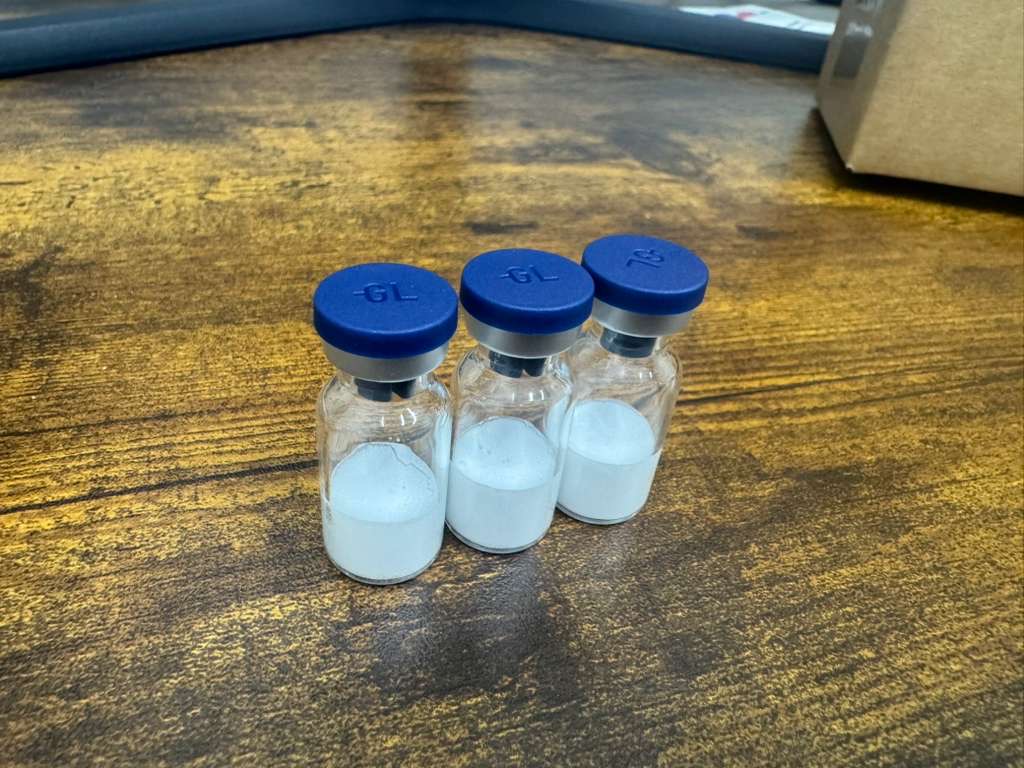
Customer case
Customer-provided photographs show white, coherent vial cakes. The case explains why appearance does not establish purity, residual moisture, sterility or stability.
Read the case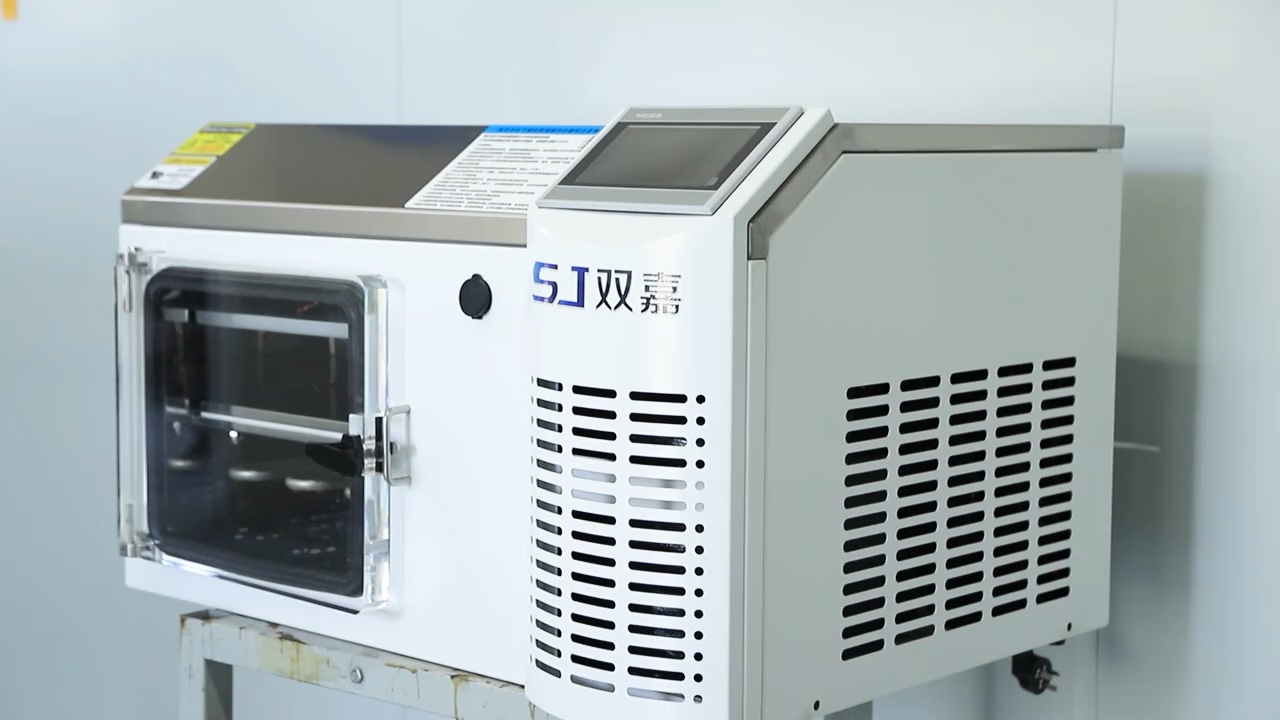
Equipment video · 45 seconds
See the compact shelf-controlled equipment. The 0.12 m² platform supports formulation screening; the 450-position reference depends on 16 mm vial diameter and configuration.
Watch the equipment video
Mechanism video · 13 seconds
A 13-shelf stoppering demonstration shows the mechanism in motion. It does not establish a validated peptide cycle, a certified filling line or guaranteed batch output.
Watch stopperingPlanning document · English PDF
A Command workflow reference for discussing loading, transfer and freeze drying. Use it as a project-planning document, not as proof of a delivered aseptic production line.
Open the workflow PDFPeptide products are often high value, moisture sensitive, and produced in smaller batches. The right peptide freeze dryer reduces batch risk by controlling the process window rather than simply offering a large chamber.
Peptide cycles can have narrow thermal margins. Mapping, ramp behavior, and edge-to-center consistency matter more than headline temperature ranges.
Early peptide programs often run partial loads. A good peptide lyophilizer should hold pressure without hunting during small development or clinical batches.
For injectable peptide formulations, reliable stoppering after drying is part of the process, not an accessory detail.
Buffers, acidic components, and solvent traces can raise material and cleaning risks. Chamber, shelf, and exhaust-side design should be reviewed early.
The best peptide freeze dryer depends on whether the immediate job is formulation screening, IND-enabling batches, GMP validation, or multi-client CDMO production.
Use Creator pilot units when you need flexible recipe development, partial-load control, and enough shelf area to move beyond tiny lab trials.
Select a pilot or small Command system when reproducibility, batch records, audit trail, and future GMP transfer become part of the program.
Use Command GMP lyophilizers for sterile vial, API, or commercial peptide workflows that require validation documentation and data integrity.
CDMOs should prioritize recipe control, user permissions, repeatable stoppering, cleaning strategy, and fast changeover between client products.
Start with shelf area and project stage, then confirm condenser load, stoppering, materials, and validation scope with our engineering team.
| Model | Best fit | Shelf area | Condenser temp | Why it fits peptide work | |
|---|---|---|---|---|---|
|
R&D / pilot | 0.12 m²S area; compare the S / ST layouts | Standard ≤ −60 °C; Max ≤ −85 °C | Small R&D batches and early cycle screening | View model |
|
R&D / pilot | 0.24 m²S area; compare the S / ST layouts | Standard ≤ −65 °C; Max ≤ −85 °C | Peptide formulation development with partial-load control | View model |
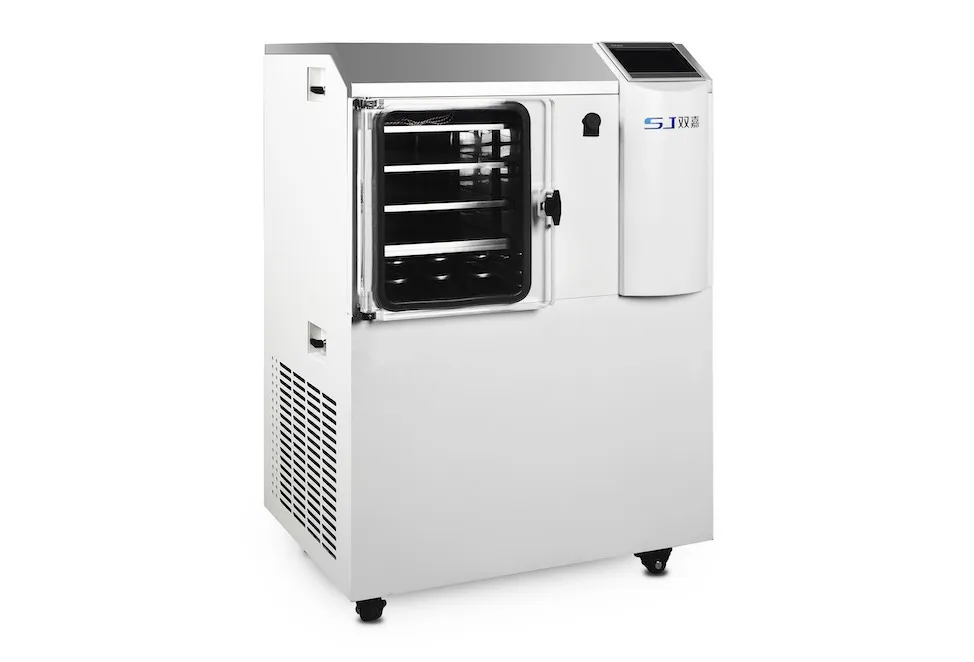 |
R&D / pilot | 0.36 m²S area; compare the S / ST layouts | Standard ≤ −65 °C; Max ≤ −85 °C | CDMO pilot batches and IND-enabling studies | View model |
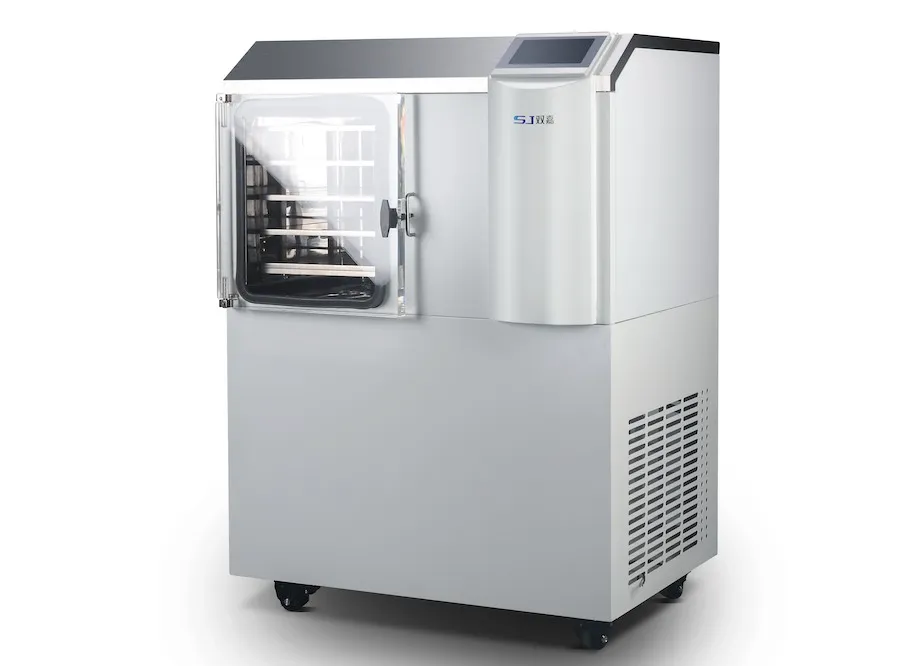 |
R&D / pilot | 0.48 m²S area; compare the S / ST layouts | Standard ≤ −65 °C; Max ≤ −85 °C | Larger pilot campaigns before GMP transfer | View model |
|
Clinical / GMP | 0.5 m² | ≤-85 °C | Compact GMP peptide lyophilizer for clinical batches | View model |
|
Clinical / GMP | 1.0 m² | ≤-85 °C | Small-batch GMP peptide production and sterile API work | View model |
 |
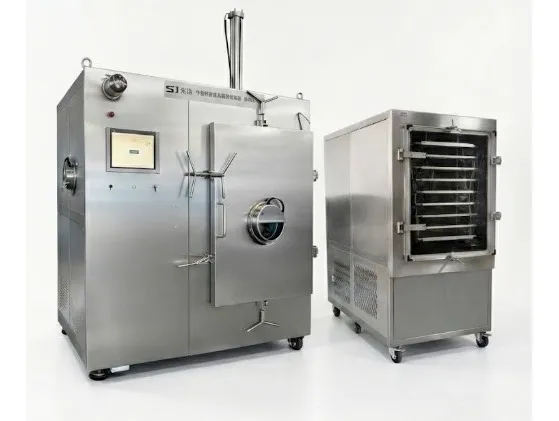
Clinical / GMP | 2.16 m² | ≤-85 °C | Scaled GMP peptide production with validation package | View model |
 |
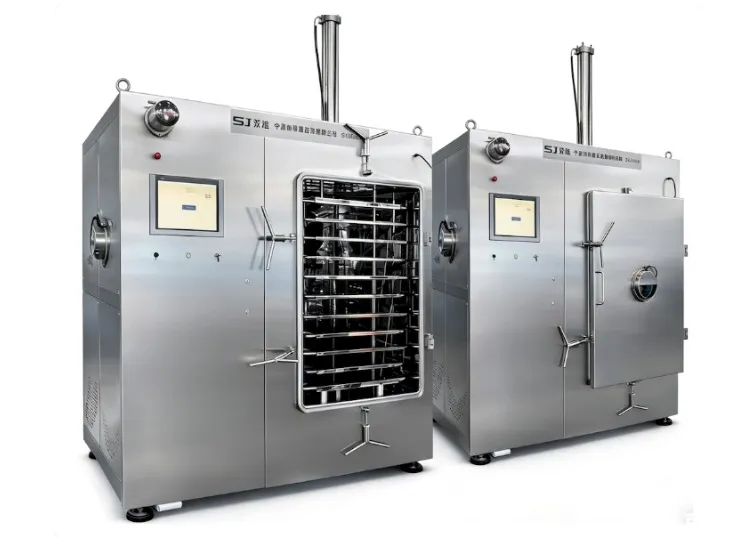
Clinical / GMP | 3.2 m² | ≤-85 °C | Commercial peptide vial production | View model |
 |
Clinical / GMP | 5.4 m² | ≤-85 °C | Large GMP peptide manufacturing lines | View model |
|
Clinical / GMP | 1.08–3.51 m² (4–13 shelves) | Confirm configuration | Configurable shelf-bank and stoppering layout for production projects; confirm vial, ice load and qualification scope. | View model |
These are representative workflows where peptide buyers normally compare freeze dryer control quality, validation readiness, and total project support.
For high-value peptide API or sterile intermediates where residual moisture, cleaning approach, and batch records must be controlled.
For vial-based peptide formulations that require controlled primary drying, reliable stoppering, and data review after each run.
For development and manufacturing teams comparing a pilot-to-GMP path for peptide formulations without locking into a single batch size too early.
Send fill volume, vial format, solids content, expected solvent or buffer system, and target batch count. We will map the model range.
We help compare Creator pilot data with the Command GMP platform so scale-up decisions are made from equipment behavior, not guesses.
For GMP peptide lyophilizers, IQ/OQ/PQ support, FAT/SAT planning, audit trail review, and recipe permission strategy can be included.
Peptide residues, buffers, and solvent traces should be discussed before purchase so materials, gasket choices, and maintenance access are aligned.
Use these supporting pages to compare the process guide, pilot platform, and GMP production platform.
A detailed buyer guide covering shelf uniformity, pressure control, cleanability, stoppering, and GMP data.
How to compare lab, pilot, and GMP peptide lyophilizers by project stage, shelf area, pressure control, and validation needs.
Freezing, primary drying, secondary drying, endpoint checks, residual moisture, and lab-to-GMP scale-up.
URS, DQ/IQ/OQ/PQ, data integrity, CIP/SIP, stoppering, and peptide scale-up checks.
Creator pilot systems for peptide cycle development, IND-enabling batches, and lab-to-GMP transfer.
Command GMP lyophilizers for regulated sterile vial and peptide production workflows.
A peptide freeze dryer is a lyophilizer selected for peptide formulations or peptide API workflows. The selection focus is stable shelf temperature, controllable vacuum, cleanability, stoppering, and documentation rather than chamber size alone.
The machine platform can be the same, but peptide projects put extra attention on low-load pressure stability, shelf uniformity, residual moisture control, cleaning strategy, and formulation compatibility. GMP peptide production normally requires a GMP lyophilizer with validation and data integrity support.
Creator pilot systems are usually the best starting point for peptide R&D because they support flexible recipe work, partial loads, and scale-up discussion before committing to a full GMP production unit.
Creator pilot lyophilizers can support formulation screening, partial-load studies, primary and secondary drying development, and endpoint comparison for GLP-1 and other peptide projects. The final recipe and equipment configuration still need to be confirmed from the actual formulation, vial, fill volume, and critical temperatures.
Early peptide API work commonly uses a controlled pilot freeze dryer for recipe development. Clinical or commercial peptide API production may require a GMP lyophilizer with suitable materials, cleaning strategy, solvent review, qualification documents, controlled records, and the condenser capacity required by the real batch load.
Peptide programs generally move toward GMP lyophilization when clinical, sterile, API, injectable, or commercial production requirements introduce controlled batch records, audit trail, qualification, and validated cleaning expectations.
Peptide products can have narrow safe process windows. Uneven shelves can cause some vials to approach collapse while others overdry, which makes residual moisture and potency control harder.
Send vial size, fill volume, target batch count, product solids, solvent or buffer details, expected cycle length, stoppering needs, and whether the project is R&D, clinical, CDMO, or GMP production.
S is the shelf-controlled research and pilot platform; ST adds stoppering. The 2ST, 3ST and 4ST shelves differ from the corresponding S shelves, so check the specific loading layout. Max identifies a lower-temperature condenser configuration, not extra shelf area or a GMP validation status.
No. Vial count is a layout reference. Actual fill volume, formulation, removable water, condenser capture rate and storage, shelf clearance, stoppering travel and cycle time must also fit. A nominal 3 mL vial does not mean it is filled with 3 mL of solution.
Request quotations on the same vial layout, fill volume, water load, condenser configuration, controls and document scope. Compare measured kWh per completed acceptable batch under a representative cycle. Installed power is not cycle energy, and catalogue vial positions are not guaranteed daily output.
A peptide freeze dryer should be selected around shelf uniformity, stable low-load pressure control, cleanability, stoppering, solvent compatibility, and GMP-ready data integrity. Use this page to compare Creator pilot systems and Command GMP lyophilizers for peptide development and production.
New practical guide: How to Lyophilize Peptides Successfully explains formulation risk, critical temperatures, primary and secondary drying, scale-up, troubleshooting, and real Command-series field experience.
Send the vial and stopper drawing, number of vials, actual fill volume, formulation or solvent notes, and whether you need stoppering. Add your target cycle, installation country and R&D or GMP stage. Ask for the proposed inspection plan, document list and service scope with the quotation.