SJ-50H Commercial Food Freeze Dryer - 50-70 kg/batch
Commercial Food Freeze Dryer
Model designation: SJ-50H is the primary public model. SJIA-50H may appear in factory records, nameplates, quotations, or earlier technical documents; both refer to the same SJIALAB equipment model.
SJ-50H food freeze dryer overview
The SJ-50H is rated for 50-70 kg/batch of reference fresh material and provides 4.98 m2 of usable tray area. The highest-capacity commercial H model for established small producers that are not yet ready for a 500 kg FFD line.
It is best considered for stable commercial batches and scale-up data generation. Typical applications include fruit, pet food, coffee ingredients, ready-meal components, meat, and seafood trials. The actual fresh load varies with product density, water content, cut size, tray fill depth, and the drying recipe.
Key specifications
| Reference fresh load | 50-70 kg/batch |
|---|---|
| Usable tray area | 4.98 m2 |
| Tray arrangement | 18 trays on 9 shelf levels |
| Tray size | 404 x 685 x 20 mm |
| Machine dimensions | 880 x 1686 x 1580 mm |
| Machine weight | Approx. 708 kg net |
| Electrical supply | Electrical supply confirmed for the project configuration |
| Condenser temperature | At or below -60 °C |
| Control | 7-inch touchscreen, manual and automatic modes |
| Food-contact construction | Stainless-steel chamber and trays |
How to interpret the batch capacity
The capacity is a sizing reference, not a guaranteed load for every food. A thin layer of sliced fruit dries differently from a deep tray of puree, cooked rice, meat, or pet food. For reliable model selection, compare usable tray area and water load as well as kilograms per batch.
Where SJ-50H fits in the range
SJ-50H occupies a specific step in the commercial food freeze dryer range. For the nearest capacity choices, compare SJ-35H (35-52 kg/batch). The series comparison page shows the full capacity progression.
What to confirm before ordering
- Product type, slice or piece thickness, and expected fresh load per cycle
- Required electrical supply and local frequency
- Preferred condenser-temperature configuration and vacuum-pump arrangement
- Available floor space, ventilation, drainage, and cleaning workflow
- Target residual moisture, packaging method, and expected batches per week
SJ-50H FAQ
Is 50-70 kg/batch the finished dry-product weight?
No. It is a reference fresh-material load. Finished weight depends mainly on the starting moisture content and the final moisture target.
Can SJ-50H process different foods?
Yes. The equipment can support multiple food categories, but each product needs its own preparation, tray loading, freezing method, cycle settings, cleaning, and packaging plan.
Food freeze-drying guides
Use the food freeze dryer selection guide to compare H, commercial H, and FFD systems. For process planning, read the food freeze-drying process guide.
Is SJ-50H the right commercial food freeze dryer for my production?
Short answer: SJ-50H is designed for established small producers running stable commercial batches before an industrial FFD line. Its 50-70 kg/batch reference fresh load and 4.98 m² usable tray area help start the comparison, but the final batch depends on product moisture, cut size or fill depth, kilograms per tray, pre-freezing, condenser water load, target moisture and the qualified cycle.
| Reference fresh load | 50-70 kg/batch; not finished dry-product weight |
|---|---|
| Usable tray area | 4.98 m² |
| Tray arrangement | 18 trays on 9 shelf levels; 404 × 685 × 20 mm |
| Condenser specification | ≤ -60°C |
| Typical applications | fruit, pet food, candy, coffee ingredients, ready-meal components, meat and seafood development batches |
How should I decide whether SJ-50H is large enough?
SJ-50H is the largest commercial H model in this range. Select it when products and orders are already stable enough to use 4.98 m² of tray area repeatedly, but a cart-based 500 kg FFD project would be premature. The decision should include weekly cycles, labor, pre-freezing, packaging throughput and whether one 50H or two smaller machines gives the better operating risk.
Capacity path: Move to the FFD industrial food freeze dryer range when production is managed by carts, separate pre-freezing, fixed daily raw-material intake, factory utilities and packaging-line balance. SJ-50H is not a substitute for an FFD simply because both are called commercial machines.
How do fresh kilograms become daily saleable output?
Start with product solids rather than assuming the catalog fresh-load number becomes dry product. A useful early estimate is:
Dry solids = fresh load × (1 − initial moisture fraction)
Estimated finished mass = dry solids ÷ (1 − target final moisture fraction)
Estimated water removed = fresh load − estimated finished mass
Then add loading, evacuation, primary and secondary drying, unloading, defrost, cleaning, changeover and packaging. The practical output per day or week may be limited by pre-freezing, operator time or packaging before it is limited by the chamber.
How should energy consumption be compared?
Installed electrical load is for connection planning; it is not the same as average consumption. Ask for a subsystem load schedule and compare kWh/batch, kWh/kg of water removed and kWh/kg of saleable product. Include external pre-freezing, room HVAC and packaging when comparing complete workflows. Product moisture, ambient temperature, condenser load and cycle pressure can change the result.
What information produces a useful quotation?
- Product photos, composition, initial moisture, cut size or fill depth and target moisture/water activity.
- Fresh kilograms per batch and per day, planned batches per week, seasonal peak and finished-product target.
- Pre-freezing method and temperature, transfer time, kilograms per tray and expected cycle window.
- Voltage, phase, frequency, room dimensions, door access, ventilation, drainage and cleaning workflow.
- Packaging format, allowable time before sealing, allergen or odor changeover and traceability requirements.
Engineering and manufacturing support from China
SJ's freeze-drying engineering team in China has about 15 years of practical experience across laboratory, pilot, pharmaceutical and food equipment. SJ Scientific Limited coordinates international projects and contracts; Ningbo Sjia Instrument Co., Ltd. provides manufacturing and engineering support in China. A commercial H project can be reviewed through the agreed specification, component list, electrical requirements, factory inspection or video review, operating documents, packing scope and recommended spare parts before shipment.
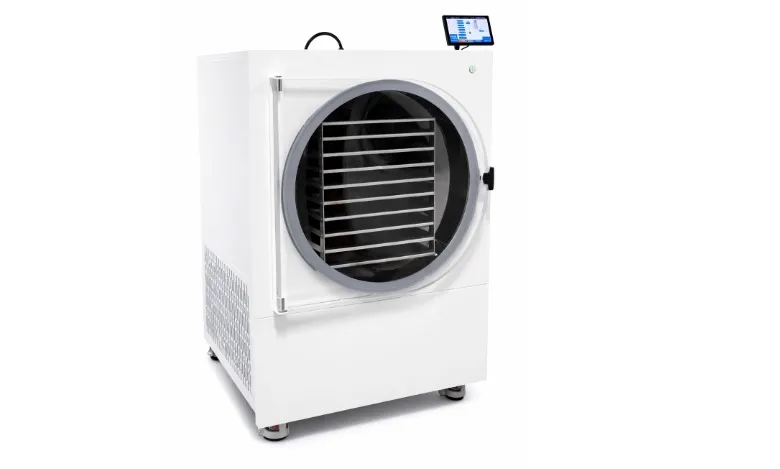
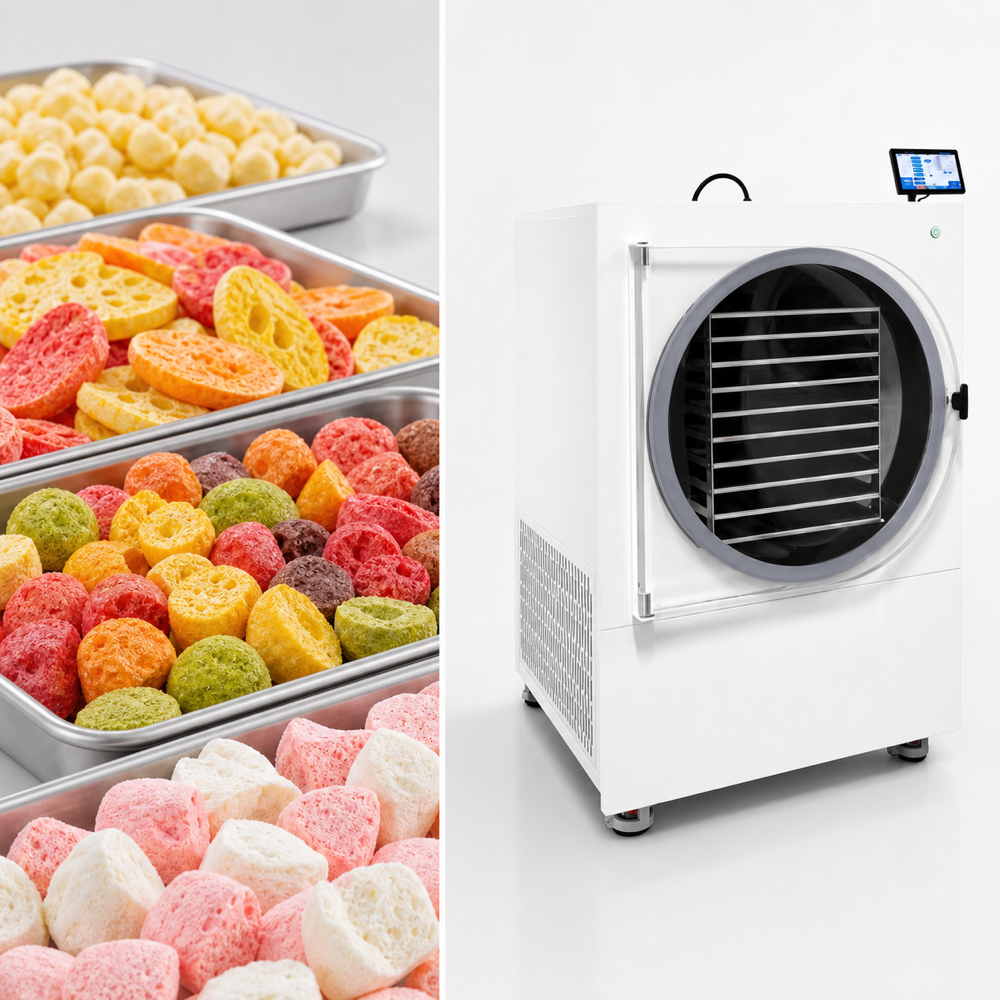
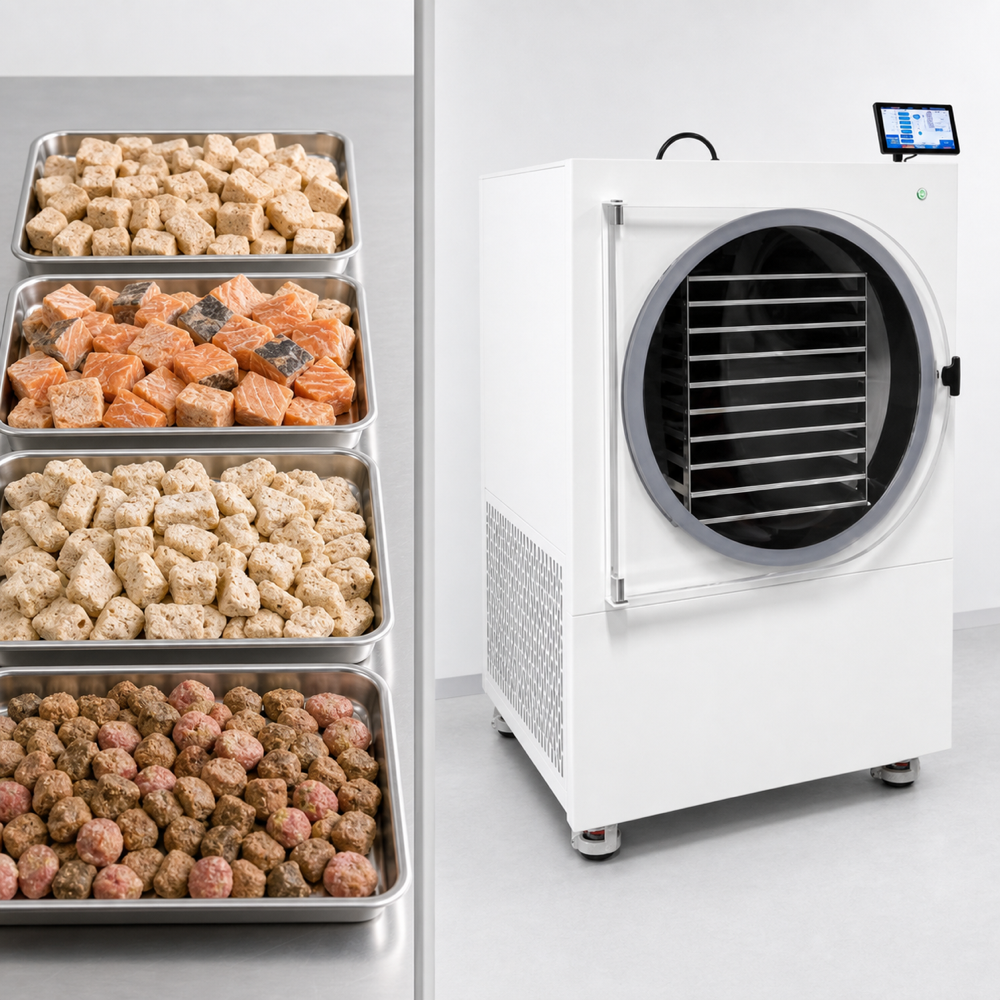
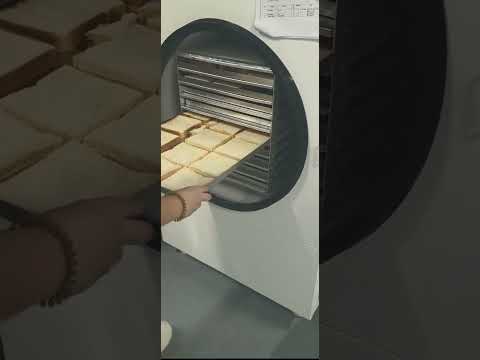
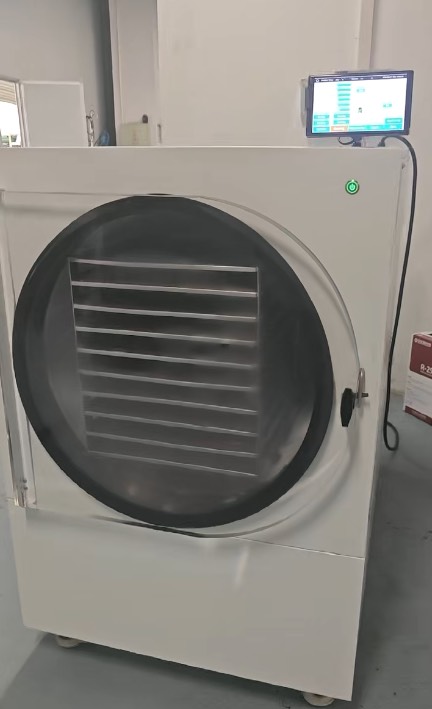
The equipment photos below support model and application discussion. Application illustrations are labeled as illustrations; actual output and product quality must be confirmed from the buyer's material, loading and cycle.
More Pictures for Reference
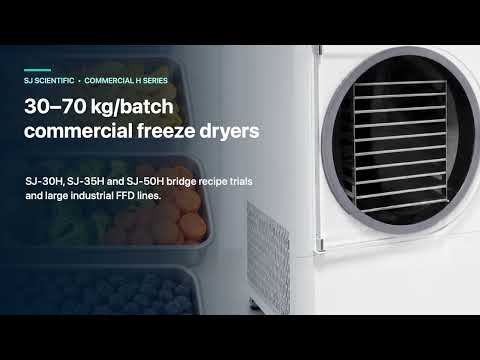
Review SJ-50H equipment, tray loading and food-application references. Text placed over each image is also visible HTML, so buyers, search engines and assistive tools can read the model, planning value and application boundary. Application illustrations are not customer batch claims.
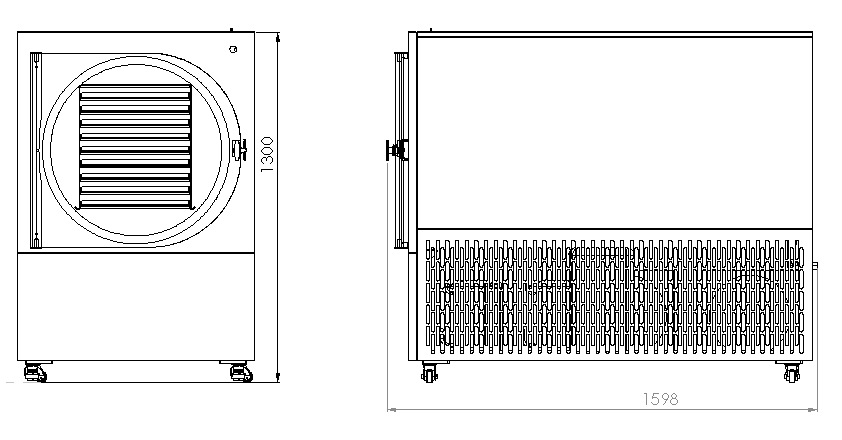
SJ-50H dimensional drawing for installation planning
This supplied drawing shows an SJ-50H reference configuration with a labeled side length of 1,598 mm and height of 1,300 mm. Cabinet configuration can vary, so confirm the ordered configuration, overall width, service clearance, utility connections and final general-arrangement drawing before site installation.


Equipment and application videos
Share This Product
Inquiry for this Product
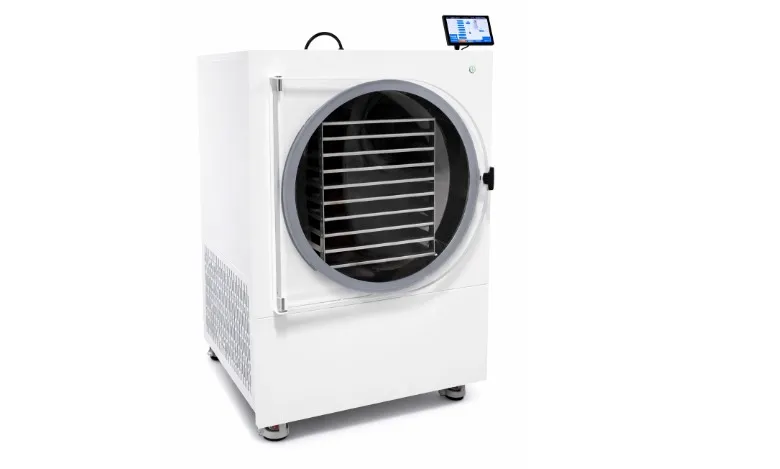
Related Products
Related Topics
Food Freeze Dryer Systems: Home, Commercial, and Industrial FFD
Food freeze dryer and food lyophilizer systems from H series small units to commercial 30H/35H/50H machines and FFD industrial production lines.
Learn MoreChina Freeze Dryer and Lyophilizer Manufacturer
SJIALAB connects Hong Kong international project coordination with freeze dryer and lyophilizer manufacturing in Ningbo, China, covering laboratory, pilot, pharmaceutical GMP, food, and industrial systems.
Learn More