Vaccine Lyophilizer Selection: GMP Freeze Dryer, Vial Stoppering, and Scale-Up
A practical vaccine freeze-dryer selection guide linking product risks, vial stoppering, sterile processing, scale-up evidence, and Command GMP equipment.
GMP Freeze Dryer
Short answer: choose a vaccine lyophilizer from the vaccine formulation, container-closure system, fill volume, vial count, critical product temperatures, expected vapor load, aseptic process, stoppering method, and validation plan. A colder condenser or larger chamber does not by itself make a better vaccine freeze dryer. The equipment must hold a controlled process while protecting a sensitive biological product and generating reviewable GMP evidence.
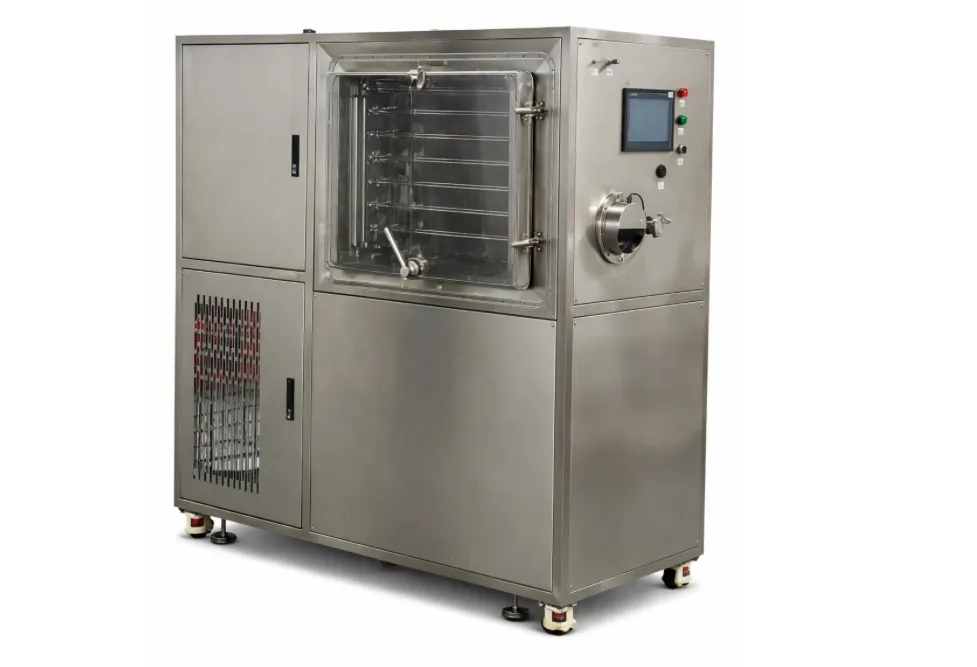
A vaccine lyophilizer, vaccine freeze dryer, and vaccine freeze-drying machine refer to the same core equipment class. The useful purchasing question is not which phrase appears on the brochure; it is whether the system can reproduce the intended freezing, primary-drying, secondary-drying, backfill, and closure sequence for the specific vaccine.
There is no universal vaccine freeze-drying cycle
Live attenuated, inactivated, recombinant, protein-subunit, viral-vector, nucleic-acid, and veterinary vaccine projects can present different formulation and stability risks. Some vaccines are supplied as liquids and some as lyophilized products. Even within one platform, antigen, adjuvant, excipients, concentration, vial, stopper, fill depth, residual-moisture target, reconstitution, and storage requirements can change the process window.
Freeze drying may support a stability strategy, but it also creates freezing, concentration, interfacial, and dehydration stresses. The formulation and cycle must therefore be demonstrated with product-specific analytical and stability data. Equipment selection cannot substitute for that development work.
Start with the vaccine and final container
| Input | Why it changes the lyophilizer | Evidence to prepare |
|---|---|---|
| Vaccine and formulation | Defines critical temperatures, sensitivity, cycle range, containment, and cleaning risks | Thermal analysis, formulation studies, product quality attributes |
| Vial, stopper, and fill | Controls shelf spacing, loading field, heat transfer, stoppering travel, and total water | Approved component drawings, fill-volume range, loading pattern |
| Batch and partial load | Changes vapor generation, pressure behavior, condenser duty, and edge-to-center distribution | Minimum, normal, and maximum vial loads |
| Aseptic workflow | Changes chamber design, loading, door interface, backfill, cleaning, sterilization, and interventions | Contamination-control strategy and facility layout |
| GMP records | Defines recipes, roles, alarms, audit trail, signatures, reports, backup, and qualification tests | URS, data-integrity matrix, FAT/SAT and IQ/OQ/PQ scope |
Command vaccine lyophilizer options by working scale
These are planning directions, not automatic model approvals. Final selection must use the vial drawing, fill volume, batch count, product-temperature limit, ice load, stoppering route, facility interface, and qualification scope.
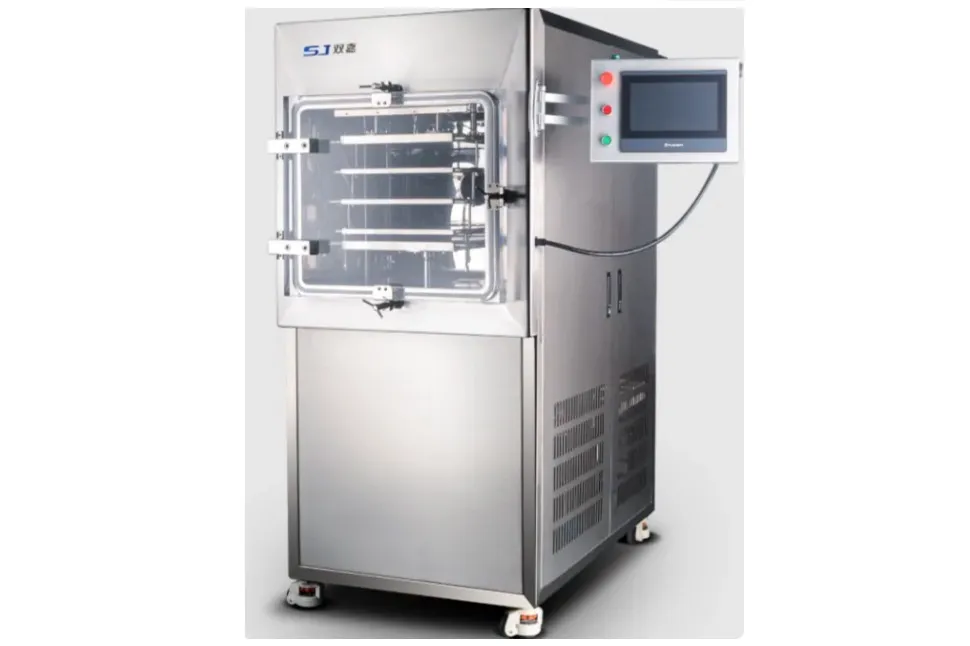
Command SJ-50F(T)
Development, clinical, or compact GMP vial batches
0.5 m2 shelf area
Command SJ-100F(T)
Small-batch vaccine and biologics production
1.0 m2 shelf area
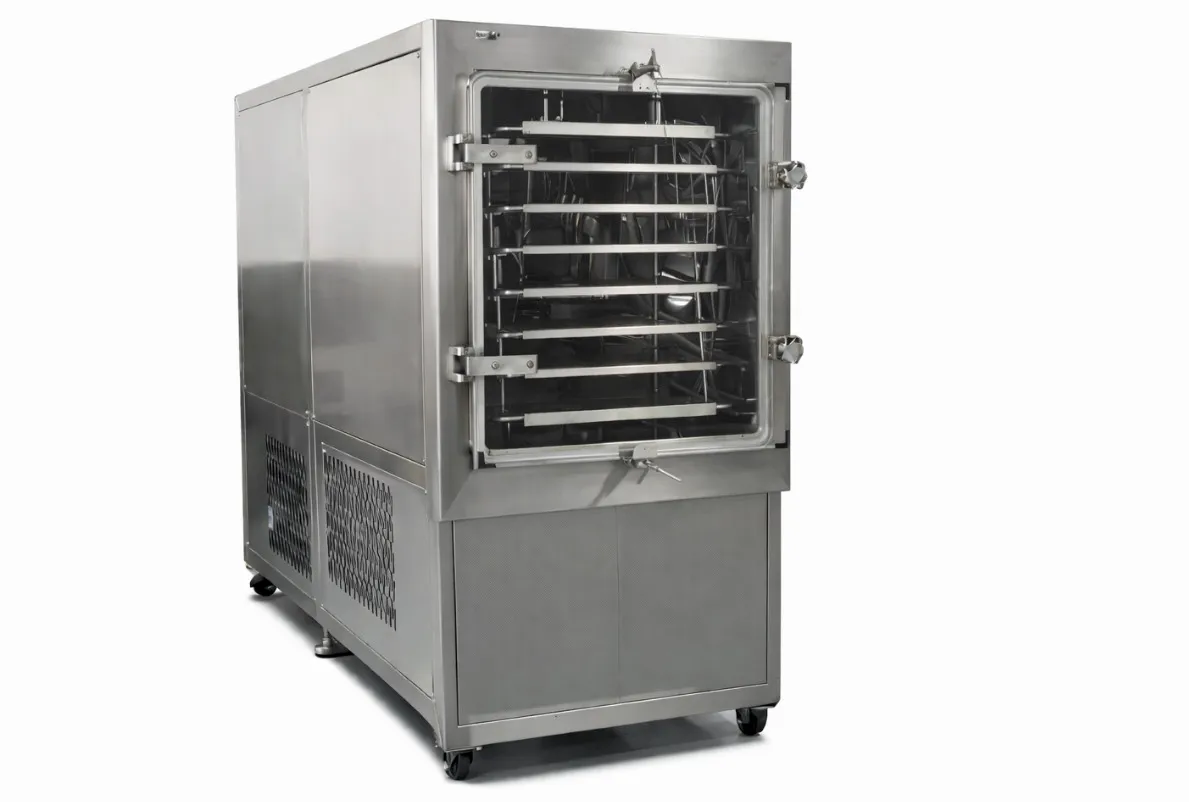
Command SJ-200F(T)-30L
Larger vial loads and scale-up batches
2.16 m2 shelf area
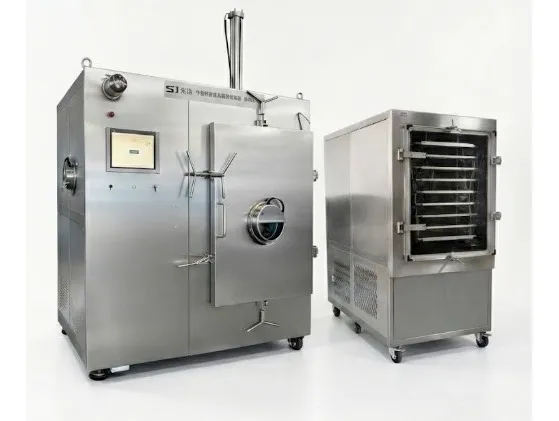
Command SJ-300F(T)
Pilot-production capacity with controlled shelves
3.2 m2 shelf area
Seven equipment decisions that deserve a written URS
- Shelf temperature and uniformity: define operating range, ramp rates, steady-state mapping, loaded behavior, and acceptance criteria relevant to the vaccine cycle.
- Process pressure: specify the control range, measurement technology, calibration range, gas admission, stability, and performance during partial loads.
- Condenser and vapor path: review total ice, peak sublimation rate, condenser temperature under load, duct conductance, isolation, defrost, and turnaround.
- Vial stoppering: confirm vial and stopper drawings, lyophilization position, shelf clearance, stroke, force, backfill, and container-closure sequence.
- Cleanability and sterilization: define manual cleaning, CIP, SIP, drainability, surface finish, gasket compatibility, sterile boundary, and verification responsibilities.
- Controls and data: translate “21 CFR Part 11-ready” into testable user roles, recipe approval, audit trail, electronic signatures where applicable, alarms, reports, backup, restore, and time synchronization.
- Qualification: agree on documents, design review, component traceability, calibration, FAT, SAT, IQ, OQ, support for PQ, training, and change control before manufacture.
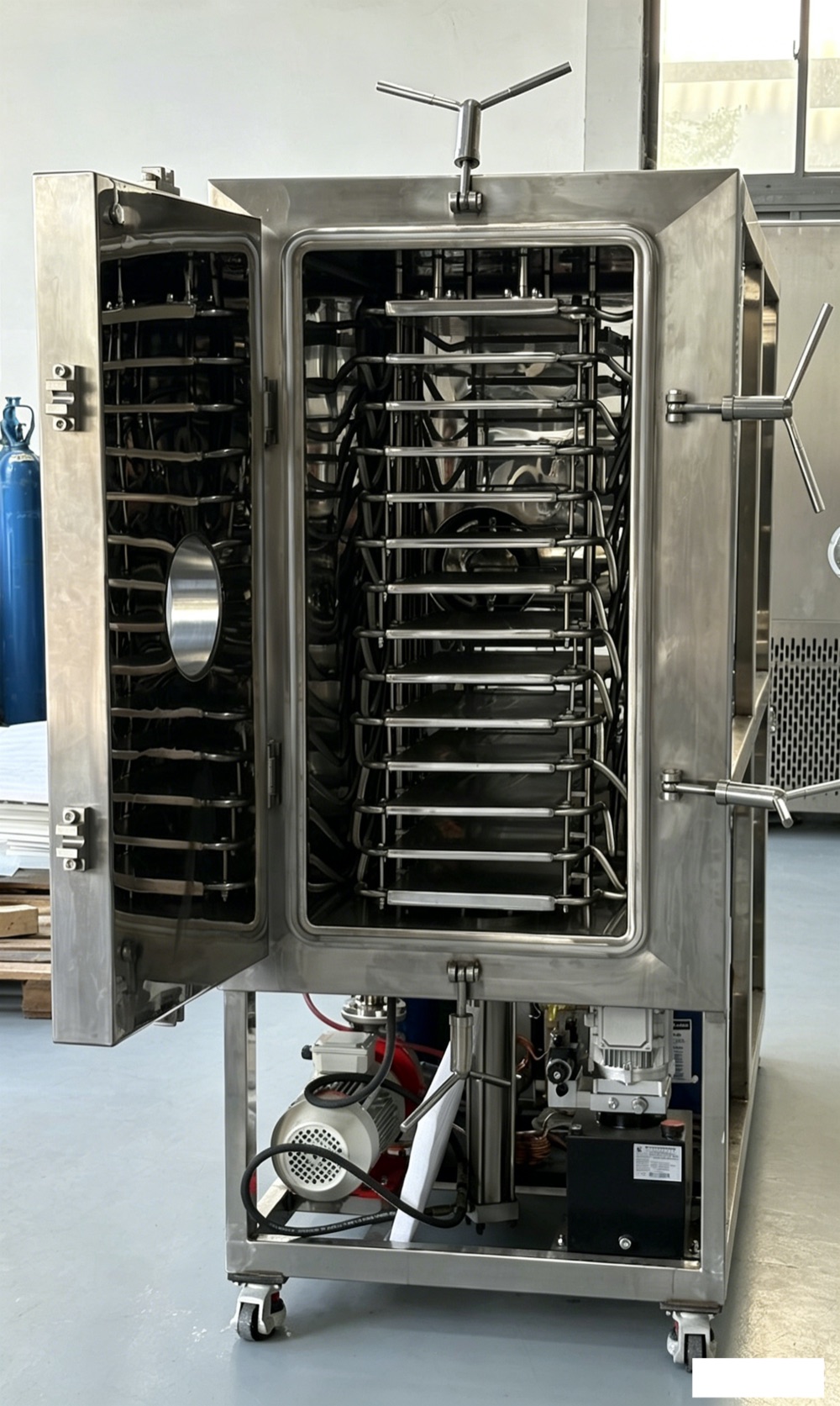
Stoppering is part of the vaccine process
For a vial product, drying does not end when the final shelf hold finishes. The pressure transition, inert-gas or vacuum backfill where specified, stopper compression, and unloading environment can affect the closed product. A useful URS describes the complete sequence and how it is challenged, observed, alarmed, and recorded.
Calculate vial capacity from the actual container drawing and loading pitch. The pharmaceutical freeze-dryer sizing guide explains how shelf area, vial count, fill volume, water load, condenser duty, and stoppering fit into one specification.
Plan scale-up before the production machine arrives
Do not transfer a vaccine cycle by copying shelf temperature and chamber pressure alone. Characterize differences in vial heat transfer, edge radiation, nucleation, loading density, pressure measurement, vapor-path conductance, condenser and refrigeration duty, control response, and endpoint method. Use product temperature and quality results to decide whether the receiving cycle is equivalent.
A practical path is formulation and cycle development on a capable pilot system, representative engineering batches, equipment characterization, then transfer to a qualified Command GMP lyophilizer. Read the pilot freeze-dryer guide, the scale-up failure guide, and the GMP lyophilizer validation checklist before finalizing the transfer protocol.
Information to send for a vaccine lyophilizer review
- vaccine platform and intended development, clinical, commercial, or veterinary use;
- formulation status, known critical temperatures, quality attributes, residual-moisture and reconstitution targets;
- vial and stopper drawings, fill volume, batch count, loading pattern, minimum and maximum loads;
- water or solvent load, expected cycle range, endpoint method, and batch frequency;
- stoppering, vacuum or inert-gas backfill, automatic loading, RABS or isolator interface;
- manual cleaning, CIP/SIP, sterile boundary, biosafety, containment, and facility utilities;
- controls, data integrity, FAT/SAT, IQ/OQ/PQ, documents, training, and service location.
Compare the complete Command GMP freeze-dryer range and the pharmaceutical lyophilizer solution, or send the vaccine process brief for a model and URS discussion.
Technical references
Frequently asked questions
What is a vaccine lyophilizer?
A vaccine lyophilizer is a freeze dryer configured and qualified for a vaccine formulation, container, load, controlled shelf and pressure cycle, condenser duty, closure sequence, facility interface, and required records.
Does every vaccine need freeze drying?
No. Product presentation is vaccine specific. Some vaccines are liquid and some are lyophilized. The formulation, process, stability, clinical, manufacturing, and regulatory strategy determine the presentation.
Why is vial stoppering important in vaccine lyophilization?
The stopper and backfill sequence closes the dried product in the chamber. Vial height, stopper position, shelf clearance, stroke, force, atmosphere, and container-closure requirements must be verified together.
Can a pilot vaccine cycle be copied directly to a production lyophilizer?
Not safely by setpoints alone. Heat transfer, edge effects, nucleation, pressure measurement, vapor conductance, condenser duty, control response, loading, and endpoint can differ and should be characterized.
Which Command model is suitable for a vaccine project?
Model selection depends on actual vial geometry, fill volume, vial count, partial loads, water or solvent load, stoppering, cycle, facility, cleaning, sterilization, data, and qualification scope.