Freeze Dryer Troubleshooting: Vacuum, Cooling, Heating, and Drying Problems
A safe, symptom-based diagnostic guide for separating leaks, vapor load, pump issues, sensor problems, refrigeration limits, and process causes.
Freeze Dryer
Short answer: troubleshoot a freeze dryer by separating the symptom, machine state, and product load. Record the exact stage, alarm, chamber pressure, condenser temperature, shelf or product temperatures, elapsed time, load, recent maintenance, and what changed. Then compare a clean, dry, empty-system test permitted by the manufacturer with a loaded run. This distinguishes a machine leak or component problem from normal vapor load and process limitations.
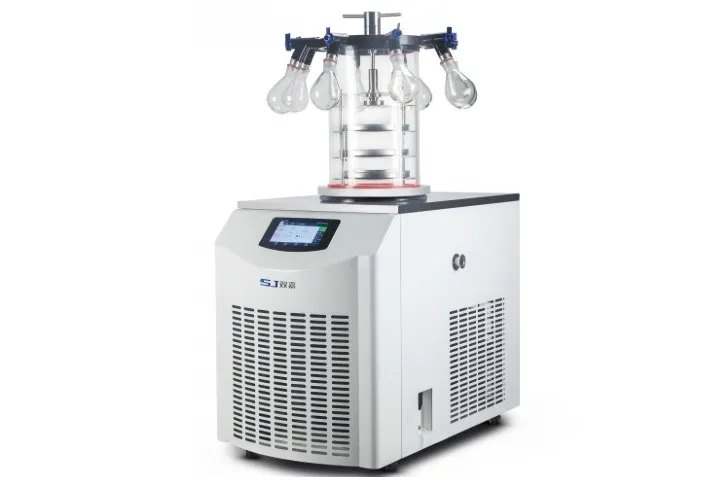
This guide addresses freeze dryer troubleshooting, freeze dryer not achieving vacuum, freeze dryer not cooling, freeze dryer not heating, and lyophilizer troubleshooting. Always follow the machine-specific manual. Refrigerant circuits, pressure vessels, live electrical panels, thermal-fluid systems, and internal vacuum-pump repair require trained and authorized personnel.
Protect people, product, and evidence first
- Do not bypass door interlocks, pressure relief, motor protection, refrigeration protection, temperature limits, or alarms.
- Do not open a chamber under vacuum or loosen a pressurized refrigeration or thermal-fluid connection.
- If there is smoke, burning odor, abnormal noise, electrical arcing, hot wiring, refrigerant alarm, major oil leak, or pressure-vessel concern, stop and isolate the equipment according to the manual.
- Preserve the batch record, alarm history, trend, operator notes, photos, and sample status before resetting faults.
- Decide with quality and process personnel whether product can be kept frozen, quarantined, sampled, or must be rejected.
Build a useful fault record
| Record | Useful detail | Why it matters |
|---|---|---|
| Machine identity | Model, serial number, control version, pump and sensor models | Prevents use of the wrong manual or spare part |
| Process point | Freezing, pull-down, primary drying, secondary drying, stoppering, defrost | Narrows the active systems and expected vapor load |
| Trend | Pressure, condenser, shelf inlet/outlet, product probes, valve state, alarms | Shows sequence and rate of change |
| Load | Product, solvent, total liquid or water, container, depth, number of trays or vials | Separates equipment capacity from a machine defect |
| Recent change | Cleaning, maintenance, hose, gasket, oil, sensor, recipe, product, room condition | Many faults follow a specific intervention |
| Reproduction | Empty dry test, pump blank-off test, or loaded repeat as authorized | Localizes chamber, pump, load, or process causes |
Freeze dryer will not reach vacuum
First confirm that the condenser is cold enough for the application and that the chamber, drain, valves, ports, hoses, and accessories are in the correct operating state. Water left after defrost can generate a large vapor load. A door gasket, drain valve, manifold valve, hose, fitting, probe feedthrough, or accessory seal can admit air.
Inspect accessible seals for dirt, cuts, flattening, displacement, or an incompatible lubricant. Confirm that all unused ports are capped and that the drain is fully closed. Do not tighten vacuum fittings randomly while a system is operating; use the manufacturer procedure.
For an oil-sealed pump, check the specified oil type, level, color, contamination, gas-ballast position, inlet and exhaust restrictions, warm-up requirement, and maintenance hours. Vapor that bypasses an overloaded or warm condenser can contaminate oil and reduce pump performance. A dry pump has different checks and service limits.
A qualified technician can use an isolation or blank-off test to determine whether the pump reaches its specified pressure independently of the chamber, and a controlled leak test to localize the system. Never condemn a pump from the chamber reading alone.
Vacuum reaches the setpoint and then rises
A rising pressure can indicate an air leak, a valve changing state, product vapor or outgassing, condenser warming or loading, sensor contamination, pump deterioration, or intentional pressure-control gas admission. Compare pressure with condenser and product-temperature trends before deciding.
If pressure rises when shelf heat increases, the product may simply be sublimating faster than before. If pressure rises during an empty dry hold, investigate leaks, valves, sensors, pump condition, and temperature-related seal movement. Where both capacitance-manometer and thermal-conductivity gauges are installed, disagreement can also provide process information; interpret it using the instrument and process method, not as an automatic sensor failure.
Condenser is not cooling or is not cold enough
Check ambient temperature, ventilation clearances, air filters or heat-exchanger cleanliness, fan operation visible to the operator, condenser defrost state, ice accumulation, setpoint, active refrigeration stage, and alarm history. A machine installed in a hot or poorly ventilated room can trip high-pressure protection or lose capacity.
A warm product load can exceed pull-down capacity and delay the condenser. Compare an empty cooldown trend with the normal qualified baseline. Repeated high-pressure, low-pressure, refrigerant, compressor, or thermal-protection alarms require refrigeration service; do not reset them repeatedly or add refrigerant without leak diagnosis and authorization.
Shelves will not freeze, heat, or follow the programmed ramp
Confirm recipe step, setpoint, ramp rate, hold conditions, control mode, pressure interlock, enabled circulation, thermal-fluid level indication, inlet/outlet temperatures, and active alarms. A slow shelf response can come from a large warm load, conservative ramp, low flow, refrigeration limit, heater limit, sensor error, valve position, or thermal-fluid problem.
Do not bypass overtemperature, low-flow, motor, heater, or compressor protection. Pumps, heaters, contactors, solid-state relays, circulation valves, refrigeration valves, and thermal-fluid systems should be diagnosed by qualified personnel using the electrical and piping documentation.
Drying is too slow
Long drying can result from a thick or uneven layer, larger fill volume, higher initial water, incomplete freezing, warmer critical product limit, low shelf heat, conservative pressure, high product resistance, poor container contact, insufficient vapor conductance, condenser or refrigeration limit, pump limit, or an endpoint criterion that is not understood.
Compare the current batch with a known good batch using product and equipment trends. Do not shorten the cycle only by raising shelf temperature: product can exceed its collapse, eutectic, or quality limit while the chamber pressure still appears acceptable. Read why product temperature can be more critical than condenser temperature and the freeze dryer process guide.
Product melts, collapses, puffs, cracks, or remains wet
| Observation | Possible process categories | Evidence to collect |
|---|---|---|
| Meltback or collapse | Incomplete freezing, product too warm, pressure excursion, excessive heat, formulation limit | Product probes, shelf trend, pressure, formulation thermal data, visual location |
| Wet center | Piece or fill too thick, overlap, high resistance, early endpoint, uneven heat | Cross-section, tray map, load depth, endpoint data, sample mass or moisture |
| Edge-to-center difference | Radiation, wall and door effects, loading, contact, airflow before freezing | Location map, probes, container contact, equipment geometry |
| Cracking or ejection | Freezing behavior, concentration, pressure transition, rapid vapor generation | Freezing history, ramp, pressure rate, formulation, container and fill |
| High final moisture | Incomplete primary or secondary drying, leak, endpoint error, moisture pickup | Pressure comparison, product temperature, hold, package exposure, test method |
Vacuum pump oil mist, smoke-like exhaust, or dirty oil
Oil-sealed rotary-vane pumps can emit an oil aerosol, especially during high gas throughput or gas-ballast operation. Persistent heavy mist, falling oil level, overheating, abnormal noise, dark or cloudy oil, or failure to reach pressure needs attention. Confirm exhaust routing and the correct mist filter; never block the pump exhaust.
Use only the manufacturer-specified oil and service method. Water, solvents, acids, and product vapor can contaminate oil. The correct gas-ballast method, warm purge, oil change, trap, or pump type depends on the application. Disconnect power, vent safely, and allow the pump to cool before authorized maintenance.
Sensor and data problems
A believable number can still be wrong. Check calibration status, sensor cleanliness, mounting, cable and connector condition, range, units, zero, and comparison with a traceable reference where the procedure permits. Water residue or contamination can affect vacuum sensors. A single failed product probe should not be replaced by an unqualified average of the remaining probes.
Record raw values before recalibration. Repeatedly recalibrating a sensor to make a batch pass hides the fault and destroys useful evidence.
Preventive maintenance by event and operating hours
- After each batch: defrost and drain as specified, inspect residues, clean product-contact areas, check seals and visible damage, and review alarms.
- Before the next batch: confirm dry chamber and drain, valve state, pump oil or dry-pump status, utilities, sensor readiness, and recipe version.
- By operating hours: service pump oil, filters, belts, seals, sensors, refrigeration and thermal-fluid components according to the manufacturer schedule.
- After abnormal events: investigate power loss, refrigerant alarm, vacuum loss, fluid leak, sensor replacement, control update, or major maintenance before releasing the system.
- Periodically: trend empty cooldown, empty vacuum, leak-rate or pressure-rise tests, shelf mapping, sensor calibration, safety devices, and performance against the qualification or factory baseline.
Information to send the service team
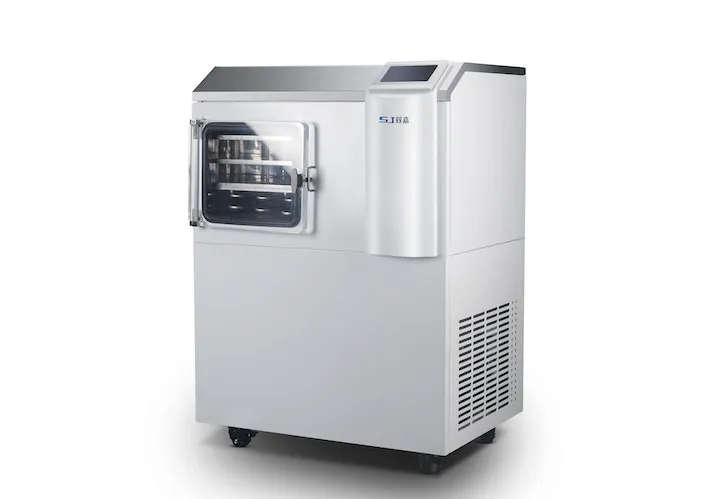
Provide model and serial number, installation country, software version, electrical supply, pump and gauge models, product and solvent, load, recipe, fault time, full alarm text, trend export, photos or video, maintenance history, room temperature, and results of only those tests authorized by the manual. Submit the case through the freeze dryer service inquiry.
Manufacturer technical references
Frequently asked questions
Why is my freeze dryer not reaching vacuum?
Common categories include an open or leaking drain or valve, dirty or damaged seals, loose ports or hoses, water residue, high product vapor load, warm or overloaded condenser, contaminated pump oil, pump condition, or sensor error.
How do I tell whether the vacuum pump or chamber is leaking?
Use only manufacturer-authorized empty-system, isolation, blank-off, and leak tests. A qualified technician compares pump-only performance with the complete dry chamber and then localizes valves, seals, hoses, feedthroughs, and accessories.
Why is the freeze dryer condenser not getting cold?
Check ambient temperature, ventilation, filters or heat exchangers, fan operation, defrost water, ice load, setpoint, and alarms. Repeated refrigeration pressure, refrigerant, compressor, or protection faults need qualified service.
Why is freeze drying taking longer than usual?
Load depth, water content, incomplete freezing, shelf heat, pressure, product resistance, vapor path, condenser and refrigeration duty, pump performance, and endpoint method can all extend the cycle.
Is smoke from a freeze dryer vacuum pump normal?
Oil-sealed pumps can emit oil mist during high gas throughput, but heavy persistent mist, falling oil level, overheating, abnormal noise, dirty oil, or poor vacuum requires inspection. Never block the exhaust.