Industrial Food Freeze Dryer Operation: From Pre-Freezing to Cleaning
How an industrial food freeze-drying line moves from standardized raw material to controlled drying, hygienic unloading, defrost and the next production batch.
Industrial Food Freeze Dryer
An industrial food freeze dryer is not simply a larger chamber. It is a production system in which product preparation, pre-freezing, tray loading, refrigeration, vacuum, vapor capture, heating, unloading and cleaning must be planned as one repeatable workflow. The machine can only deliver stable batches when the incoming material and operating method are equally controlled.
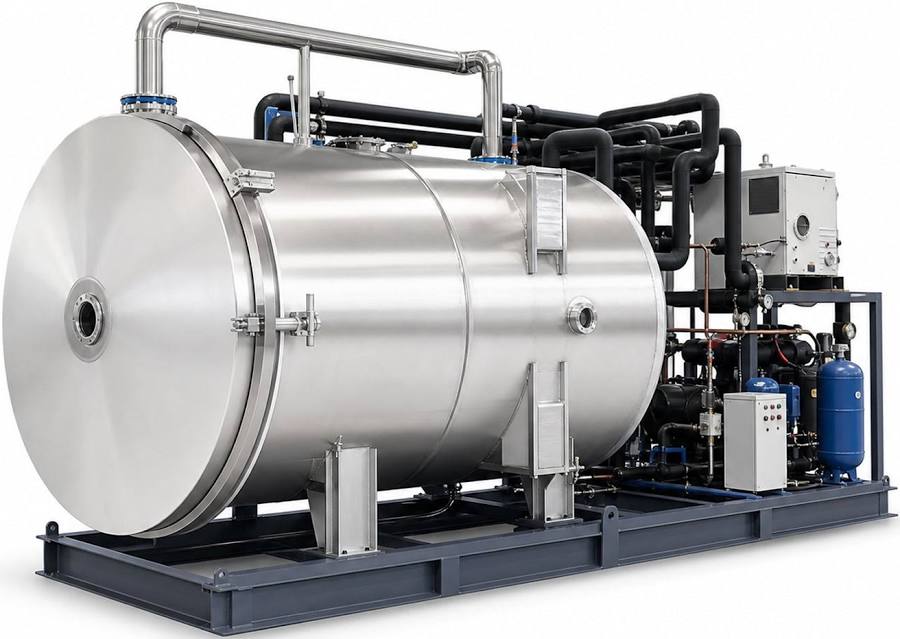
1. Define the product before defining the cycle
Start with the product rather than a borrowed recipe. Record the variety or formulation, incoming moisture, piece dimensions, cut thickness, pretreatment, tray loading, target residual moisture and acceptable appearance. Strawberries, coffee extract, cooked meat, pet treats and probiotic ingredients do not create the same heat and mass-transfer conditions.
Variation at this stage becomes variation at the end of drying. A thick piece may remain wet at its core after a thin piece has already finished. For liquids and purees, fill depth matters more than tray weight alone. A production specification should therefore set practical limits for piece size, layer depth and kilograms per tray.
2. Prepare and load trays consistently
Wash, sort, cut and pretreat the material according to its process specification. Remove free surface water where appropriate. Spread solids in a uniform single layer or load liquids to a controlled depth. Avoid piles at tray edges and blocked gaps that restrict vapor flow.
Record net product weight per tray and the number of loaded trays. These two values connect the recipe to real batch capacity and make deviations visible. Food-contact trays, carts and tools should be clean, dry and identified before loading begins.
3. Choose a pre-freezing workflow
Large food lines commonly pre-freeze loaded carts in a separate blast freezer or cold room so the freeze dryer spends more of its time drying. In-chamber freezing may simplify handling for some products and smaller batches, but it occupies chamber time. The choice should be evaluated against throughput, floor space, transfer time and the risk of partial thawing.
The product must be frozen through before deep vacuum and meaningful shelf heating begin. The required product temperature depends on composition, especially dissolved sugar, salt and other solids. Air temperature alone does not prove that the center of the load is frozen; representative product probes and a qualified loading pattern provide better evidence.
4. Verify the machine before starting
- Confirm the chamber, condenser, door seal, drain and carts are clean and ready.
- Check refrigeration, heat-transfer fluid, vacuum pump, cooling water and compressed-air availability where applicable.
- Verify sensors, alarms, recipe selection and data recording.
- Confirm the condenser is defrosted and drained from the previous batch.
- Load carts without damaging the door gasket or obstructing internal flow paths.
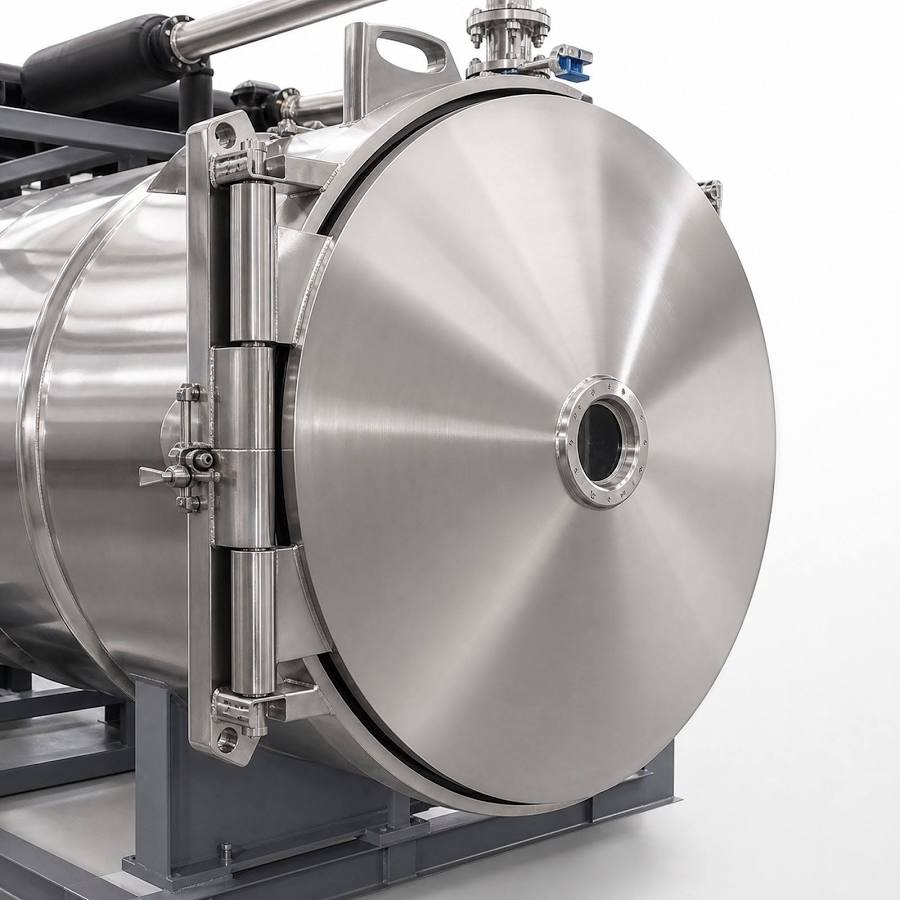
5. Freezing, primary drying and secondary drying
Freezing
The freezing step establishes the ice structure through which vapor will later escape. Product formulation, freezing rate and final frozen temperature can change pore structure, shrinkage and rehydration. The recipe should include a hold long enough for the slowest location in the load, not only the chamber air, to reach the required condition.
Primary drying
During primary drying, chamber pressure is reduced and controlled heat is supplied so ice sublimes. The condenser must remain cold enough and have enough ice capacity to capture the expected water load. Adding heat too aggressively can cause meltback, collapse, puffing or loss of shape; too little heat extends the cycle and reduces annual output. Product temperature, shelf or heating-medium temperature, chamber pressure and condenser behavior should be trended together.
Secondary drying and endpoint
After visible ice has been removed, secondary drying reduces more tightly bound moisture. The final temperature and hold depend on the food's heat sensitivity and moisture target. Endpoint decisions should combine process trends with a defined product test, such as moisture or water activity. A fixed timer copied from another product is not a reliable release criterion.
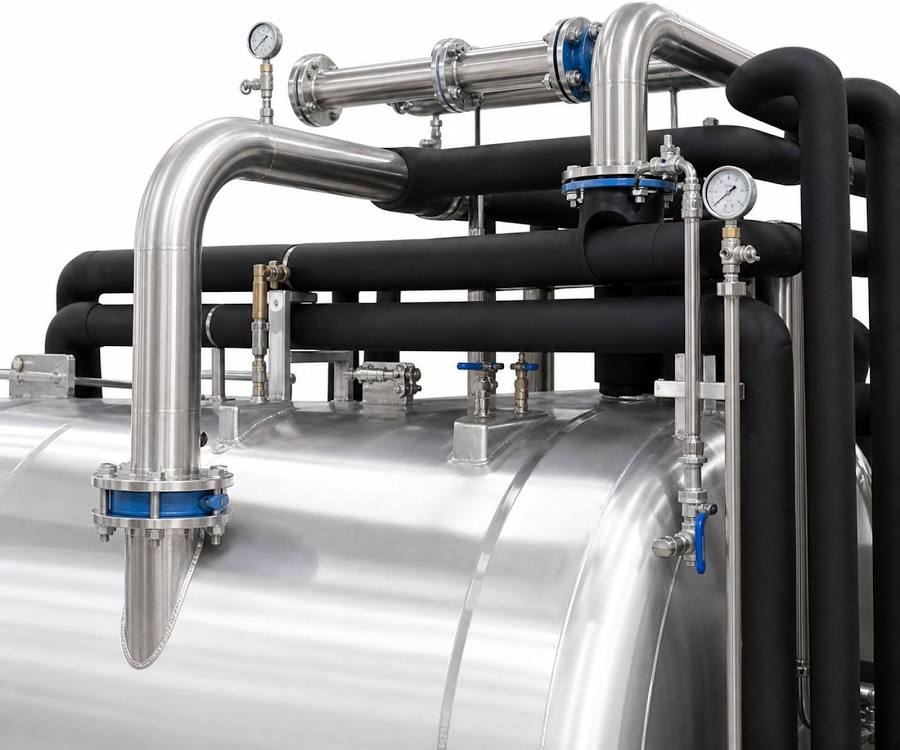
6. Unloading and moisture-protective packaging
Break vacuum with the specified clean gas or filtered air, then unload promptly under controlled humidity. Freeze-dried food is porous and can regain moisture quickly. Packaging therefore belongs to the process, not to a later logistics step. Select a suitable moisture and oxygen barrier, establish the seal specification and use inert-gas flushing or oxygen absorbers when the product requires them.
Keep representative samples from defined cart and shelf locations during development. Differences between the front, center and rear of the chamber can reveal loading or heat-transfer problems that a single sample misses.
7. Defrost, drain and clean for the next batch
At the end of drying, the condenser may hold a large mass of ice. Isolate and defrost it according to the equipment procedure, confirm complete drainage, and prevent standing water from remaining in low points. Do not start the next batch while residual ice reduces condenser capacity.
Clean the chamber, carts, trays, drain and product-contact handling tools using a documented method compatible with the soil and construction materials. Pay attention to hinges, gaskets, cart wheels, corners and drain paths. Where allergens, meat, seafood or strong flavors are processed, the changeover plan should define segregation and verification rather than relying only on visual inspection.
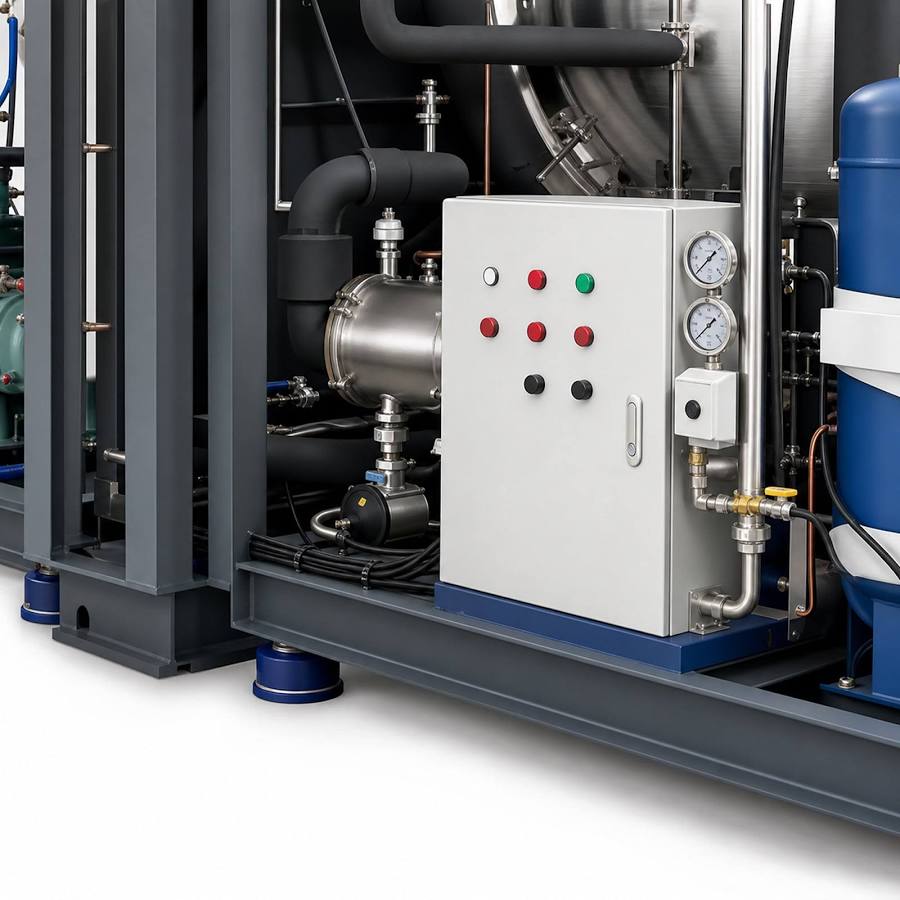
8. Utilities and maintenance determine real output
Nominal shelf area does not guarantee production output if utilities cannot support simultaneous refrigeration, vacuum and heating demand. Project engineering should confirm electrical supply, cooling-water conditions, ambient temperature, drainage, ventilation, defrost utilities and service access. Where several units operate together, peak loads and redundancy need line-level calculation.
Preventive maintenance should cover vacuum-pump oil and filters, refrigeration pressures, heat-transfer-fluid condition, door seals, valves, sensors, electrical terminals and condenser cleanliness. Track evacuation time, leak-test results, cooling time and batch duration. Gradual changes in these values often identify deterioration before a batch fails.
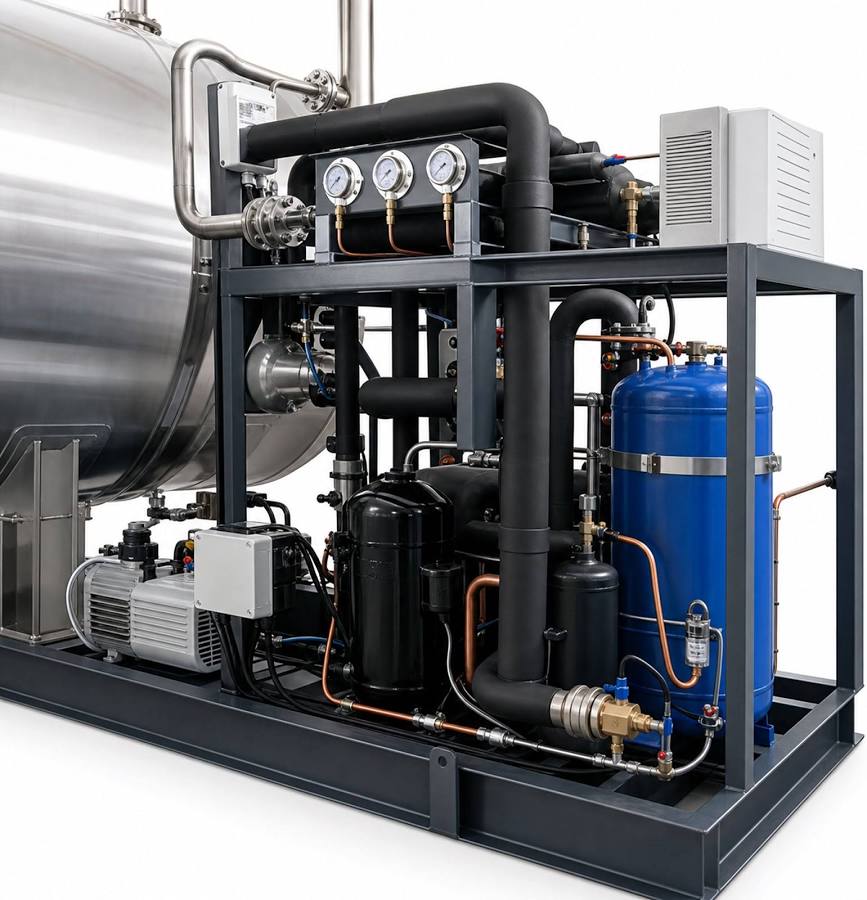
9. How to size an FFD system
Do not select an FFD model from fresh kilograms alone. Size the project from usable shelf area, tray loading density, product water load, condenser margin, cycle time, batches per day and annual production days. Facility constraints and packaging throughput may set the practical line capacity before the chamber does.
SJ Scientific's current large industrial range starts with the FFD-50 industrial food freeze dryer and extends through FFD-100, FFD-150, FFD-200 and FFD-250. See the FFD capacity guide for a shelf-area-based comparison and the food freeze-drying process guide for application-specific preparation.
Information to prepare for a technical proposal
- Food type, formulation and pretreatment.
- Incoming and target moisture or water activity.
- Piece dimensions or liquid fill depth.
- Target fresh load per batch and daily output.
- Available pre-freezing method and transfer temperature.
- Working days, batches per day and required redundancy.
- Site voltage, frequency, cooling water, ambient conditions and installation limits.
- Cleaning, allergen-control and packaging requirements.
Frequently asked questions
Should food be pre-frozen before loading an industrial freeze dryer?
Many industrial lines pre-freeze loaded carts separately to improve chamber utilization. In-chamber freezing can also be used for selected products, but the product center must be frozen to the validated condition before primary drying.
How is an industrial food freeze dryer sized?
Use shelf area, tray loading density, water load, condenser margin, cycle time, batches per day and annual output. Fresh kilograms per batch alone are not enough.
How do you know when food freeze drying is complete?
Use process trends together with a defined product test such as moisture or water activity. A timer copied from another product is not a reliable endpoint.
Why must the condenser be fully defrosted between batches?
Residual ice reduces available vapor-capture capacity and can affect the next cycle. The condenser should be defrosted, drained and inspected according to the operating procedure.
What information is needed for an FFD quotation?
Provide product type, dimensions or fill depth, initial and target moisture, batch and daily output, pre-freezing method, utilities, site limits, cleaning needs and packaging requirements.