Pilot Scale Freeze Dryer: Small-Batch Lyophilizer Selection and Scale-Up
A pilot lyophilizer selection guide connecting small-batch work with transferable cycle development, partial loads, condenser capacity, PAT, and production scale-up.
Pilot Freeze Dryer
Short answer: a pilot scale freeze dryer should bridge formulation work and the intended larger process. It needs enough shelf area for representative loading, but its more important job is to generate interpretable data under controlled shelf temperature and chamber pressure. Select it from the vial or tray, fill depth, batch size, partial-load behavior, condenser and vapor-path duty, instrumentation, stoppering, data requirements, and the production equipment to which the cycle may transfer.
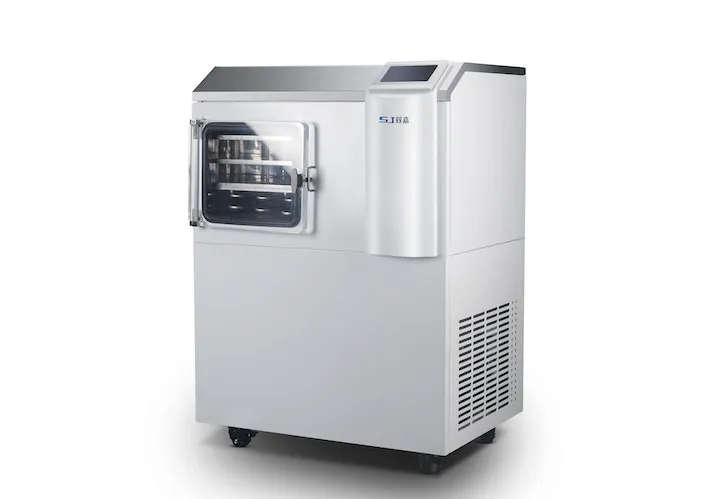
The search terms pilot freeze dryer, pilot scale lyophilizer, pilot plant freeze dryer, and small batch lyophilizer often describe overlapping equipment. The correct boundary depends on intended use. A research pilot machine can support formulation, cycle development, engineering lots, and non-GMP small batches; a sterile clinical or commercial batch may require a qualified Command GMP lyophilizer, appropriate facility interfaces, and the customer’s regulated quality system.
Define the pilot machine’s role in the development path
| Role | Questions the equipment should answer |
|---|---|
| Formulation screening | Can the system run small, repeatable loads while recording product and process behavior? |
| Cycle development | Can shelf temperature and chamber pressure be programmed and controlled through freezing, primary drying, and secondary drying? |
| Vial and stopper study | Does shelf spacing, loading field, probe arrangement, and optional stoppering match the selected components? |
| Scale-up study | Can the team characterize heat transfer, pressure control, vapor load, endpoint, and equipment limits relevant to the receiving dryer? |
| Small-batch production | Are materials, cleaning, records, qualification, sterile boundary, and release requirements appropriate for the intended batch? |
A pilot freeze dryer is not simply a larger lab collector
Basic laboratory collectors are effective for many endpoint sample-drying tasks. A pilot shelf lyophilizer adds a controlled thermal surface, programmable ramps and holds, process-pressure control, product-temperature measurement, recipe execution, and data trends. Those functions let a development team understand why a run behaved as it did and whether the result can be transferred.
Review the laboratory freeze dryer selection guide when the task is flask, manifold, or simple tray drying. Use a pilot system when the shelf program and pressure history are part of the product process.
Match shelf area to representative loads
Too little area may not support the vial count or loading pattern needed for development. Too much area can make early batches a very small partial load, which changes vapor generation and may expose weak pressure-control behavior. Define both the normal load and the smallest development load.
For each vial project, provide vial outside diameter, height, stopper drawing, fill volume, quantity, loading pitch, shelf spacing, and whether stoppering is required. For bulk trays, provide dimensions, layer depth, solids, solvent, and total liquid. Shelf area alone does not determine batch capacity.
Current Creator pilot scale range
| Model | Controlled shelf area | Typical project position | Product page |
|---|---|---|---|
| SJ-Creator 1S | 0.12 m² | Formulation screening and compact controlled small batches | View Creator 1S |
| SJ-Creator 2S | 0.24 m² | Peptide, protein, vial, and cycle-development studies | View Creator 2S |
| SJ-Creator 3S | 0.36 m² | Process development, larger vial studies, and pilot scale-up | View Creator 3S |
| SJ-Creator 4S | 0.48 m² | Larger pilot batches and laboratory-to-production studies | View Creator 4S |
The public model name uses the SJ-Creator prefix. SJIA-Creator may appear in earlier factory records or channel material referring to the same SJIALAB equipment family.
Partial-load pressure control deserves a real test
During a small development batch, the vapor flow can be far below the full-load condition. The control valve, pump, pressure sensor, and controller must still hold a useful process setpoint without persistent hunting. Ask for the controllable pressure range, sensor types and locations, valve logic, sampling rate, and a representative partial-load demonstration.
Capacitance manometers and thermal-conductivity gauges provide different information. Their comparison can help interpret vapor conditions and primary-drying progress, but the instruments, ranges, calibration, and endpoint logic should be defined rather than inferred from a screen image.
Condenser and vapor path must support the proposed cycle
Total ice capacity is necessary but incomplete. Primary drying can be limited by peak sublimation rate, refrigeration duty, condenser surface, duct conductance, chamber-to-condenser geometry, pressure control, or the minimum controllable pressure. Ask how the condenser was matched to shelf area and the intended water load.
More shelves or a warmer primary-drying step can increase vapor generation. A cycle that works in a lightly loaded pilot machine may overload a production vapor path after scale-up if these limits are not characterized.
Plan scale-up around heat and mass transfer
Using identical shelf-temperature and pressure setpoints in two machines does not guarantee identical product behavior. Differences can include vial heat-transfer coefficient (Kv), edge-vial radiation, wall and door temperature, shelf emissivity, pressure measurement, loading density, chamber geometry, vapor-path conductance, condenser duty, refrigeration capacity, and maximum sublimation rate.
Useful scale-up work can include representative product-temperature profiles, water-sublimation or Kv characterization, product resistance Rp where justified, minimum controllable pressure, maximum sustainable sublimation rate, endpoint behavior, and comparison of critical quality attributes. Read Why Freeze-Drying Results Fail During Scale-Up for the failure mechanisms.
Do not treat freezing as perfectly scalable
Freezing can change with nucleation, shelf contact, loading speed, fill temperature, supercooling, chamber geometry, and controlled-nucleation strategy. Primary drying is often modeled more confidently than freezing. Record the freezing method, hold, product temperatures, nucleation observations, and annealing conditions so that transfer does not begin with an undocumented first stage.
Choose monitoring that answers development questions
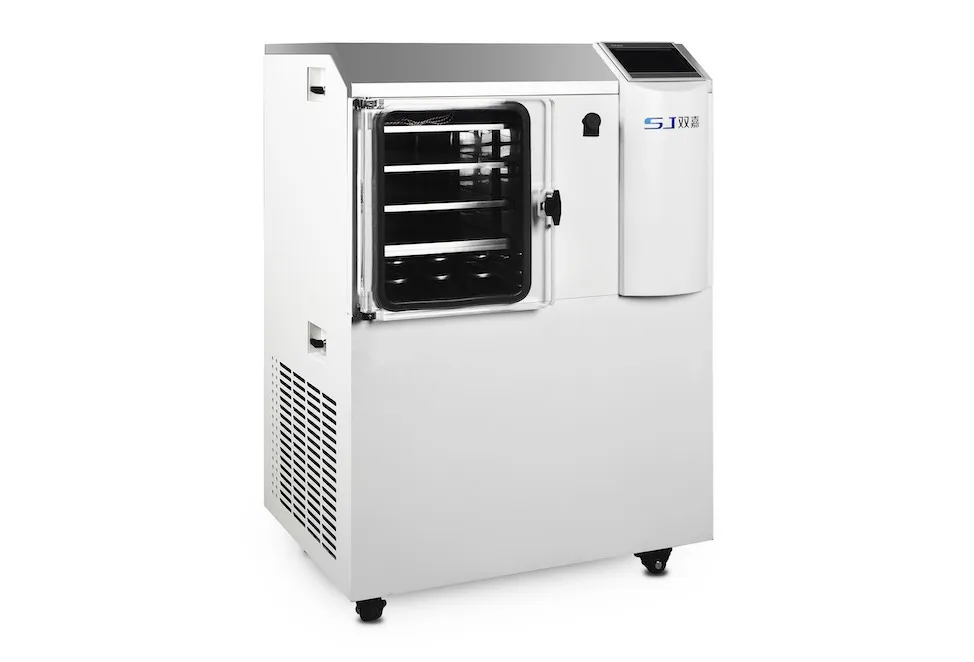
A pilot lyophilizer should provide clear time-aligned trends for shelf inlet/outlet or controlled temperature, chamber pressure, condenser temperature, vacuum status, product probes, phase transitions, alarms, and operator actions. Optional process analytical technology may include pressure-rise testing, comparative pressure gauges, mass or heat-flux approaches, or other endpoint tools. Select tools because they answer a development question and can be interpreted, not because the acronym list is long.
Small-batch does not automatically mean GMP
“Small batch lyophilizer” describes quantity, not compliance. Research equipment may be suitable for formulation or engineering studies but not for sterile clinical manufacturing. If the batch is intended for human or veterinary use, define the regulatory status, cleanroom and aseptic interfaces, materials, cleaning and sterilization, stoppering, data integrity, qualification, and release requirements with the site quality team.
What changes pilot freeze dryer price?
Pilot freeze dryer price is affected by shelf area and temperature range, condenser capacity and temperature, refrigeration, vacuum pumps and sensors, pressure-control hardware, stoppering, chamber and shelf materials, probes and PAT, controls and software, data functions, corrosion or solvent options, utilities, FAT, installation, training, documentation, and service.
Ask every supplier to quote the same vial or tray load and the same acceptance boundary. A machine-only price without the pump, stoppering tooling, control functions, testing, and installation responsibilities is not comparable.
Information for a pilot scale quotation
- application, formulation or material class, solvent, and development stage;
- vial/stopper or tray drawings, fill volume or depth, normal and minimum batch quantities;
- known critical temperature, shelf and pressure range, target cycle, and endpoint method;
- water or solvent load, condenser requirement, vacuum-pump and materials compatibility;
- stoppering, probes, PAT, recipes, trends, data export, user access, and documentation;
- receiving production freeze dryer, intended transfer method, utilities, room, and installation country.
Compare the complete SJ-Creator pilot freeze dryer range or submit a pilot-scale process brief.
Technical references
Frequently asked questions
What is a pilot scale freeze dryer?
It is a shelf-controlled lyophilizer used between basic laboratory sample drying and larger production equipment for formulation, cycle development, vial studies, engineering work, small batches, and scale-up.
How is a pilot freeze dryer different from a laboratory freeze dryer?
A pilot system normally emphasizes programmable shelf temperature, controlled chamber pressure, product probes, recipes, trends, representative vial loading, and optional stoppering rather than only endpoint sample drying.
What should be tested at partial load?
Verify pressure-control stability, sensor resolution, control-valve behavior, shelf-fluid control, recipe execution, product-temperature measurement, data capture, alarms, and endpoint interpretation at the smallest intended load.
Can I copy a pilot lyophilization cycle directly to production?
Not safely by setpoints alone. Compare vial heat transfer, radiation, loading, pressure measurement, vapor conductance, condenser and refrigeration duty, maximum sublimation rate, endpoint, and product quality attributes.
What determines pilot freeze dryer price?
Shelf area and range, condenser, refrigeration, vacuum and pressure control, stoppering, materials, probes and PAT, software and data, solvent options, utilities, FAT, installation, documentation, training, and service all affect price.