Home Freeze Dryer Size Guide: SJ-05H to SJ-20H Compared
A model-by-model guide to SJ Scientific home and small food freeze dryers, including realistic capacity questions and when to move to commercial equipment.
Home Freeze Dryer
Short answer: choose a home freeze dryer from the amount of prepared food you will actually load, not the largest batch claim you can afford. SJ-05H and SJ-08H suit testing and light household use; SJ-10H and SJ-15H give more practical room for repeat batches; SJ-20H is the bridge toward farm, micro-business, and commercial-readiness work.
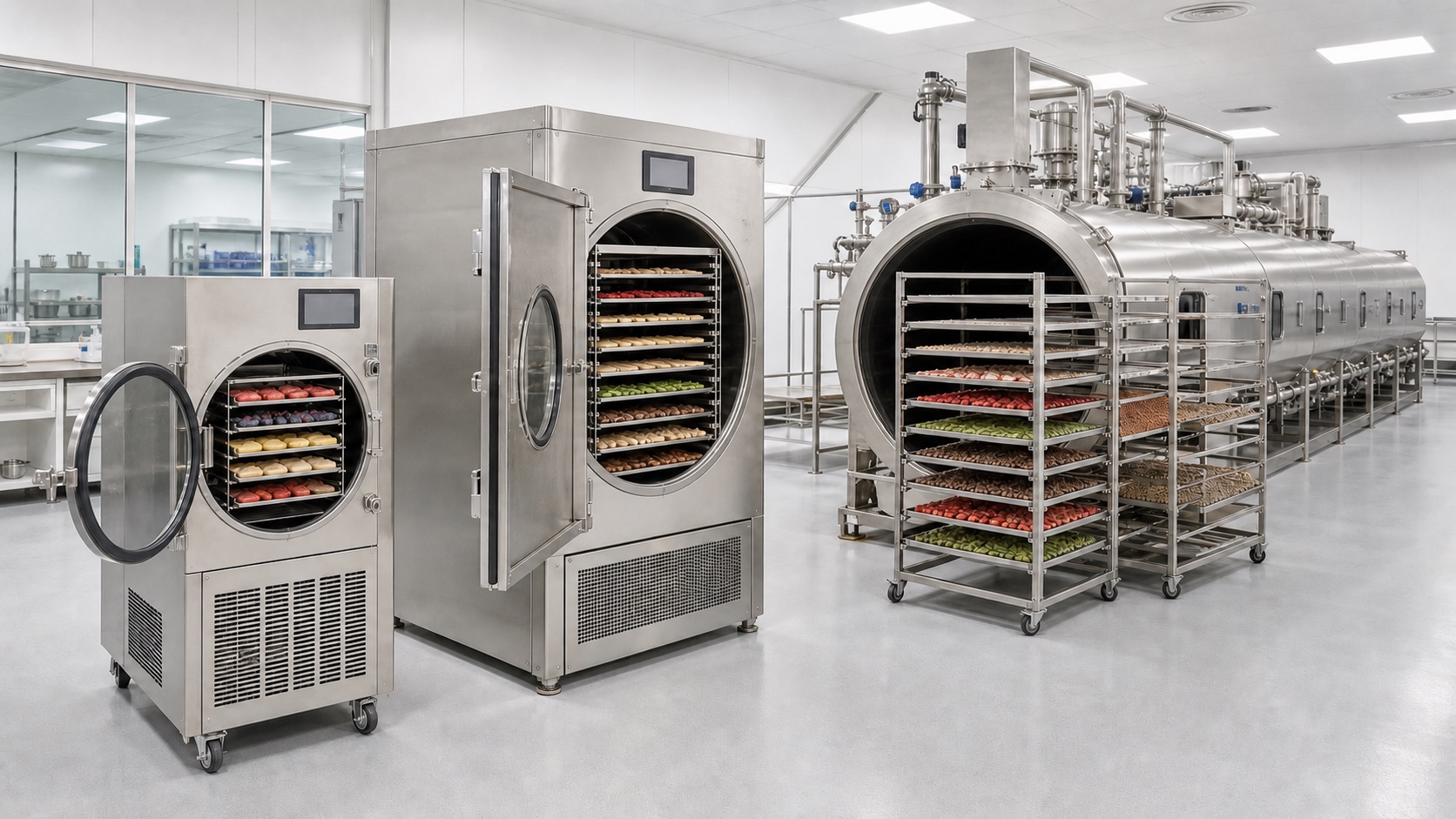
The term home freeze dryer covers more than one buyer. A family preserving garden produce, a pet-treat startup testing recipes, and a farm processing seasonal fruit may all begin with a small unit, but they do not need the same tray area or weekly throughput. This guide compares the active SJ H series food freeze dryers.
SJ home freeze dryer comparison
| Model | Catalog batch reference | Tray area | Trays | Best starting use |
|---|---|---|---|---|
| SJ-05H | 5-7 kg/batch | 0.48 m² | 4 | Recipe trials, occasional household batches, samples |
| SJ-08H | 8-12 kg/batch | 0.81 m² | 5 | Regular family use, garden harvests, early product testing |
| SJ-10H Smart | 10-15 kg/batch | 0.973 m² | 6 | Frequent use, small sales trials, multiple recipes |
| SJ-15H Smart | 15-22 kg/batch | 1.45 m² | 7 | Farm products, specialty snacks, repeated small batches |
| SJ-20H Smart | 20-30 kg/batch | 2.21 m² | 9 | Micro-production and commercial-readiness testing |
Capacity note: these are catalog planning ranges, not a promise that every product can be loaded at the maximum number. Whole berries, thin apple slices, cooked meals, candy, meat, coffee extract, and pet-food pieces have different loading density, water content, vapor resistance, and cycle time.
Start with prepared load, not raw purchase weight
Weigh the product after washing, trimming, pitting, cooking, or slicing. That is the prepared wet load that reaches the trays. A crate of fruit may lose considerable weight before loading. Conversely, a sauce or meal may carry more water per kilogram than a firm fruit slice and therefore create a heavier condenser duty.
For a first estimate, record three numbers for five normal batches:
- Prepared wet food loaded onto the trays.
- Final dry product after the cycle.
- Total turnaround from preparation through defrost and cleaning.
Those records will tell you more about the correct home freeze dryer size than a single maximum figure.
Which model fits which user?
SJ-05H: learn the product with low batch risk
SJ-05H is the entry point when you need to test slice thickness, pretreatment, texture, packaging, and customer reaction. It is easier to accept a failed 5 kg development batch than a failed 30 kg batch. Choose it when learning matters more than throughput.
SJ-08H: regular household and garden use
SJ-08H gives more tray area without moving into a micro-production footprint. It is a sensible choice for families, gardeners, hunters, and small farms that will run regular seasonal batches but do not yet have a fixed sales schedule.
SJ-10H Smart: the balanced small-business starting point
SJ-10H has enough room to compare recipes or package sizes while remaining manageable for one operator. For a new fruit snack, pet treat, herb, candy, or meal ingredient, this is often where product-development work begins to resemble a repeatable business routine.
SJ-15H Smart: frequent batches and more SKU flexibility
SJ-15H suits users who already know what they want to dry and need more weekly output. The extra tray area helps separate products or loading patterns, but sanitation and allergen planning become more important if several SKUs share the machine.
SJ-20H Smart: a bridge, not a full industrial line
SJ-20H can support farm processing, small contract work, and micro-production. It is also useful for generating scale-up data before selecting a commercial food freeze dryer. Once customers depend on fixed delivery dates, however, the decision should be based on daily output, labor, redundancy, and packaging flow rather than simply buying the largest home model.
Check the room and utilities before ordering
- Electrical supply: confirm voltage, frequency, plug or hard-wiring, circuit capacity, and local code.
- Heat rejection: refrigeration and vacuum equipment release heat; provide ventilation and operating clearance.
- Noise: pumps and compressors make a utility room or workshop more suitable than a quiet living space.
- Drain and defrost: plan where melted condenser ice will go.
- Vacuum pump: understand oil maintenance or the service needs of an oil-free option.
- Cleaning: leave enough room to remove trays, wipe the chamber, and inspect seals.
Tray loading controls quality and cycle time
Spread pieces in a repeatable single layer where practical. Keep slice thickness consistent. Record tray weight, product thickness, recipe, and final result. Thick loading may increase the starting kilograms but can lengthen primary drying, produce uneven texture, and reduce weekly output.
For mixed meals or protein products, test a conservative load first. Fat, sugar, salt, starch, and piece geometry change drying behavior. A cycle that works for strawberries is not automatically right for cooked meat or candy.
When should you move to a commercial freeze dryer?
Move beyond the home range when you have scheduled orders, multiple batches per week, staff loading the machine, formal cleaning records, packaging bottlenecks, or a need for redundancy. SJ-30H, SJ-35H, and SJ-50H provide the next step. Large factories should evaluate the FFD industrial food freeze dryer range.
A practical buying checklist
- Prepared kg per normal batch, not only maximum batch
- Tray area and usable tray dimensions
- Product types and expected slice or fill thickness
- Water removed per batch
- Full turnaround time and batches per week
- Electrical supply, room heat, noise, drain, and access
- Packaging capacity after the dryer finishes
- Spare pump oil, seals, filters, and service plan
Frequently asked questions
Which SJ home freeze dryer is best for a small food business?
SJ-10H or SJ-15H is often a practical starting range for product trials and small sales. SJ-20H suits higher micro-production, but scheduled commercial output may justify 30H, 35H, or 50H.
Can I always load the maximum stated kilograms?
No. The catalog range depends on product density and water load. Thick, sugary, fatty, or irregular products may need a lower load or longer cycle.
What is the difference between a home and commercial food freeze dryer?
Commercial selection places more weight on weekly output, labor, cleaning records, service access, packaging flow, and equipment uptime, not only chamber size.