Fruit and vegetables
Strawberry, mango, apple, banana, corn, mushroom, herbs, and vegetable ingredients where color, shape, and crisp texture matter.
Use the FFD platform when the product value depends on appearance, aroma, nutritional retention, ambient shelf life, and reliable rehydration.
Strawberry, mango, apple, banana, corn, mushroom, herbs, and vegetable ingredients where color, shape, and crisp texture matter.
Instant coffee, tea extracts, fruit powders, and functional drink ingredients that need aroma protection and fast dissolution.
High-value protein ingredients, seafood, and prepared meat pieces where low-temperature drying helps protect flavor and structure.
Chicken, beef, fish, egg yolk, and mixed pet treats for brands that need premium nutrition claims and shelf-stable packaging.
Meal components, sauces, soups, and outdoor or emergency rations that need light weight and quick rehydration.
Temperature-sensitive cultures, enzymes, botanicals, and functional ingredients that require gentler moisture removal.
Meat, organ, fish, poultry, topper, training-treat, and formulated pet-food projects that require repeatable tray loading, controlled freeze drying, hygienic handling, and moisture-protective packaging.
The FFD number represents usable shelf area in square meters. FFD-5 / 10 / 20 use compact contact-heated shelves; FFD-50+ use radiant heating and cart-based handling. Batch capacity is an approximate fresh-material reference and must be confirmed against the real product and cycle.
| Model | Usable shelf area | Approx. fresh load | Best-fit production scenario | |
|---|---|---|---|---|
| FFD-5 | 5 m2 | About 50 kg/batch | Pilot production, product validation and the first compact industrial line | View Model |
| FFD-10 | 10 m2 | About 100 kg/batch | Small-batch commercial production and growing food or pet-treat programs | View Model |
| FFD-20 | 20 m2 | About 200 kg/batch | Mid-volume production bridging commercial H models and cart-based FFD-50+ | View Model |
| FFD-50 | 50 m2 | About 500 kg/batch | Entry industrial line, premium snacks, pilot-to-production scale-up | View Model |
| FFD-100 | 100 m2 | About 1000 kg/batch | Fruit, vegetables, coffee, pet treats, and ingredient production | View Model |
| FFD-130 | 130 m2 | About 1300 kg/batch | Higher daily output with flexible SKU changeover | View Model |
| FFD-150 | 150 m2 | About 1500 kg/batch | Factory-scale food drying with room for throughput growth | View Model |
| FFD-200 | 200 m2 | About 2000 kg/batch | Large-volume production for mainstream food or pet-food SKUs | View Model |
| FFD-250 | 250 m2 | About 2500 kg/batch | High-capacity continuous batch operation and multi-shift factories | View Model |
Industrial food freeze drying works when freezing, sublimation, and final desorption are matched to the product. The equipment must control shelf temperature, vacuum, condenser load, and heating rate as one process.
Products can be frozen inside the chamber or pre-frozen by blast freezer / IQF. The choice affects cycle time, ice crystal structure, handling labor, and factory layout.
Under deep vacuum, shelf heat drives sublimation while the condenser captures vapor. Stable heat transfer and vacuum control help avoid collapse, shrinkage, and uneven drying.
A controlled final stage removes bound moisture to the target range for shelf life, packaging stability, texture, and rehydration behavior.
The right FFD configuration depends on the product, room, operators, utilities, cleaning workflow, and target daily output. Sizing starts with production data, not a catalog model number.
We estimate batch size, cycle duration, batches per day, and model fit based on fresh material volume, tray loading, water content, and product target.
Tray size, cart quantity, loading direction, pre-freezing workflow, and unloading plan can be tailored to reduce labor and bottlenecks.
Cooling, electrical load, compressed air, vacuum exhaust, drainage, room temperature, and maintenance access are reviewed before final layout.
Siemens PLC recipes, data export, vacuum pump set, heated-water shelf option, automation level, and CIP-related options can be configured by project.
Compare 50-250 m2 FFD machines, then send the material, target daily output, water load, site utilities and loading workflow for project sizing.
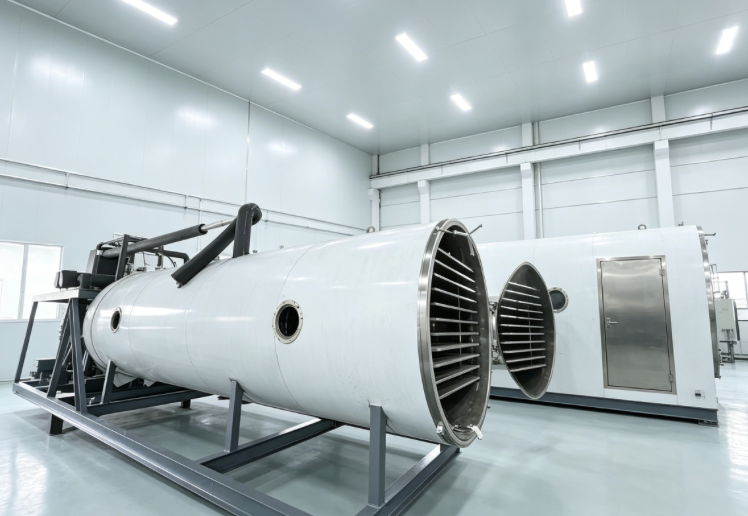
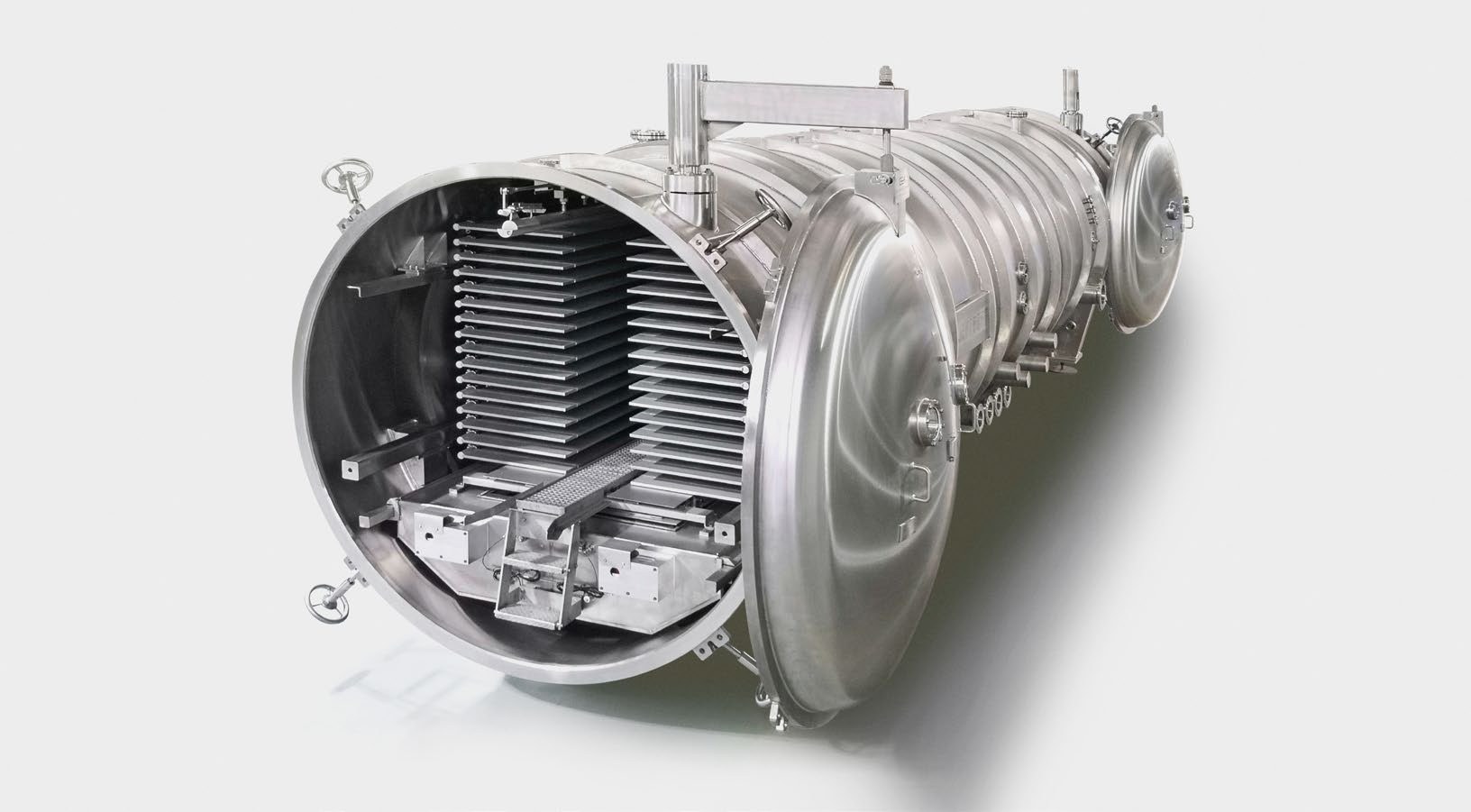
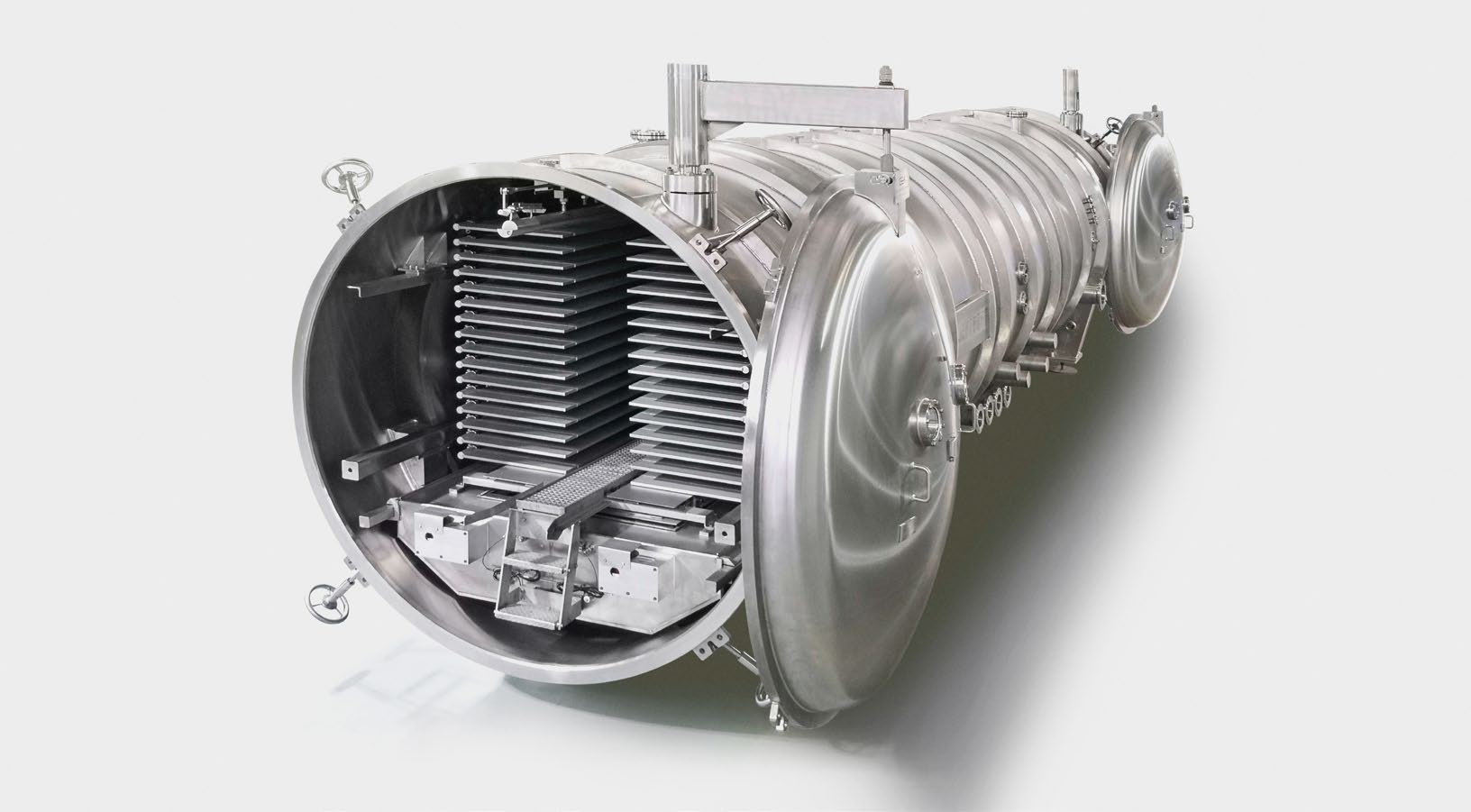
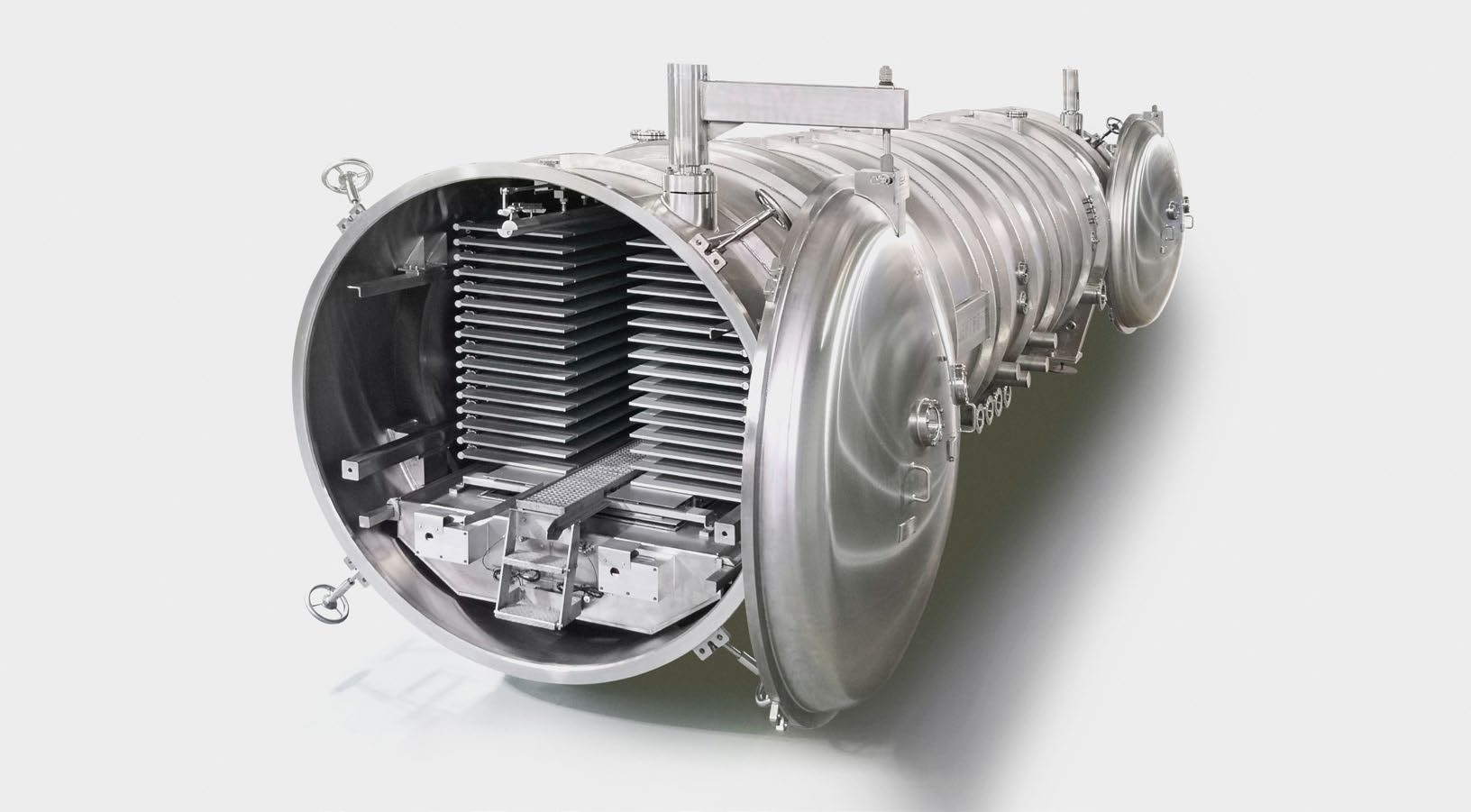
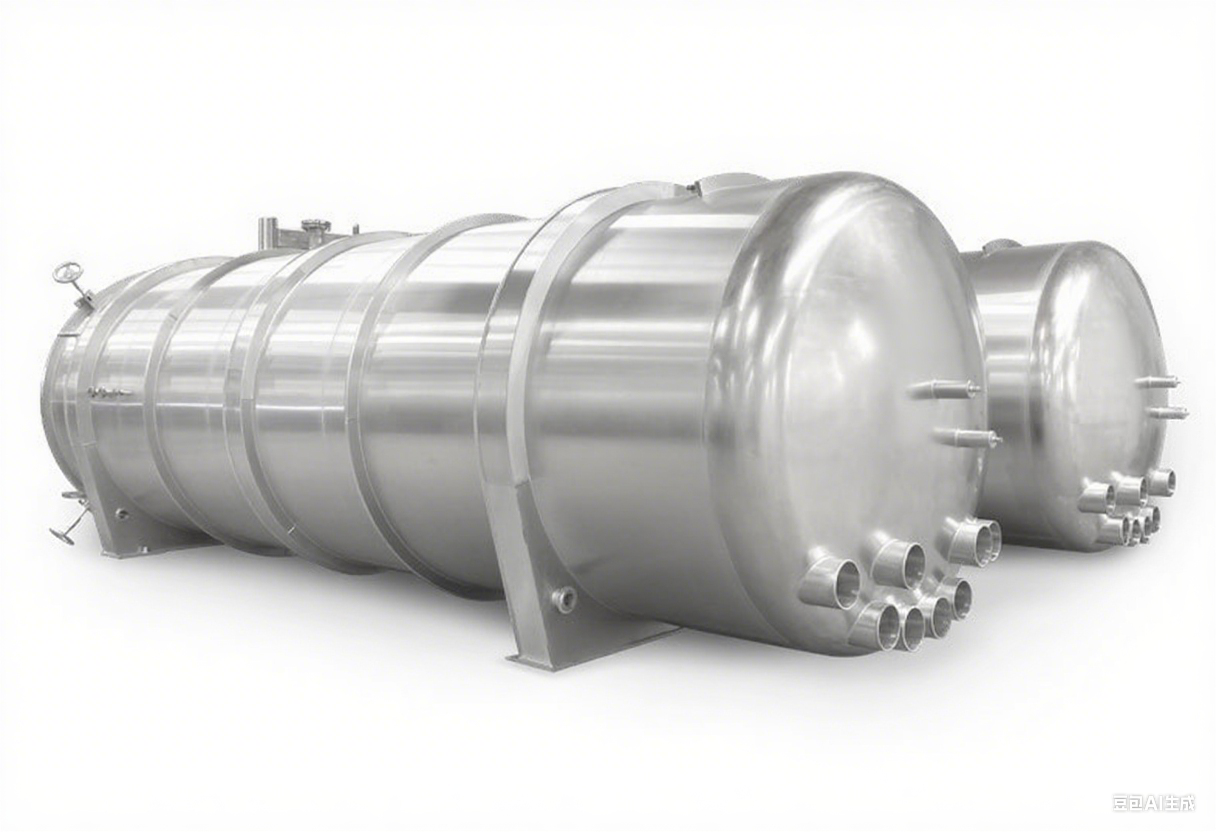
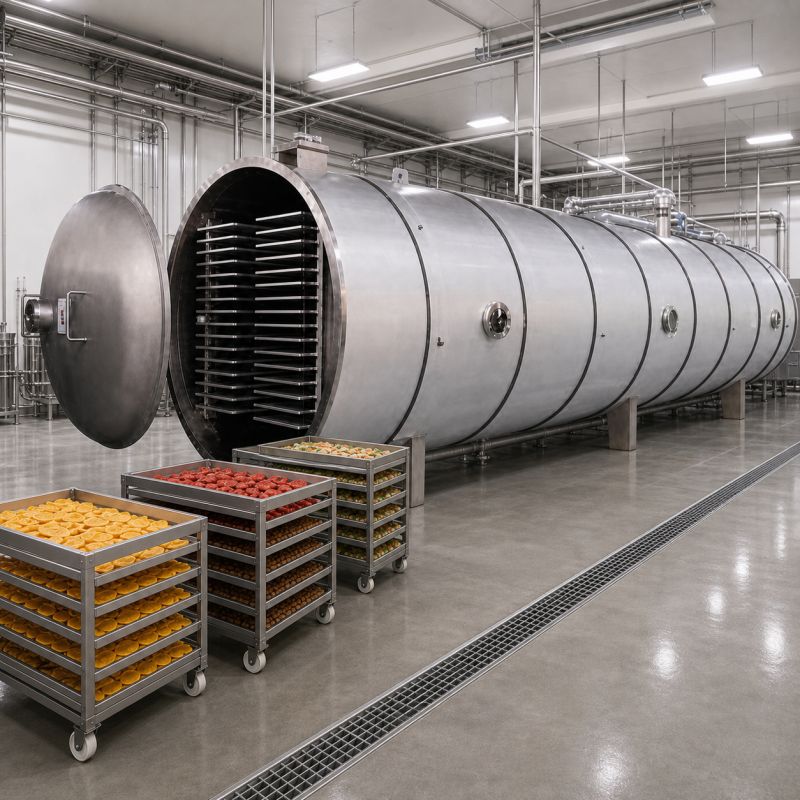
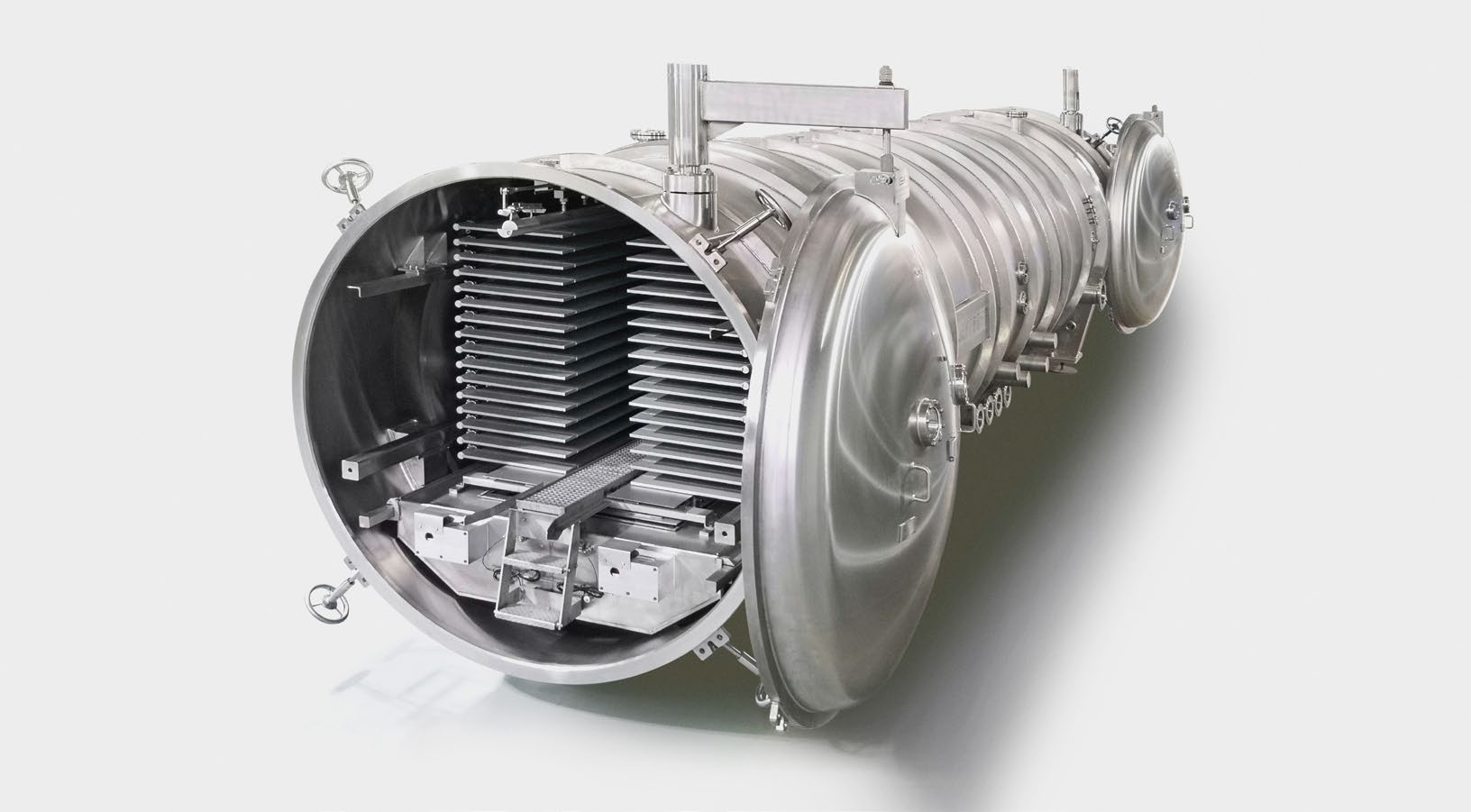
Original 3D process studies for project planning, not customer installations or guaranteed production recipes. Final configuration depends on the material, loading, trials and approved project drawing.
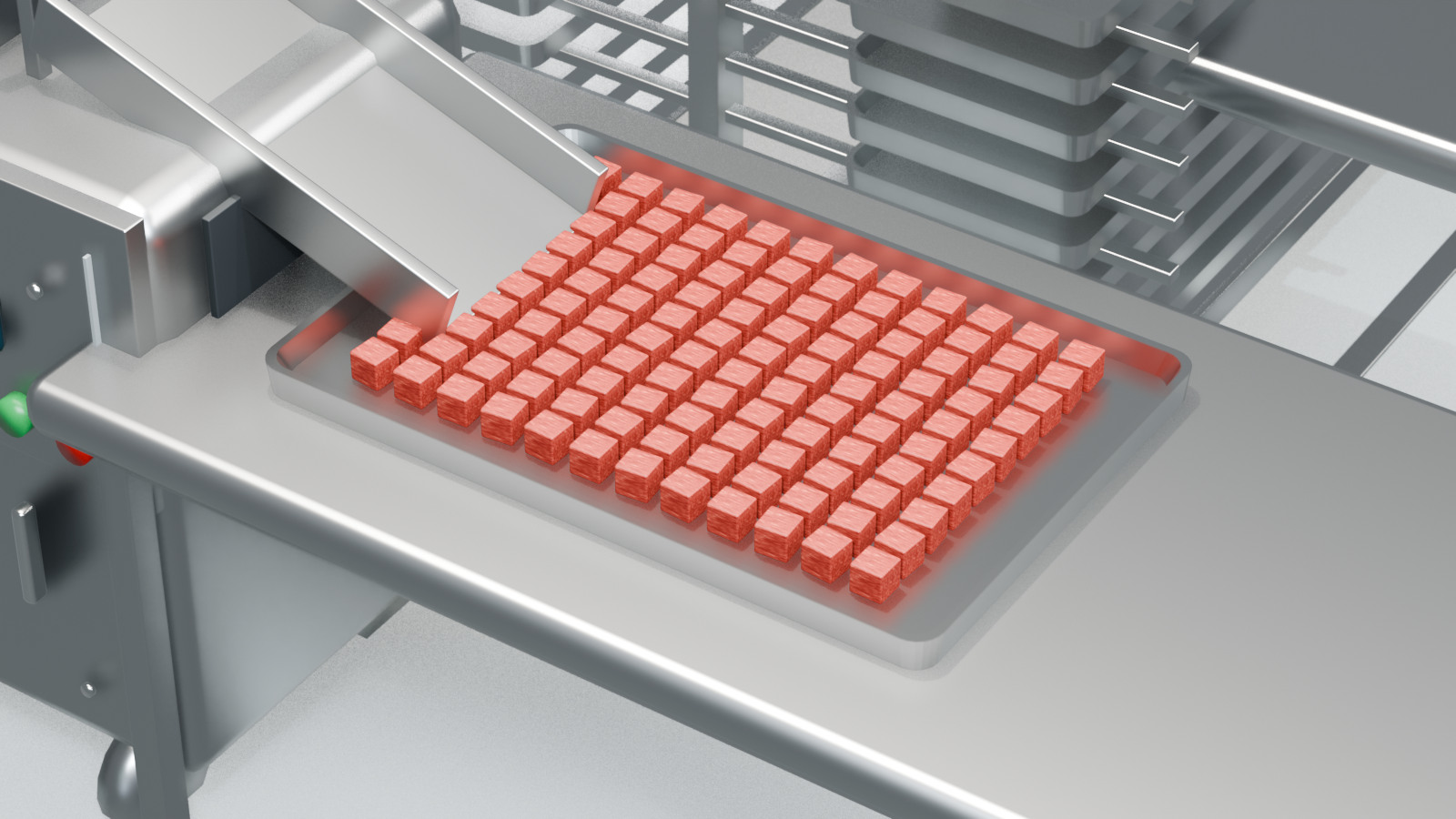
Dicing, shallow-tray loading, pre-freezing and rack transfer, with English FFD-50 / 100 / 150 / 200 / 250 process PDFs.
Read process guide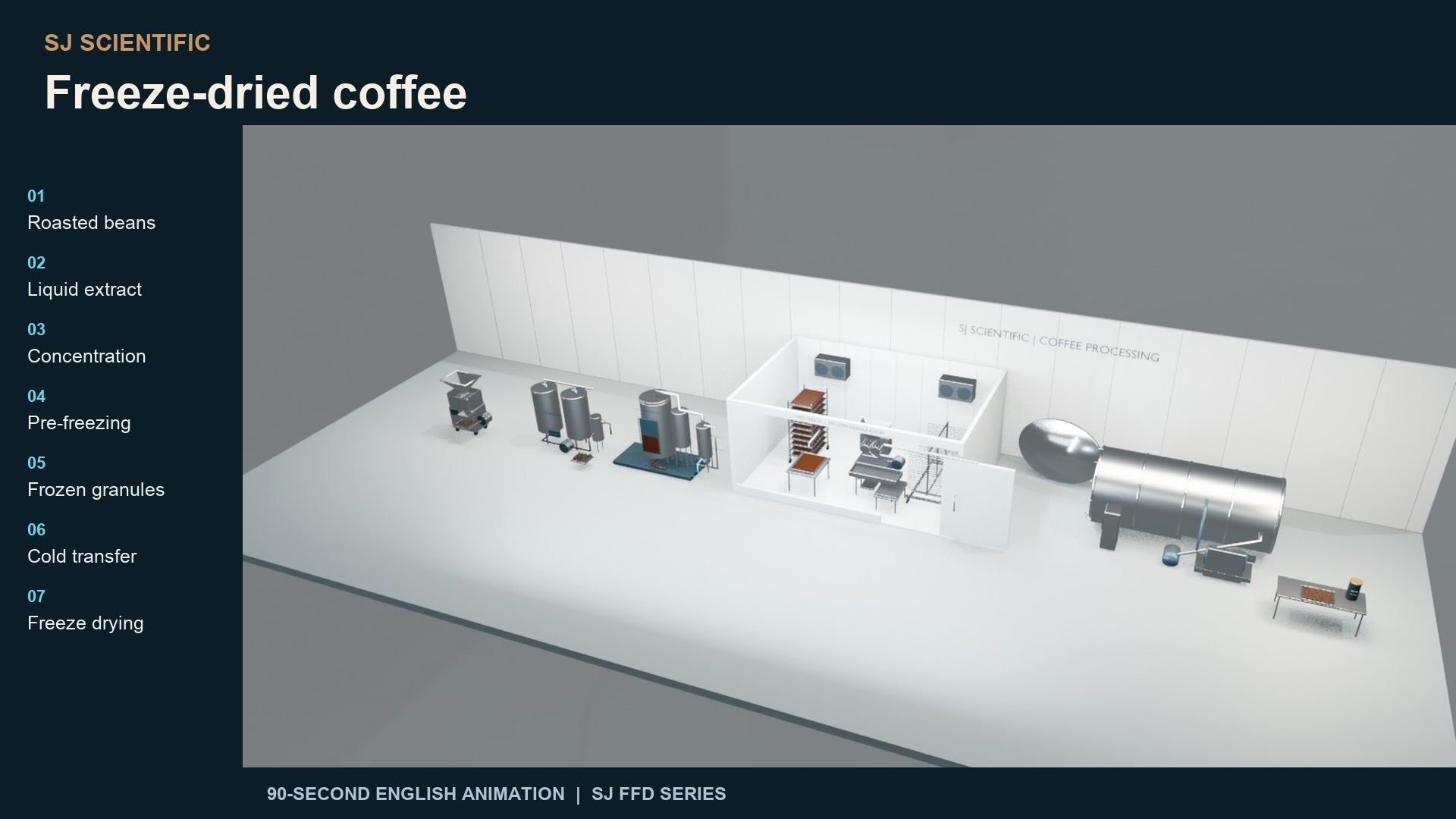
Vacuum concentration, slab freezing, cold-room granulation and SJ FFD drying, with an English video and process PDF.
Read process guideFood freeze dryer and food lyophilizer systems from H series small units to commercial 30H/35H/50H machines and FFD industrial production lines.
Learn MoreSJIALAB connects Hong Kong international project coordination with freeze dryer and lyophilizer manufacturing in Ningbo, China, covering laboratory, pilot, pharmaceutical GMP, food, and industrial systems.
Learn MoreStart with daily fresh material input, expected cycle time, number of batches per day, tray loading thickness, and target residual moisture. The model name gives the shelf area, but real capacity depends on the product and process.
Yes, in-place freezing can be configured. Some factories prefer external blast freezing or IQF to shorten chamber occupancy. We compare both workflows during sizing.
Many food products target roughly 2-5% residual moisture, but the correct target depends on product type, water activity, packaging, and shelf-life requirement.
Yes. The FFD series can be used for pet treats, meat, seafood, and protein ingredients. Material thickness, fat content, sanitation plan, and odor management should be reviewed before final specification.
Yes. Tray dimensions, cart quantity, loading workflow, automation level, and cleaning-related options can be adapted to the production room and labor model.
Send product name, fresh material kg/day, product thickness, target final moisture, tray size if fixed, available utilities, preferred freezing method, and photos or drawings of the production room if available.
Yes. FFD is SJ Scientific’s industrial food freeze dryer range, and food lyophilizer is an equivalent technical term. Each model still needs to be sized for product loading, water removal, condenser duty and cycle target.
Review food-contact materials, cleanability, drainage, tray and cart workflow, seals, controls, condenser sizing, utility design and the sanitation plan for the actual product. “Food grade” should be defined by these project requirements.
Shelf area is only the starting point. Refrigeration and condenser duty, vacuum equipment, chamber and loading design, controls, utilities, pre-freezing, automation, shipping, installation and service scope all affect project cost.
Yes. FFD systems can process prepared meat, organ, fish, poultry, topper, and formulated pet-food products. Final sizing requires the actual recipe, incoming and target moisture, fat content, piece size, kilograms and depth per tray, pre-freezing, sanitation plan, validated process, condenser load, and packaging workflow.
Send your product, target kg/day, tray size, moisture target, and room limits. We will recommend the FFD model and the key options to review before purchase.