Specialty food brands
Run planned batches of fruit snacks, candy, herbs, coffee ingredients, and premium prepared foods.
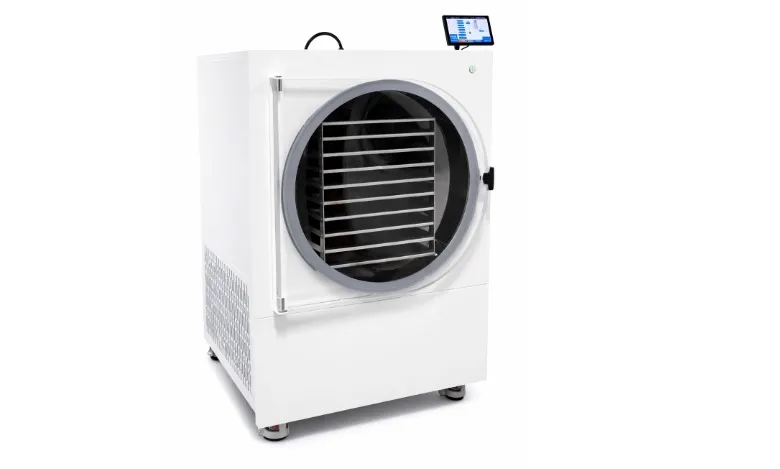
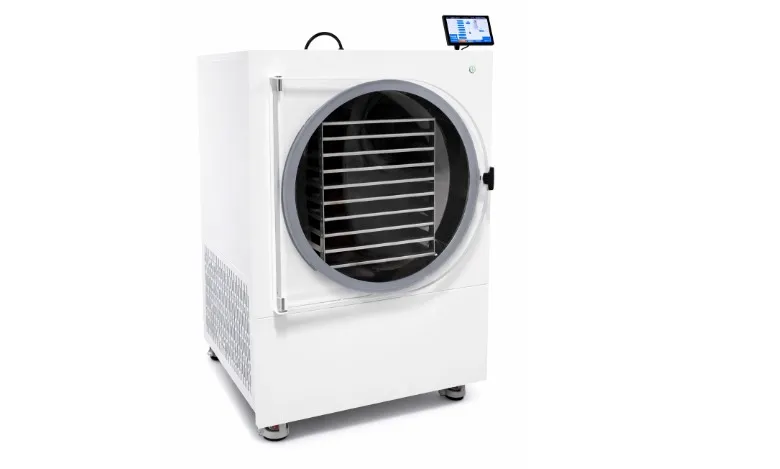
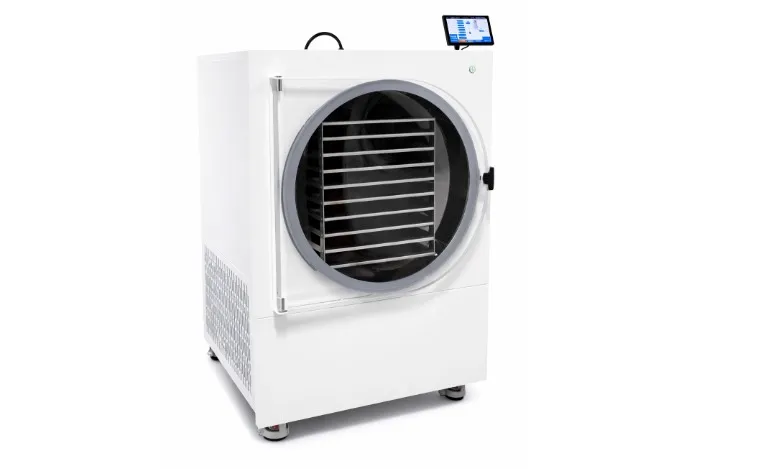
Use commercial H when weekly orders and repeatable production matter, but an FFD cart-based factory line would be premature.
Run planned batches of fruit snacks, candy, herbs, coffee ingredients, and premium prepared foods.
Develop and produce premium treats while controlling piece size, fat, sanitation, odor, and moisture-sensitive packaging.
Generate scale-up data, process seasonal raw material, and validate products before a larger capital project.
Choose from the tray area, product water load, site power, and batch frequency rather than the model number alone.
| Model | Usable tray area | Reference fresh load | Best-fit stage | |
|---|---|---|---|---|
| SJ-30H | 2.95 m2 | 30-45 kg/batch | pilot sales, farm processing, and specialty-food production | View Model |
| SJ-35H | 3.5 m2 | 35-52 kg/batch | regular production with several food SKUs | View Model |
| SJ-50H | 4.98 m2 | 50-70 kg/batch | stable commercial batches and scale-up data generation | View Model |
Commercial output depends on standard preparation, loading, cycle records, cleaning, and packaging.
Control piece size, pretreatment, fill depth, and tray weight so each cycle starts from comparable conditions.
Track freezing, drying, unloading, cleaning, packaging, and operator time to calculate useful daily output.
Use moisture-barrier packaging, suitable oxygen control, and a dry unloading environment for stable shelf life.
Commercial sizing should connect the machine to the building, people, product flow, and sales target.
Confirm electrical supply, ventilation, heat rejection, pump placement, drainage, and service clearance.
Estimate cycles per week from product thickness, water content, tray loading, and packaging capacity.
Review food-contact surfaces, tray handling, allergen control, odor, fat, and changeover between SKUs.
Use commercial H records to size FFD shelf area, condenser load, carts, pre-freezing, and factory utilities.
Compare the SJ-30H, SJ-35H, and SJ-50H machines by tray area, reference fresh load, condenser specification, power and installation footprint.
Food freeze dryer and food lyophilizer systems from H series small units to commercial 30H/35H/50H machines and FFD industrial production lines.
Learn MoreFreeze dryer and lyophilizer manufacturer for laboratory, pilot, pharmaceutical GMP, and food projects, combining China manufacturing with Hong Kong international trade and project coordination.
Learn MoreThe main differences are reference fresh load, usable tray area, tray dimensions, condenser specification, machine size, weight, and electrical configuration.
No. It is a reference fresh-material load. Dry yield depends on the raw product moisture and the selected final moisture.
Yes, but each product needs a separate preparation, tray-loading, drying, sanitation, odor-control, and packaging plan.
FFD becomes more appropriate when regular demand, daily raw material, labor, pre-freezing, packaging, utilities, and factory layout support batches of roughly 500 kg or more.
Send product photos, piece or layer thickness, fresh kilograms per batch and per day, target moisture, voltage, room size, and expected operating schedule.
No. The terms describe the same low-temperature vacuum-drying equipment. Food producers usually say freeze dryer, while lyophilizer is common in technical specifications and international RFQs.
Price depends on tray area, refrigeration and condenser duty, vacuum configuration, controls, materials, voltage, shipping, commissioning and documentation. Compare quotations against the same product load and scope.
Send the product, tray load, target batches per week, voltage, room limits, and packaging plan. We will compare the 30H, 35H, and 50H for your workflow.